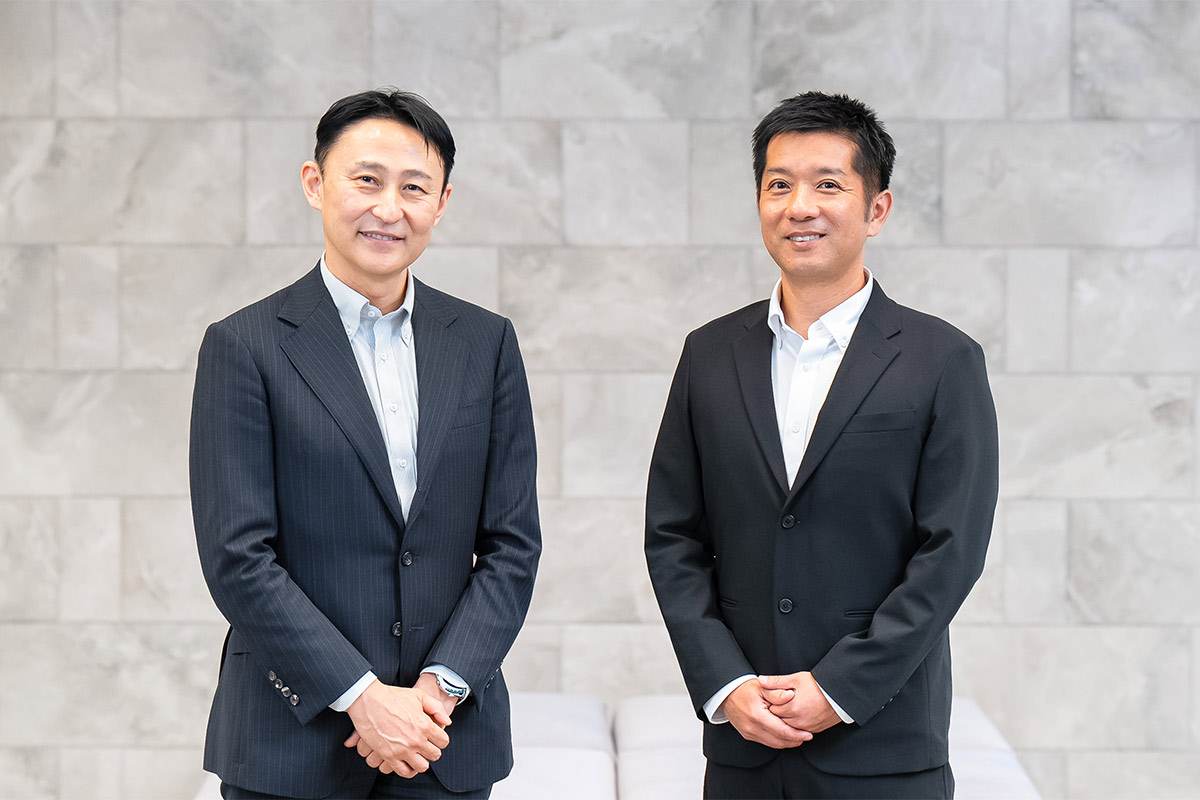
AI continues to advance at an extraordinary pace, making both work and daily life more convenient. At the same time, to ensure that AI is used responsibly, frameworks and principles need to be put in place. In this series of dialogues, external members of the AI Ethics Committee at SoftBank Corp. (TOKYO: 9434) share their perspectives on AI governance.
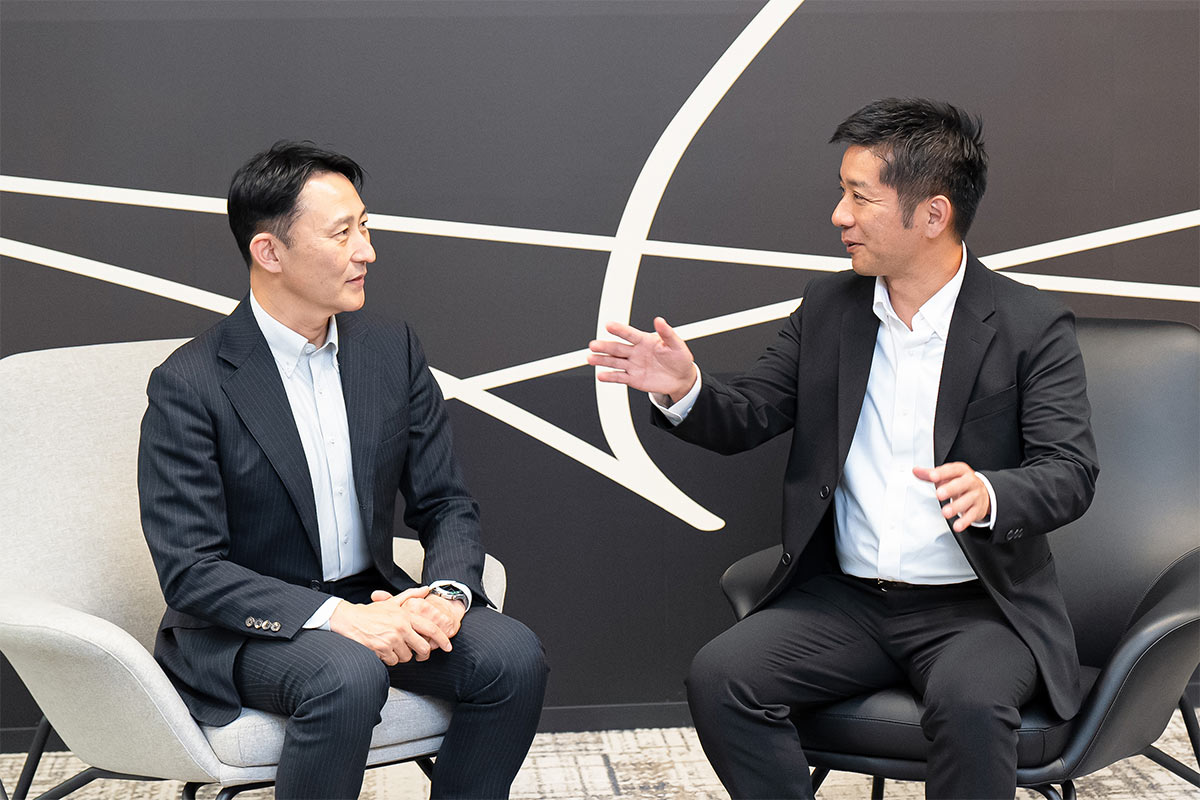
In this installment, Jun Sakuma, a leading expert on AI security, joins Tadashi Iida, Senior Vice President, CISO*¹ & CRO*² & CAIGO*³, for a conversation on AI and security. Together, they look at how security must evolve in the AI era and what is necessary to build an environment where people can use AI with confidence.
- *¹
Chief Information Security Officer
- *²
Chief Risk Officer
- *³
Chief AI Governance Officer
Jun Sakuma Ph.D.
Professor,
School of Computing
Institute of Science Tokyo
Team Director, AI Security and Privacy Team
RIKEN Center for Advanced Intelligence Project
After earning his Ph.D. from the Graduate School of the former Tokyo Institute of Technology (now the Institute of Science Tokyo), Jun Sakuma worked as a researcher at Tokyo Research Laboratory, IBM, Tokyo Japan, and later served as a professor at the University of Tsukuba before assuming his current position. He also serves as an external expert member on SoftBank's AI Ethics Committee. His research focuses on AI security, data privacy, machine learning and trustworthy AI.
Tadashi Iida
Senior Vice President, CISO & CRO & CAIGO
SoftBank Corp.
Tadashi Iida oversees cybersecurity and risk management across SoftBank Corp. and its group companies. As Chair of SoftBank’s AI Ethics Committee, he also leads initiatives to strengthen governance for the company's internal use of AI.
As AI becomes more powerful, security risks become apparent

Iida: As AI adoption accelerates, many users are experiencing a general sense of unease about potential security risks, such as information leaks or misuse by malicious actors. From your perspective as an expert on the subject, how do you view the current situation?
Sakuma: Over the past year or two, AI has become something many people use almost every day. As a result, people's concerns have gone from being abstract toward something more concrete.
This is particularly true for those who make extensive use of chat-based AI services such as ChatGPT. The more personal information or contextual details users provide, the more useful and sophisticated the responses become. While that convenience is appealing, it also raises questions like, “Is it really safe to share this information?” or “Could this violate my company's policies?” I think more and more people are using AI with these concerns in mind.
Iida: Which AI risks deserve the most attention?
Sakuma: Broadly speaking, the risk of information leakage through AI falls into two categories.
First is the possibility that an AI model unintentionally retains confidential information during training and later exposes it in some form. The second is human error—users entering information into AI systems that should never have been shared in the first place.
Researchers are actively working on solutions to the first issue, but there's honestly not much individuals can do about it. The second risk, however, stems from human behavior. Like handling confidential information in conventional IT systems, it can largely be mitigated by adhering to clear operational rules and having greater awareness.
Iida: I completely agree. With traditional IT systems, users generally know what kind of output to expect from a given input. AI is different. Even when given the same prompt, AI may produce different responses depending on timing, context, or the individual using it.
What's more, once sensitive information is accidentally entered into an AI system, it's often impossible to verify exactly where that data went or how it might be used. Once it's been submitted, you can't take it back. That's one of the biggest risks I see.
Sakuma: For sure. When you're using a black-box AI model, you have to assume that the moment information is sent to an external system, it's no longer entirely under your control. For a large company like SoftBank, an important approach is to provide secure, in-house environments where confidential information can be handled safely.
Iida: That's exactly what we're doing at SoftBank. Within our business operations, we use enterprise-grade AI services under extremely strict security controls. At the same time, we're investing heavily in the development of Japan-developed generative AI so that both customer data and our own company data can be processed securely within Japan’s borders, without relying on AI services developed overseas.
This is helping to build what’s often called “Sovereign AI”—the ability to independently manage and operate a nation's or organization's own AI infrastructure and data.
We believe that only by pursuing these initiatives in earnest can we fundamentally address society's concerns about AI and build lasting trust.

“Brakes” Needed as AI Becomes More Multimodal and Autonomous
AI's rapid evolution brings new risks
Iida: AI is evolving beyond text-based interactions. We're now seeing multimodal AI that can process images and speech, agentic AI, which can act autonomously, and even Physical AI, which is capable of interacting with the real world. What new security concerns do these advances bring?
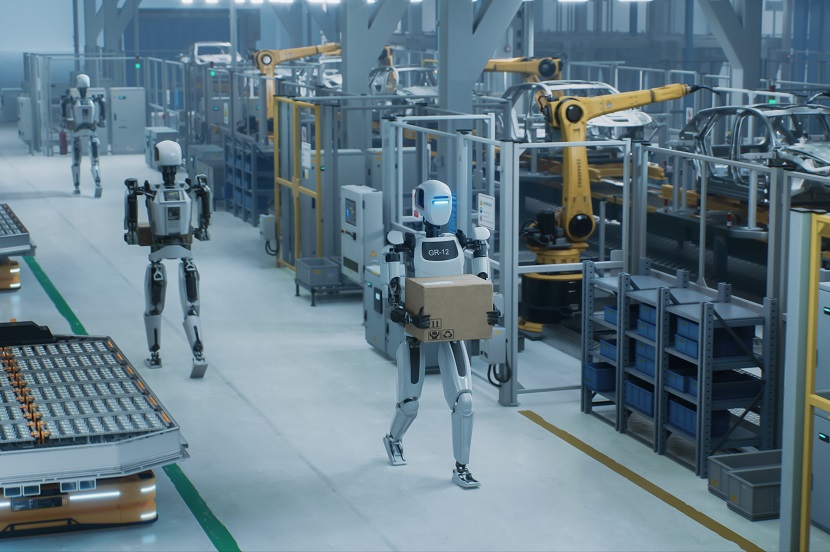
Sakuma: With multimodal AI, users are no longer just typing text to interact with a chatbot. Devices such as smart speakers and cameras can actively collect information from multiple sources, making it increasingly difficult for people to understand exactly what data AI systems have access to.
Agentic AI presents another challenge because it can directly execute actions within systems. In the future, an AI agent could, for example, complete a financial transaction on its own, potentially causing a monetary loss. How we effectively control autonomous AI remains an open technical question and is an important area of ongoing research.
Then there's Physical AI, such as autonomous vehicles and humanoid robots, to name some examples. As these technologies become more widespread, AI failures will no longer be limited to digital consequences—they could lead directly to real-world accidents and cause physical harm.
Building trust means taking responsibility for AI services
Iida: Expecting users to understand and evaluate all of these risks before using AI services seems like a very tall order.
Sakuma: Exactly. That's why service providers need to take the initiative by implementing robust AI governance, including strong privacy protections and security measures.
It's simply unrealistic to expect users to evaluate every AI service individually and determine what risks it carries or what precautions they should take. That's why trust will become even more valuable in the AI era. Companies that can earn a reputation for offering AI services people can rely on will have a significant advantage.
Safe AI needs strong brakes, not just a powerful engine
Iida: That's a good point. I'd also like to ask about your own research. You've spent many years studying AI-related risks and security. What motivated you to pursue research in this field?
Sakuma: Many AI researchers are naturally drawn to improving AI performance to make it more capable and powerful. You could think of that as developing the “accelerator pedal” for AI.
I've always been more interested in developing the “brakes.” In other words, the privacy and security technologies to ensure AI can be used safely.
It's relatively straightforward to measure improvements in AI performance. But defining and evaluating whether an AI system is behaving safely or appropriately is a lot more difficult. That challenge is precisely what has fascinated me throughout my career.
Iida: What are the main themes of your research today?
Sakuma: One of my primary research areas is AI “red teaming,” which means testing whether large language models (LLMs) can reliably refuse harmful requests or avoid disclosing personal information. We intentionally think like attackers to uncover vulnerabilities before malicious actors can exploit them.
Another topic I've become increasingly interested in is AI supply chain risk. More companies are customizing open-source AI models for their own use. However, vulnerabilities present in the original model can easily be inherited by the customized version. So we're studying ways to identify and prevent those inherited risks.
Iida: That's an extremely real and important challenge.
Sakuma: More recently, I also started researching security for Physical AI. Cybersecurity risks and physical risks are fundamentally different, so we're first trying to understand what kinds of threats there are and what precautions will need to be taken.
I'm also interested in approaches that reduce attackers’ incentives in the first place. Cybersecurity often becomes an endless cycle of back-and-forth between attackers and defenders, and there’s no sustainable solution for that. By applying ideas from game theory, we're exploring how to create situations where, no matter how much effort an attacker invests, the potential reward remains too small to justify the cyberattack in the first place.
Iida: Those kinds of "braking" technologies will be indispensable if AI is to be safely deployed across society.
In business, there's long been a dilemma over whether investments in security are strategic investments or simply operating costs. No matter how fast a car can go, if it doesn’t have brakes, you can’t say it meets the quality standards required to offer it to customers. After all, no one would want to ride in a car without brakes.
Sakuma: I couldn't agree more. AI without dependable brakes is simply too dangerous for real-world use. Security isn't optional—it's key to corporate responsibility. And as AI becomes more pervasive, its importance will only continue to grow.
Being Transparent About AI Risks Builds Trust
The role of the AI Ethics Committee and the pursuit of transparency
Iida: At SoftBank, we regularly seek guidance from external experts like yourself through our AI Ethics Committee. From your perspective, what do you think of our approach?
Sakuma: One aspect of SoftBank's AI Ethics Policy that particularly impressed me is its commitment to transparency and accountability. The policy states, “We will strive for transparency in explaining how we use the results of AI judgments.”
Given the black-box nature of many AI systems and the speed at which the technology is evolving, it's unrealistic for any company to guarantee complete safety. That's precisely why I believe it's important that the policy explicitly commits to communicating not only the benefits of AI, but also its potential risks in an honest and transparent way.
Iida: Thank you. As an organization, we're committed to continually strengthening our efforts so customers can use AI confidently and with peace of mind.
Sakuma: Another thing that stood out is the diversity of the AI Ethics Committee itself. The committee isn't made up solely of technical experts like myself—it brings together people from a wide range of professional backgrounds. Everyone actively contributes, and the discussions are substantive.
AI ethics is a field where potential issues aren't always obvious. That's why diverse perspectives are so valuable—they help reveal risks that might otherwise go unnoticed. I felt the committee has the right mix of expertise needed for those discussions.
Learning by building: hands-on experience drives AI literacy
Iida: Our discussions with committee members continually provide us with new insights. At the same time, no matter how well-designed our governance frameworks and policies are, AI is ultimately used by individuals across the company. Ensuring that this awareness and AI literacy spreads throughout the organization is just as important.
Sakuma: I heard SoftBank launched an initiative encouraging every employee to create 100 AI agents. My first reaction was, “That's certainly ambitious!” (laughs). Was it also intended as a way to improve AI literacy?

Iida: Absolutely. I think our President & CEO, Junichi Miyakawa, strongly believes that you can't truly understand AI simply by thinking about it—you have to build something and experience it firsthand. The fastest way to learn is by using your hands.
The AI agents didn’t necessarily have to be work-related. Employees were free to build agents for personal interests or hobbies as well. The important thing is simply to create one and see what happens.
When someone realizes that a task they've always spent hours on can suddenly be completed in half the time—or sees firsthand how much easier AI can make their work—that positive surprise becomes a powerful catalyst. Once people get that experience, they're naturally motivated to continue exploring AI on their own.
Sakuma: I think it's an incredibly forward-looking initiative, not only for improving AI literacy but also for raising employees' overall IT and security awareness.
The more people actively use AI, the more they begin to recognize its risks—and the more they appreciate the importance of having effective “brakes” in place.
Iida: Exactly. For an organization to embrace AI both responsibly and proactively, it needs to have two things working hand in hand: a culture that encourages experimentation, and strong governance structure that ensures AI is used appropriately.
With the continued support of our AI Ethics Committee members, we'll keep working to advance the adoption of trustworthy AI across society. Thank you for sharing your valuable insights with us today.
About SoftBank’s AI Ethics Committee
The AI Ethics Committee is an internal body established in April 2024 by SoftBank to promote the safe, secure and responsible use of AI.
The committee comprises both internal members and external experts who discuss and provide recommendations on ethical issues related to the development and deployment of AI. By sharing insights informed by the latest developments in Japan and around the world, the committee helps advance SoftBank’s commitment to responsible AI, ensuring AI is developed and used in ways that benefit society while addressing ethical and social concerns.
(Posted on August 20, 2026)
Photos by Yusuke Tanakadate
Original text by Hitomi Suto
Edited by Exwrite Inc. and SoftBank News Editors



