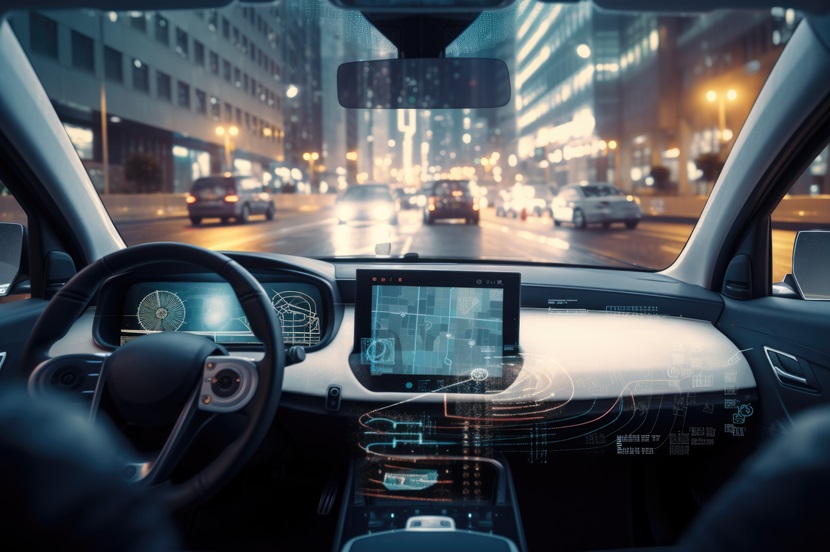

A vehicle where software, not fixed hardware, controls the core functions of a car.
A software-defined vehicle (SDV) is a type of vehicle where software, rather than hardware, controls the core functions of a car. While hardware determined what vehicles could do for most of automotive history, SDVs are opening up new possibilities and challenging past assumptions.
With SDVs, propulsion, safety systems, driver assistance, infotainment and connectivity are all managed through software layers that can be updated, reconfigured or replaced after a vehicle leaves the factory. While the hardware provides a platform, the software-defined architecture determines what that platform actually does. The enabling architecture relies on several components working together: a centralized vehicle compute platform, a high-bandwidth internal network connecting electronic control units (ECUs), a secure over-the-air (OTA) update channel and persistent connectivity to cloud and edge infrastructure.
An embedded Subscriber Identity Module (eSIM) is key to the connectivity layer that makes an SDV work. Unlike a physical SIM card that locks a vehicle to a single network operator, an eSIM allows remote switching between carriers — ensuring the vehicle maintains the best available connection regardless of geography.
What are some benefits of SDVs? Performance can be improved in response to real-world feedback rather than waiting for the next hardware generation. In addition, recall campaigns that once required physical intervention can, where software is the root cause, be resolved remotely.
Cubic³, a SoftBank Corp. (TOKYO: 9434) group company, is a global leader in SDV solutions. In this blog post, Cubic³ looked at how SDVs are changing the commercial model for vehicle manufacturers, what technologies make the architecture work and where the regulatory and competitive landscape is heading. Learn more here.

(Posted on August 24, 2026)
by SoftBank News Editors



