
The Formula 1 Aramco Japanese Grand Prix 2026 (F1 Japanese Grand Prix) took place at Suzuka Circuit in Suzuka City, Mie Prefecture from March 27 to 29, attracting more than 310,000 spectators over three days.
One of the biggest challenges for mobile network operators during large-scale events like this one is network congestion. From social media uploads and video streaming to cashless payments, reliable connectivity has become a critical part of the F1 fan experience. To address these demands, SoftBank Corp. (TOKYO: 9434), together with Ericsson Japan K.K. (Ericsson), conducted a demonstration utilizing 5G Standalone (5G SA) and millimeter wave (mmWave) technologies to deliver a seamless communications environment during the course of the event.
Advanced network technologies used to support the F1 Japanese Grand Prix

To provide reliable and high-quality connectivity at the F1 Japanese Grand Prix, which attracted more than 310,000 visitors, SoftBank and Ericsson deployed network slicing on a 5G SA network and utilized mmWave technology at Suzuka Circuit.
The initiative was designed to support a wide range of communications needs in a highly crowded environment, including smartphone usage, cashless payments, Extended Reality (XR) experiences and live television broadcasting.
Meeting the diverse connectivity needs of F1 fans
At the F1 Japanese Grand Prix, it was common to see fans watching live broadcasts on their smartphones. Spectators enjoyed the incredible speed and powerful engine sounds that can only be experienced at the circuit, while simultaneously checking positions and detailed race information on their smartphones.
As this style of race viewing continues to grow in popularity, communications infrastructure is playing an increasingly important role.
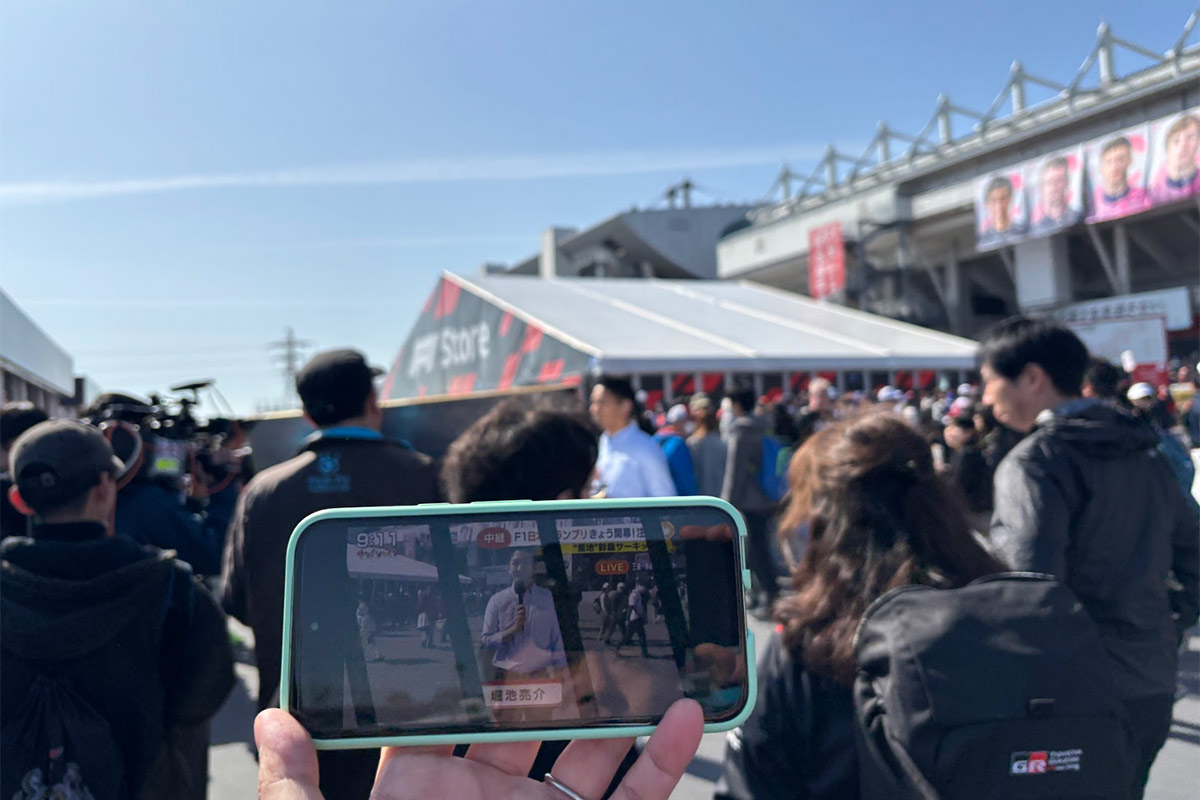
To support customers using 5G SA data services, SoftBank secured additional network capacity, enabling visitors to enjoy smooth data communications even in highly congested conditions.
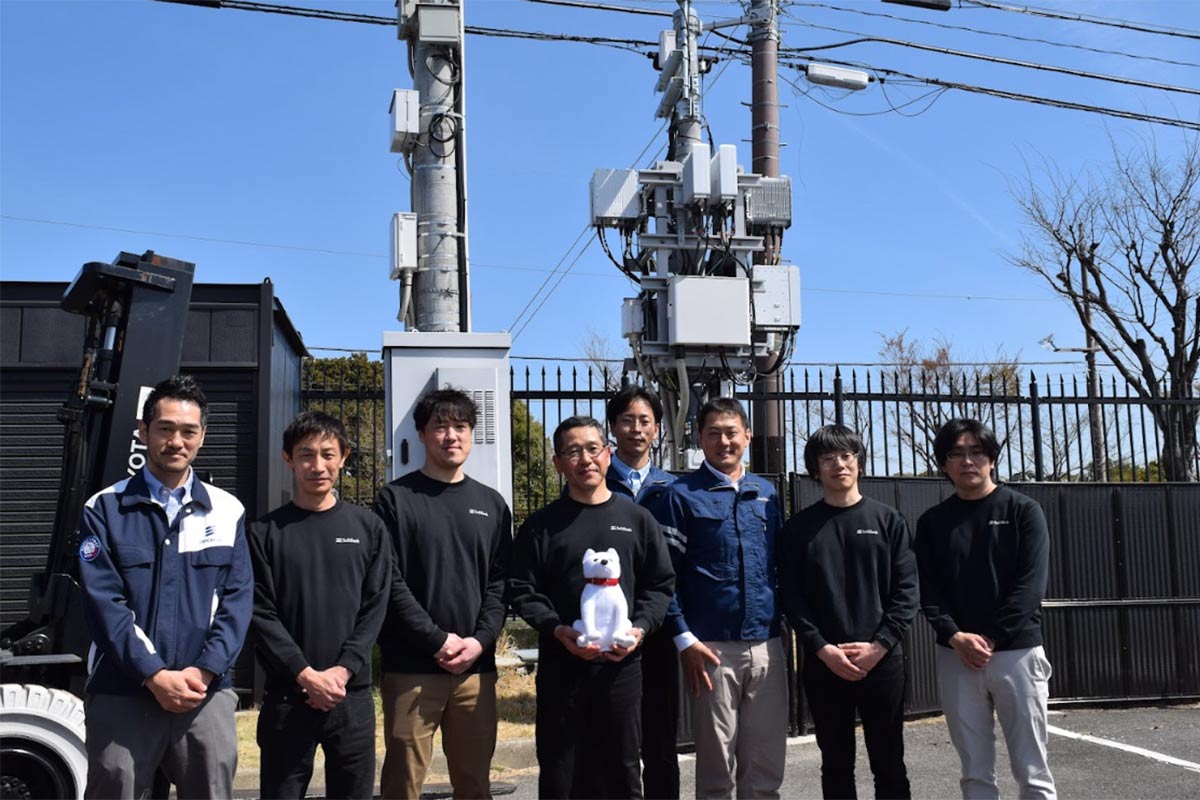
mmWave base stations previously used at Expo 2025 Osaka, Kansai, Japan, were also repurposed and set up as permanent installations at Suzuka Circuit. Equipment was installed to convert mmWave signals into Wi-Fi, creating an environment where even devices not compatible with mmWave can benefit from high-speed, high-capacity connectivity.
This enabled traffic to be distributed between the 5G SA network and Wi-Fi leveraging mmWave, thereby reducing the overall load on the network and helping to provide stable connectivity.
Bringing greater mobility and flexibility to live television broadcasting
The network initiatives were not limited to smartphone users. SoftBank also introduced new technologies for television broadcasters covering the event. A private 5G network utilizing ultra-high-speed, high-capacity mmWave communications enabled wireless video transmissions for live broadcasts. Video captured by cameras was transmitted in real time via compact 5G SA-compatible transmitters.
Traditionally, transmitting high-quality broadcast footage required long cables and large transmission systems, limiting camera placement and mobility. By enabling wireless video transmission, the new solution eliminated the need for cable installation and removal while enabling camera crews to quickly and flexibly change locations.
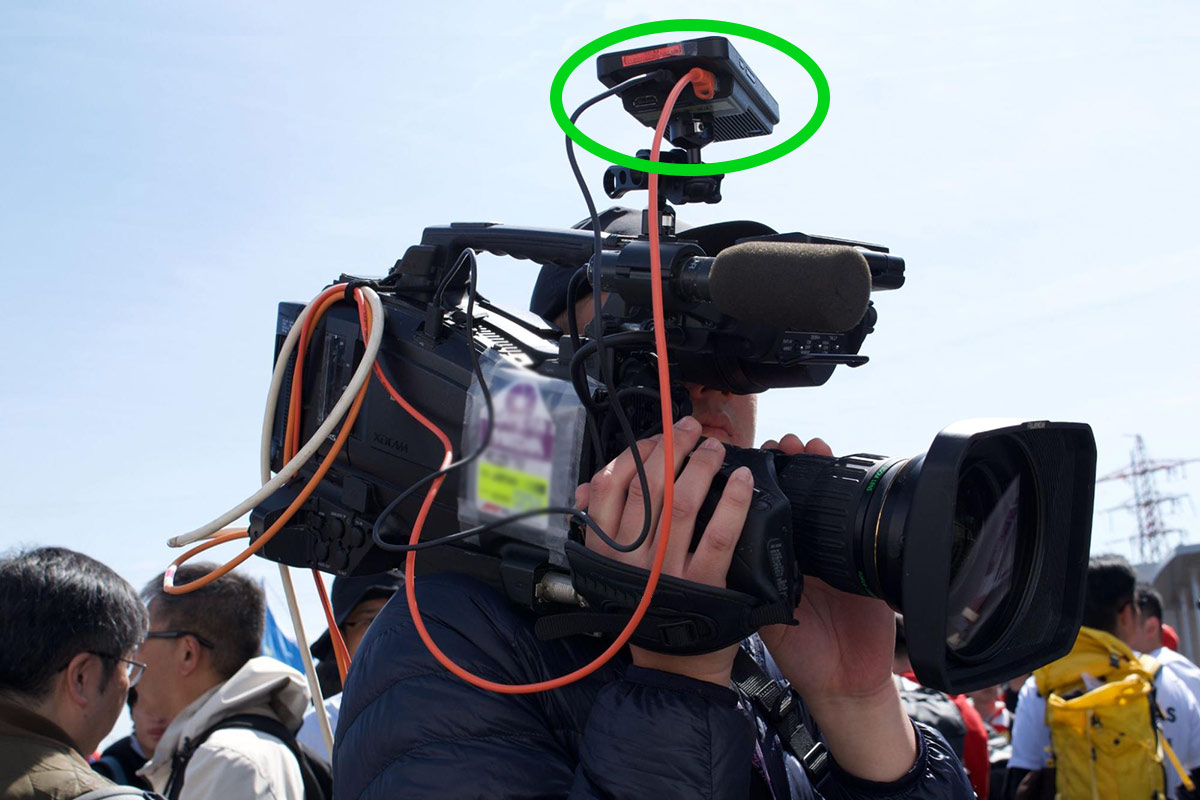
Compact transmitter mounted on a video camera for broadcasting purposes
Dedicated Networks for Smooth Cashless Payments
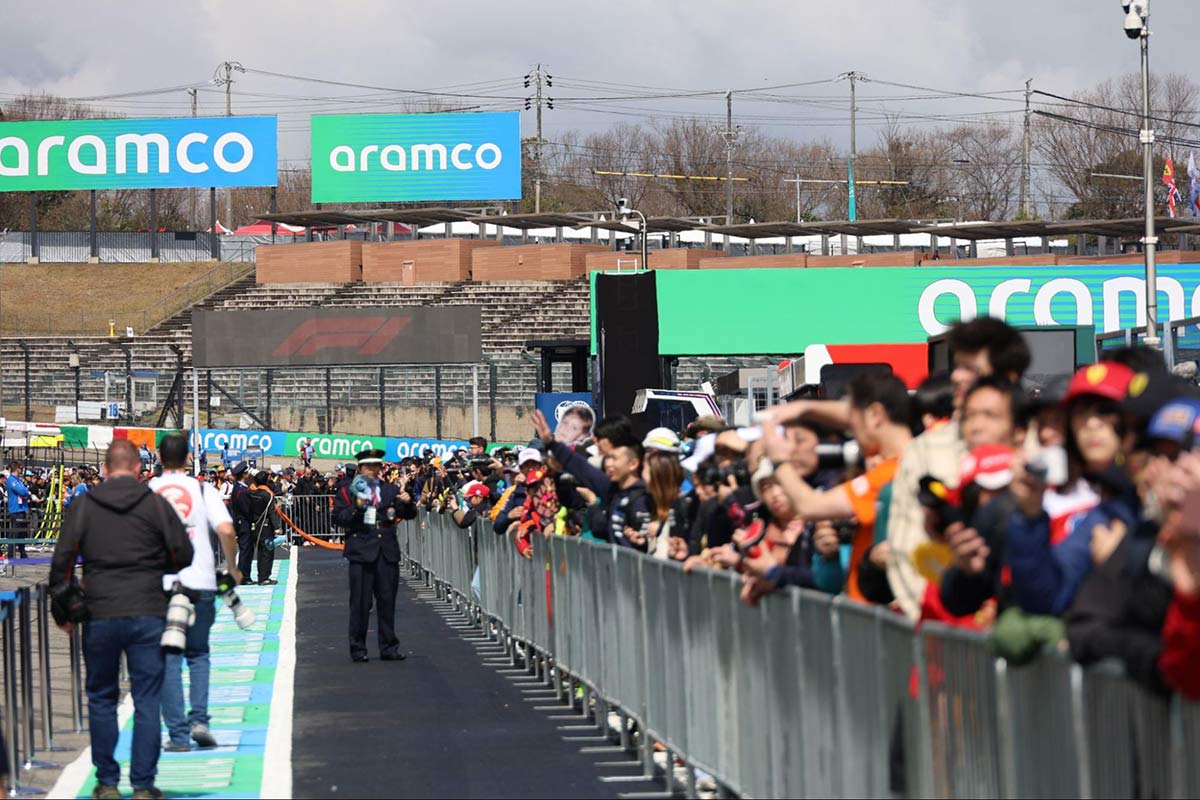
With more than 310,000 spectators in attendance, areas surrounding Suzuka Circuit—including grandstands, official merchandise stores, and the GP SQUARE FANZONE—were packed with visitors.
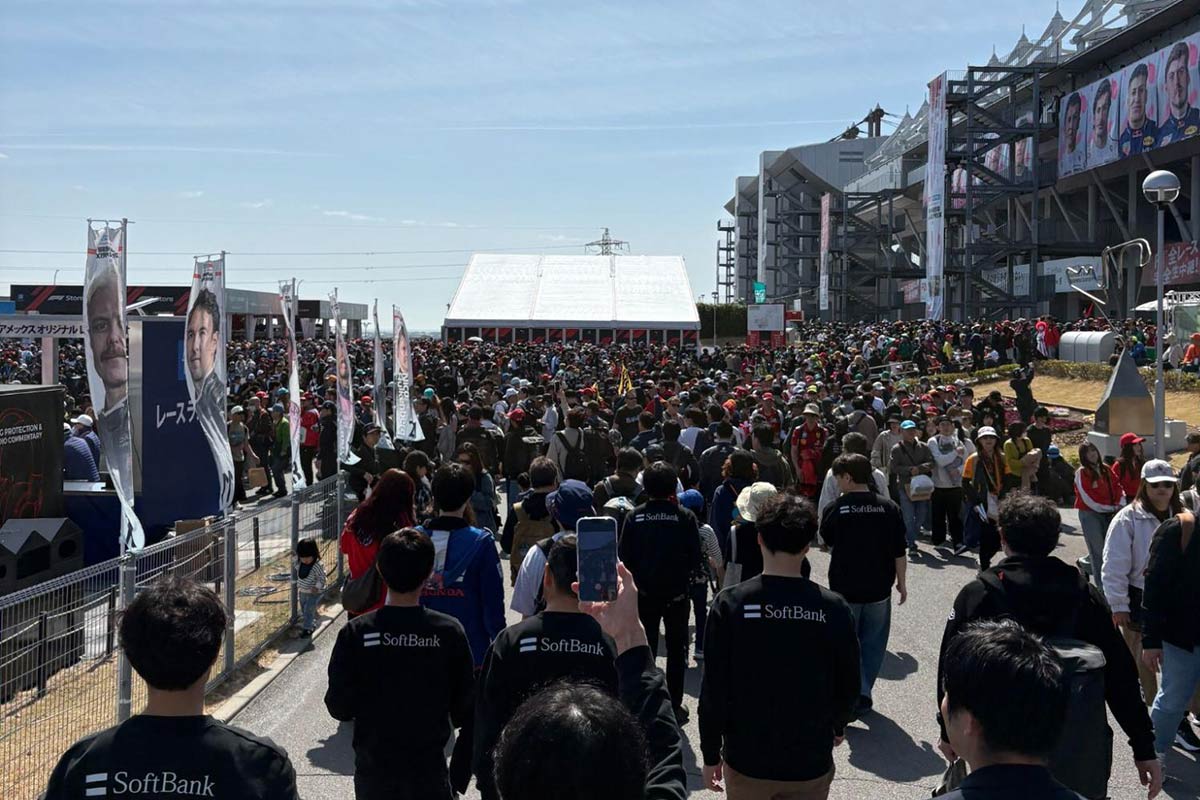
Historically, lunchtime and breaks between racing sessions created major network congestion as large crowds converged on concession stands and retail areas simultaneously.
To address this challenge, SoftBank deployed public Wi-Fi powered by mmWave technology to efficiently offload traffic from SoftBank users. In addition, private 5G terminals dedicated to payment processing were provided to selected concession stand vendors.
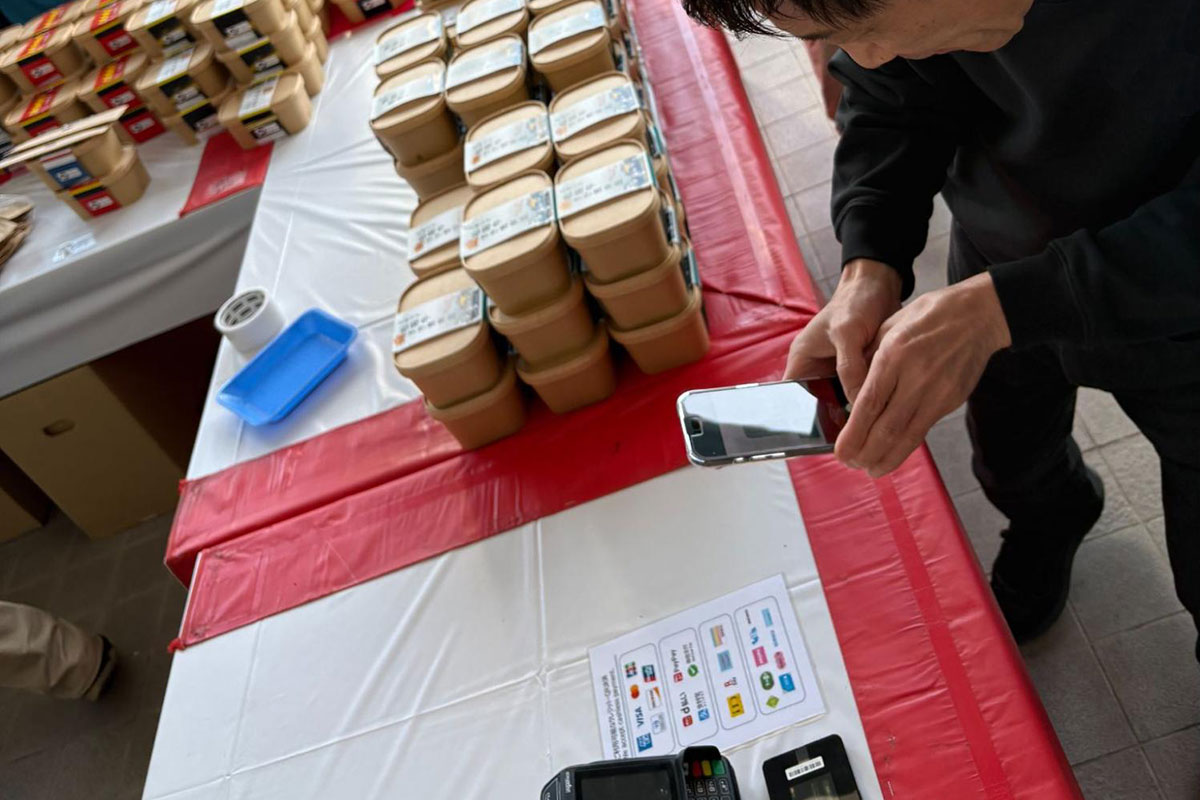
As a result, even during peak periods when bento boxes sold out almost instantly, the dedicated connectivity helped reduce the impact of network congestion on payment processing, allowing visitors to complete transactions smoothly and enjoy the event without unnecessary delays.
Demonstrating immersive XR experiences powered by 5G SA
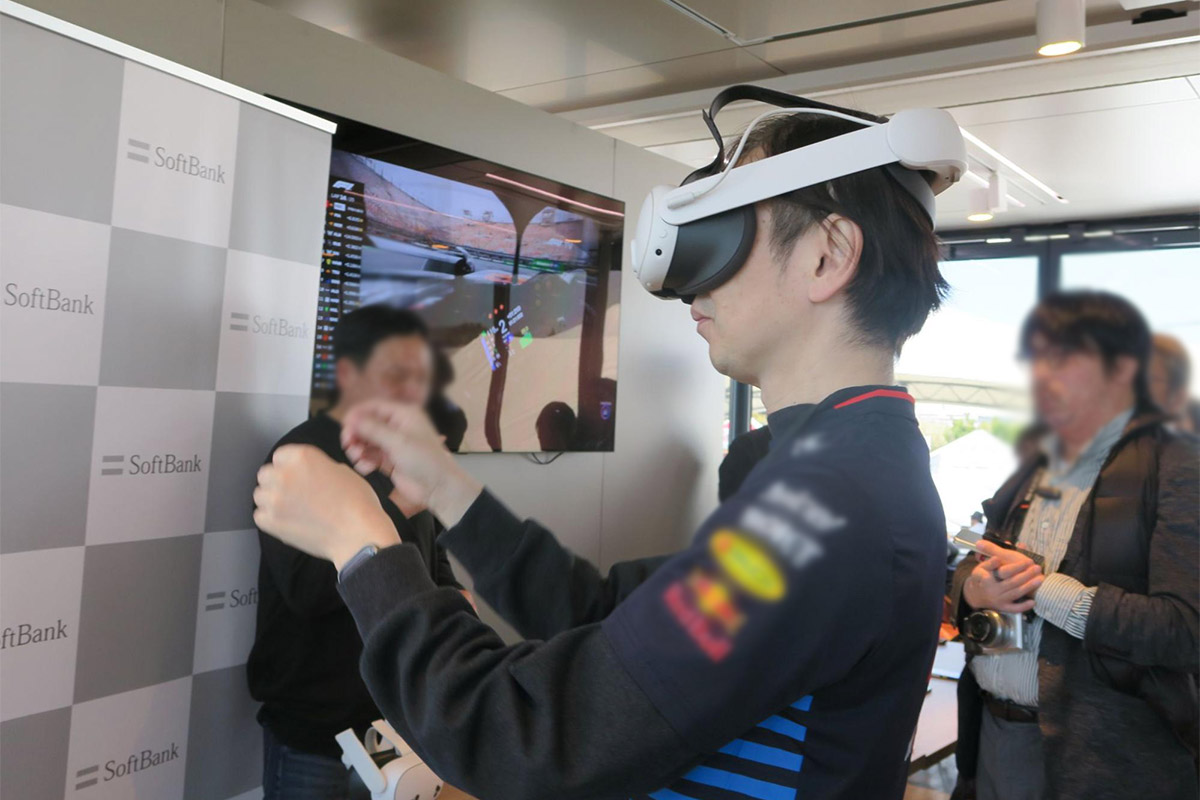
In addition to network enhancements, visitors were able to experience demonstrations showcasing how 5G SA can transform race viewing experiences. Inside a demonstration trailer, attendees were invited to try XR content designed to take full advantage of one of 5G SA's key strengths: ultra-low latency.
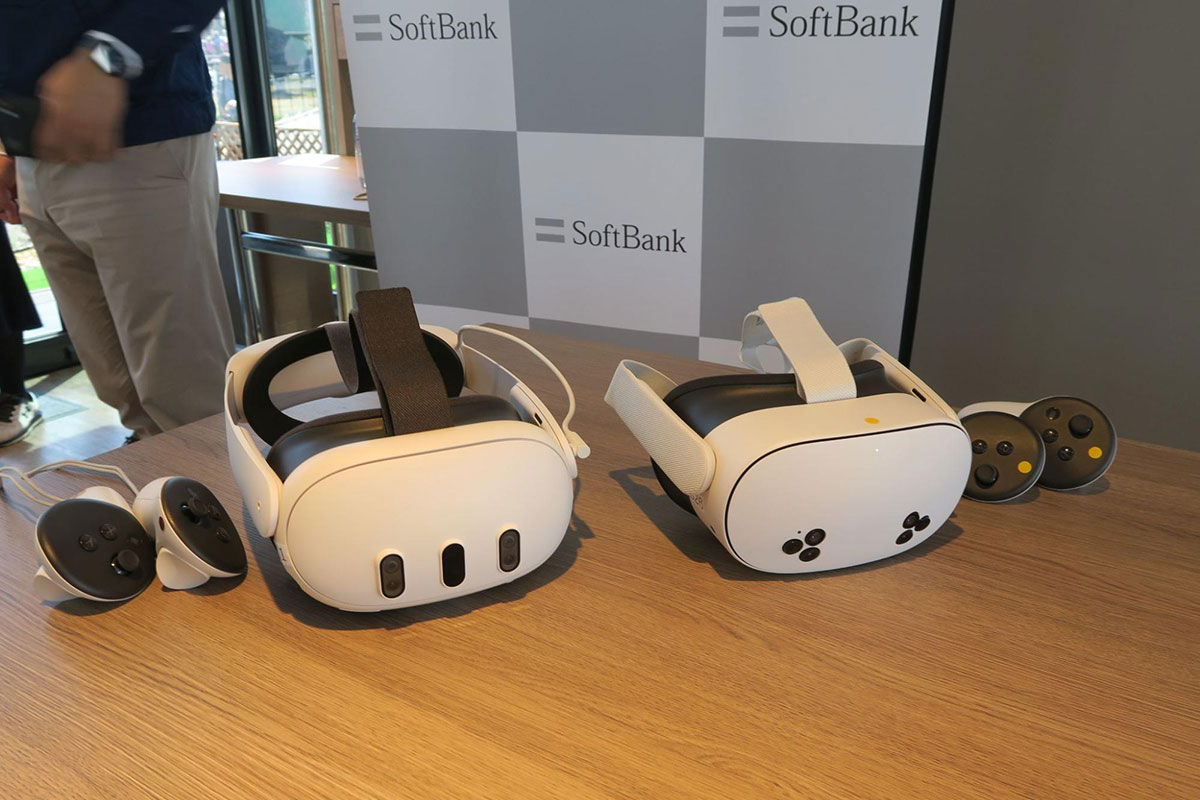
After donning VR headsets, users were instantly transported into the cockpit of an F1 car. The immersive experience recreated the sensation of traveling at speeds of 300 km/h, making participants feel as though they were actually behind the wheel.
The future may even bring “immersive communication,” where AI appears in the form of an F1 driver to explain racing rules and the cars.
Network slicing delivers optimized connectivity for every use case
At the heart of these communications initiatives was network slicing technology.
Network slicing allows a single physical network to be virtually divided into multiple dedicated segments, each optimized for specific applications. Similar to creating dedicated lanes on a highway for different types of vehicles, network slicing enables diverse services like smartphone connectivity, cashless payments, XR experiences and television broadcasting to coexist efficiently on the same infrastructure.
At Suzuka Circuit, five slices were deployed simultaneously:
- General spectators
High-quality 5G SA communications for smooth smartphone usage, even when heavily congested - XR experiences
Ultra-low-latency communications supporting immersive XR content - Cashless payments
Highly reliable communications to support stable payment processing - mmWave-backhauled Wi-Fi (FWA)
High-speed Wi-Fi utilizing mmWave technology for network backhaul - Television broadcasting
High-capacity, high-speed communications to support live video transmissions
Massive MIMO and Real-Time Control: Technologies Behind the Network
Supporting advanced network slicing required significant upgrades to base station equipment. A key component was Massive MIMO (Multiple Input Multiple Output), a base station technology that uses a large number of antennas to process more communications simultaneously, improving performance in congested environments.
SoftBank expanded the network coverage area of its Massive MIMO base stations to more than twice that of the previous year. This was made possible by the latest generation of equipment, which reduced volume and weight by approximately 40%, enabling deployment in locations where installation had previously been difficult.
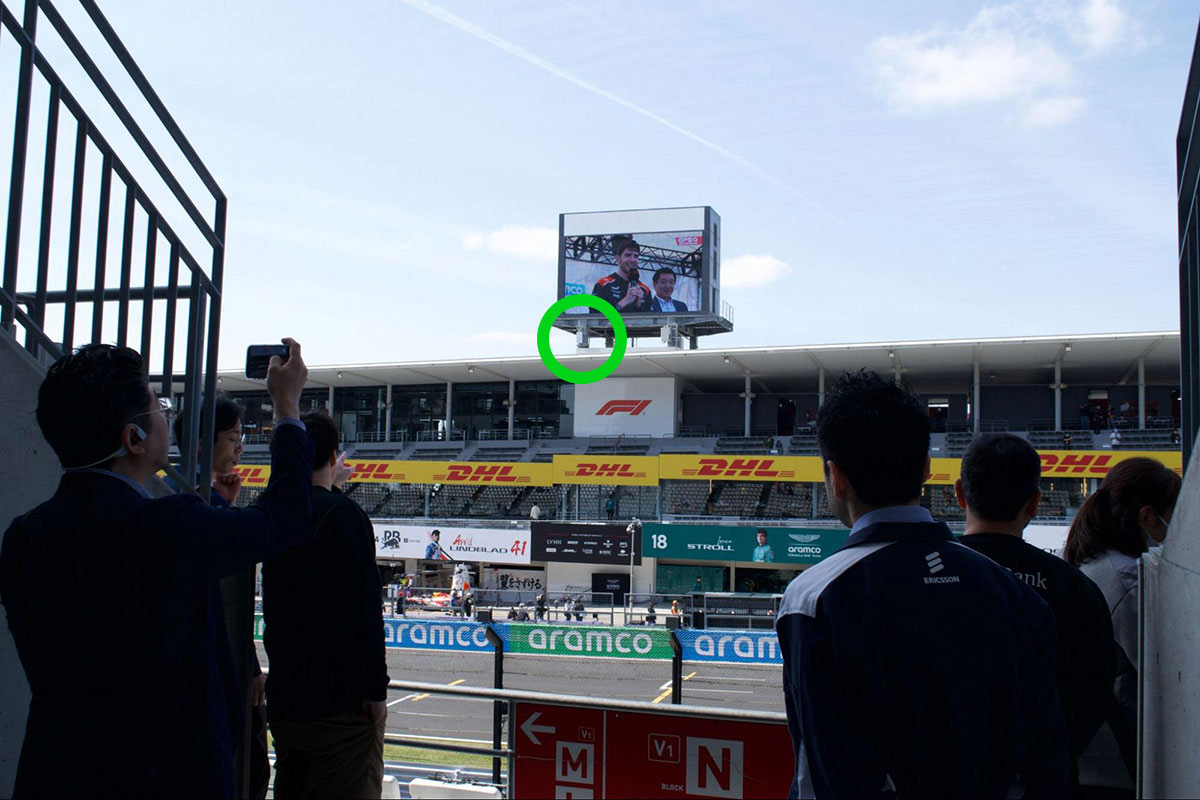
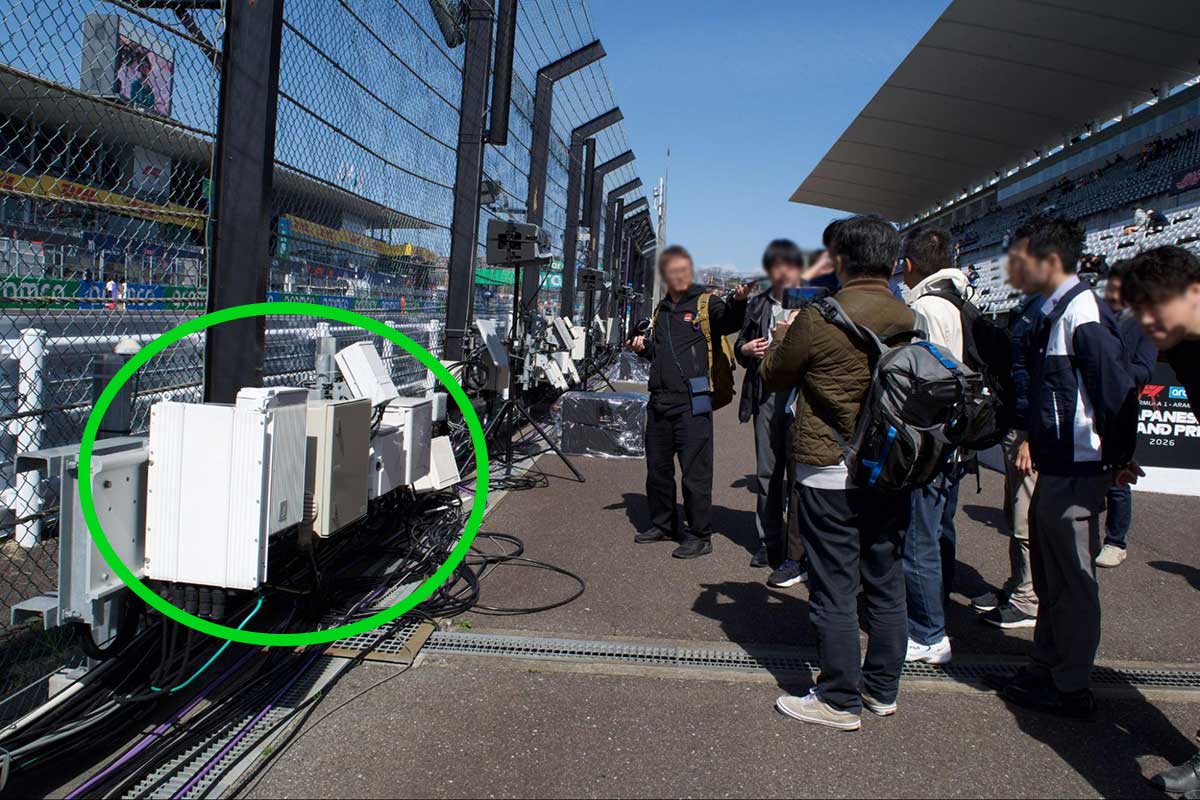
From left: Massive MIMO base station installed on support structure beside the large screen, and mmWave antenna installed near the grandstands
From left: Massive MIMO base station installed on support structure beside the large screen, and mmWave antenna installed near the grandstands
Compared with standard base stations, Massive MIMO significantly increased network capacity. The system also consolidated support for three frequency bands—3.4 GHz, 3.5 GHz and 3.9 GHz—into a single unit.
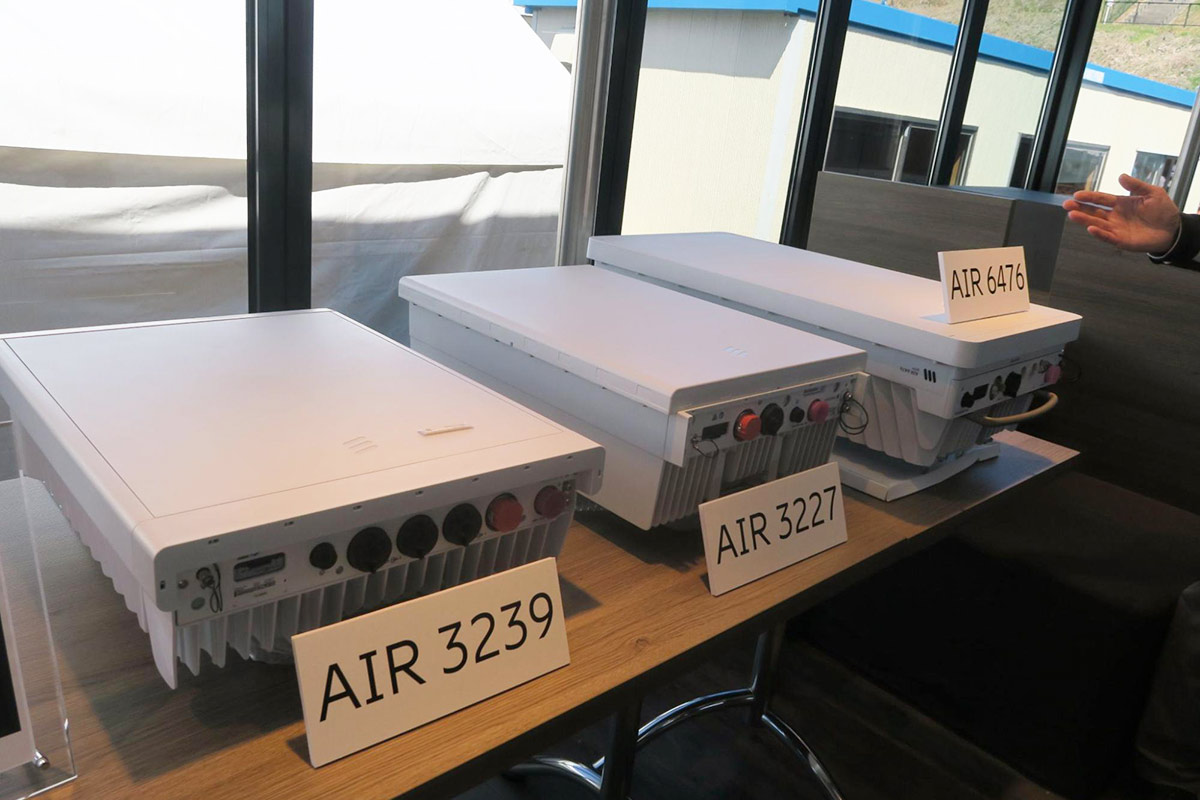
The newly deployed AIR 6476 (far right) consolidates the functionality of the two conventional units shown on the left
As crowd movement and traffic demand changed over the course of the event, SoftBank continuously analyzed network usage and dynamically adjusted capacity allocation for each network slice and application.
Typically, network slicing configurations are reviewed and adjusted approximately every 15 minutes. During the F1 Japanese Grand Prix, however, SoftBank shortened this interval to just one minute and introduced automated resource allocation based on real-time network traffic conditions.
As a result, network throughput improved dramatically compared with the previous year, even during the busiest periods on Saturday and Sunday. According to Ericsson, throughput increased by approximately 14 times for uplink and 4.1 times for downlink on the 5G SA network, while the 5G Non-Standalone (NSA) network recorded improvements of approximately 6.1 times for uplink and 1.4 times for downlink.
Letting fans enjoy the event without thinking about connectivity
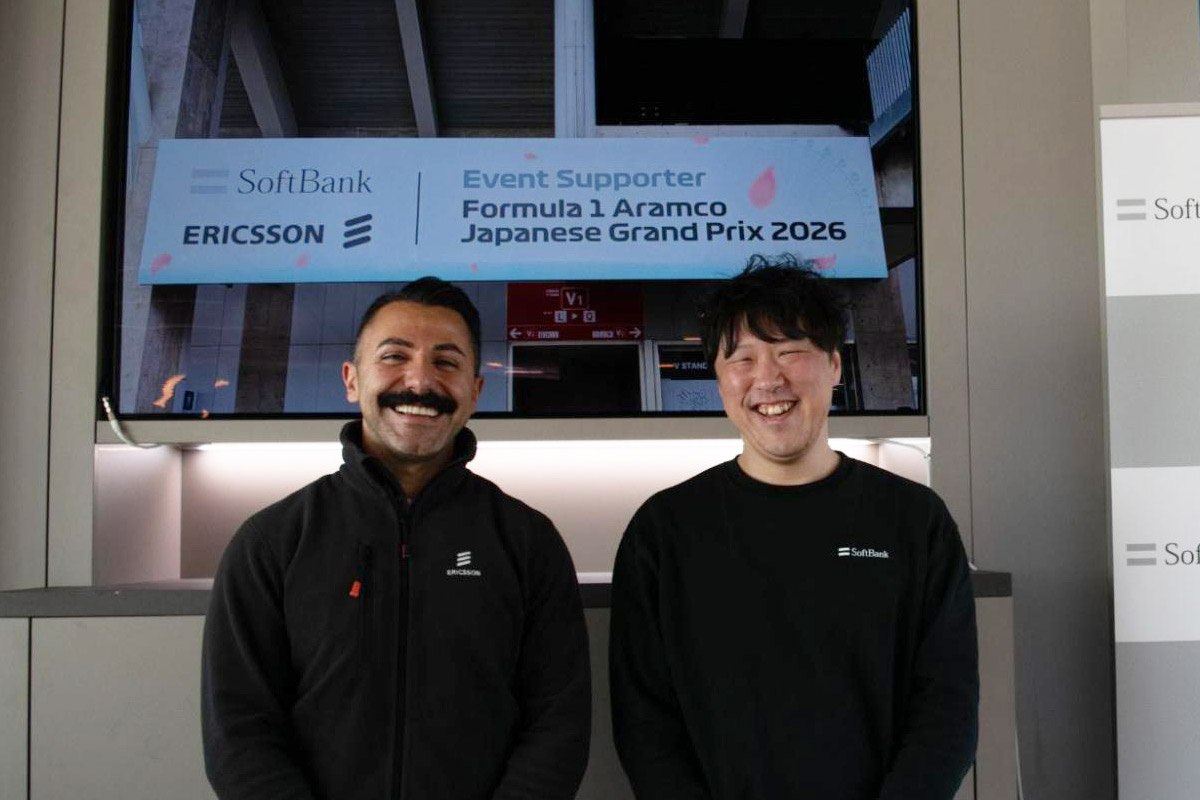
To learn more about the project, SoftBank News spoke with Jawad Manssour, President and Representative Director of Ericsson Japan K.K., and Noriyuki Fujino of SoftBank Corp., who led the initiative.
Jawad Manssour
President and Representative Director
Ericsson Japan K.K.

Noriyuki Fujino
Director, Advanced NTN Development Department
Technology Unit, SoftBank Corp.
What motivated you to take these network initiatives at the F1 Japanese Grand Prix?
Manssour: We wanted to bring the expertise we've gained from enhancing networks at stadiums and event venues around the world to Japan and create new value together with SoftBank. Connectivity has become an essential part of the event experience itself. A dynamic environment like the F1 Japanese Grand Prix, where more than 300,000 people gather over a short period, represents the ultimate challenge for a telecommunications operator—and the perfect stage to demonstrate our technology.
What was the biggest challenge?
Fujino: As content becomes richer every year, data usage per user continues to increase. More fans are watching video streams from their seats while following the race from multiple perspectives, making it difficult enough to handle the sheer volume of demand. On top of that, we needed to use network slicing to deliver different levels of quality for different use cases, which was the most challenging aspect.
Demonstrating that we can maintain a high-quality network while serving more than 300,000 visitors over three days showcased our technical capabilities. The venue was also extremely well suited to the use cases we envision, such as cashless payments and XR experiences, which was another major reason we decided to take on this challenge here.
Manssour: Another challenge is the unique nature of events, where the number of people at a venue changes dramatically once the event ends. Building a network capable of handling these temporary surges while satisfying everyone—from general users to those using high-capacity dedicated applications such as television broadcasting—was a major undertaking.
What value do you believe communications technologies will bring to future events?
Fujino: This project focused on maximizing the core capabilities of 5G SA. Eliminating everyday frustrations—whether it's making smartphones more responsive or enabling payments—ultimately improves overall satisfaction with the event. We hope more people will discover the possibilities enabled by new network initiatives.
Manssour: Our ultimate goal is for visitors to focus entirely on the event itself without ever having to think about connectivity. A major part of the value of this initiative lies in freeing visitors from concerns such as being unable to send photos or worrying about connectivity draining their battery.
In the future, we believe XR glasses could make it possible to overlay real-time information onto the cars right in front of spectators. We also expect this demonstration to become a platform for attracting new partners.
Related News


(Posted on August 27, 2026)
by SoftBank News Editors



