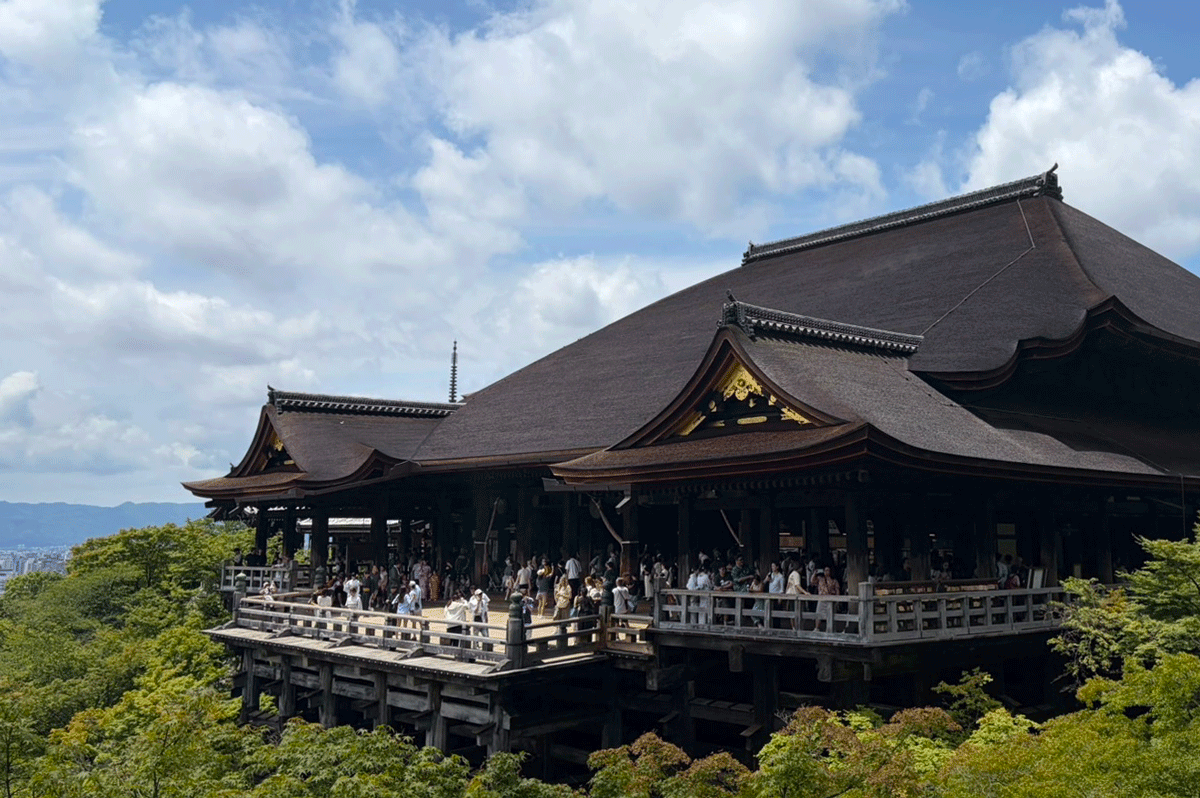
Kiyomizu-dera is one of Kyoto’s most iconic temples and a major destination. It attracts a constant stream of visitors from Japan and around the world, including student groups. Whether sharing photos and videos of the spectacular scenery on social media, or using map apps to explore the surrounding area, smartphone connectivity has become an essential part of the sightseeing experience.
Providing stable connectivity in a place like this, however, is no easy task. Kiyomizu-dera’s location in the hills of Kyoto, the unique structure of its historic buildings and the need to preserve the surrounding landscape all place significant constraints on network infrastructure.
To address these challenges, SoftBank Corp. (TOKYO: 9434) installed a new base station in the Kiyomizu-dera area that began transmitting radio signals in early spring 2026. SoftBank News spoke with the engineers behind the project to learn how they improved connectivity while carefully preserving the integrity of this culturally and historically significant site.
Kyohei Kuroyanagi
Kansai Network Technology Department
Area Construction Division, SoftBank Corp.

Shinichi Ito
Kansai Network Technology Department
Area Construction Division, SoftBank Corp.
Meeting the growing demand for connectivity at one of Kyoto’s most-visited destinations
Kiyomizu-dera is so well known, it is synonymous with Kyoto itself. No matter the season or time of day, the temple grounds and surrounding area are bustling with visitors.
And visitors are doing much more than taking photos of the scenery. They are posting on social media, sharing videos, checking maps and using translation apps. In other words, they expect seamless connectivity wherever they go.
At a unique location like Kiyomizu-dera, however, delivering that seemingly ordinary experience presented an extraordinary challenge.
Kiyomizu-dera attracts large numbers of visitors from Japan and around the world. What kinds of connectivity challenges were you facing?
Kuroyanagi: There’s an enormous amount of network traffic generated on the temple grounds and in the surrounding area. Visitors are increasingly using mobile connectivity while sightseeing, whether it’s to upload photos and videos, livestream, or use map and translation apps.
The terrain also presented a major challenge. Generally speaking, base stations can efficiently provide coverage by transmitting radio signals from elevated locations to surrounding areas below. Kiyomizu-dera itself, however, sits on elevated terrain, making it difficult for base stations located at lower elevations nearby to provide stable coverage all the way up to the temple grounds. Kiyomizu-zaka, the street leading up to the temple, is also a major sightseeing area, so there are very few suitable locations where new base stations can be installed.
As a result, it was difficult to maintain sufficient network quality using existing base stations alone, and data speeds were particularly prone to slowing down around the famous wooden stage known as “Kiyomizu no Butai,” which is built on a cliffside and overlooks the city of Kyoto.
SoftBank had been exploring ways to improve connectivity in the area for many years. But the need to preserve the historic landscape, combined with the difficulty of securing suitable installation sites, made this an extremely challenging area to address.
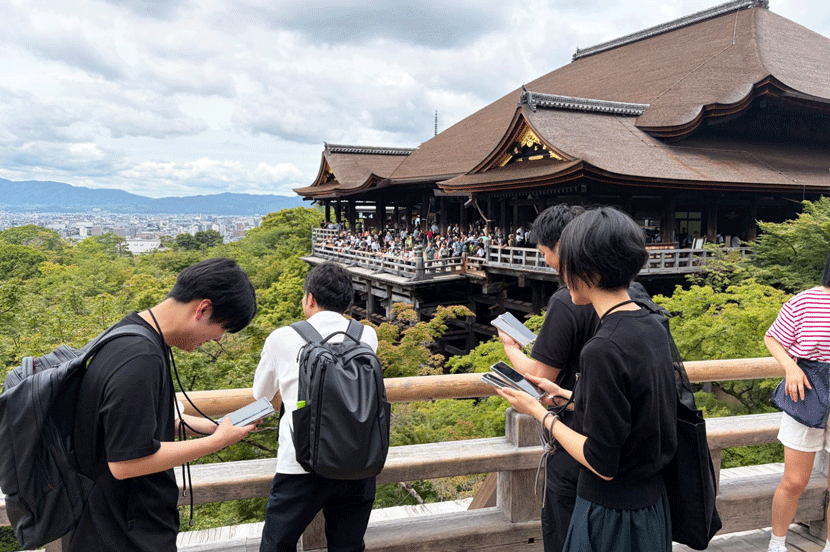
The Kiyomizu-dera area is bustling with visitors
So in addition to the challenging terrain, finding a suitable place for the equipment was another major hurdle, right?
Kuroyanagi: Kyoto City has regulations designed to protect its landscape, and the Kiyomizu-dera area is subject to particularly stringent standards because it lies within designated scenic and aesthetic districts. Any installation therefore needs to be carefully designed to blend in with the surrounding landscape. The area around Kiyomizu-dera is subject to special scrutiny.
We had been exploring the possibility of installing a base station in the Kiyomizu-dera area for many years, but securing an appropriate location was far from easy. We approached the operators of various facilities, but in some cases there wasn’t enough space, while in others concerns about the visual impact prevented the project from moving forward.
This time, however, Kiyomizu-dera recognized the importance of improving connectivity precisely because the area attracts so many visitors, and they agreed to cooperate with us. With great care and attention to detail, we shared the equipment design and installation plans with them in advance. Ultimately, they felt that our proposed approach would sufficiently preserve the surrounding landscape. This allowed us to proceed with the understanding and cooperation of both Kyoto City and Kiyomizu-dera.
Building a base station while preserving a historic landscape
What network measures did you implement?
Ito: We installed a new base station on the Kiyomizu-dera grounds, and it started operating in early spring 2026. Centered on the “Kiyomizu no Butai” wooden stage, it provides coverage over an area extending approximately 200 to 300 meters around it.
Previously, the area around the stage was covered by a base station near the Gojo-Higashiyama area. That base station is capable of transmitting radio signals over a distance of roughly one kilometer. However, there are numerous tourist attractions between it and Kiyomizu-dera, and large numbers of people congregate throughout the area. This placed a heavy load on the existing base station. Visitors weren’t necessarily losing connectivity altogether, but it was difficult to achieve fast data speeds.
With the additional base station, we can now distribute the network traffic generated by visitors around Kiyomizu-dera to the newly installed equipment. This has also helped reduce the load on the surrounding base stations that previously had to provide coverage for the temple area.
Kiyomizu-dera is one of Kyoto’s most popular destinations and attracts huge numbers of visitors. What special measures did you take during construction?
Kuroyanagi: We chose February, when visitor numbers are relatively low, and carried out work such as installing the steel pole at night. We also carefully planned routes for construction vehicles and working hours to minimize the impact on visitors as much as possible.
We also went to great lengths to ensure that the equipment blended in with the landscape. All of the base station equipment was painted in colors matching the surroundings, and covers were placed over the radio units so they would be as inconspicuous as possible from the outside. We also adopted a slimmer installation structure and used more compact equipment, refining the design through extensive internal discussions.
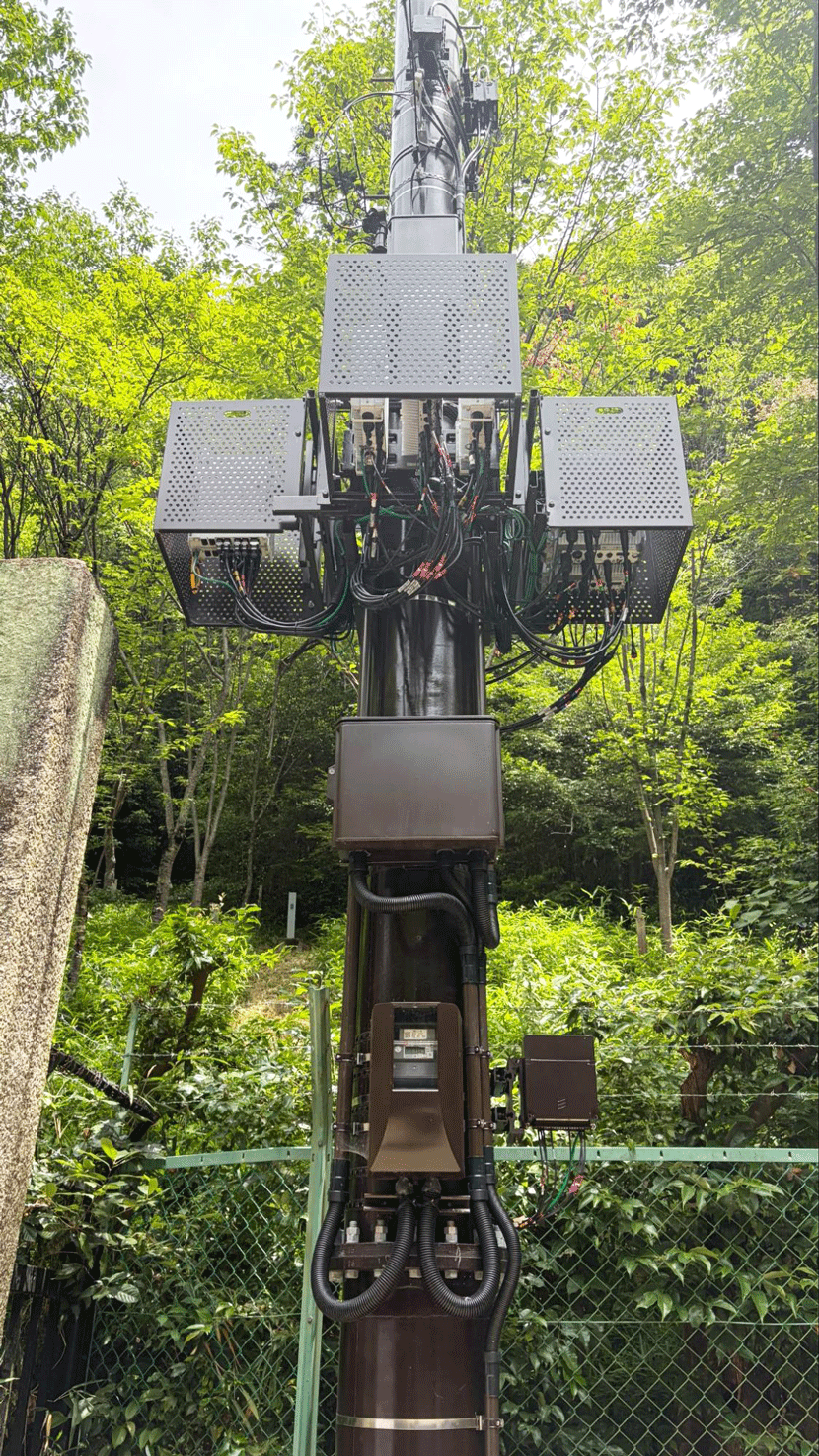
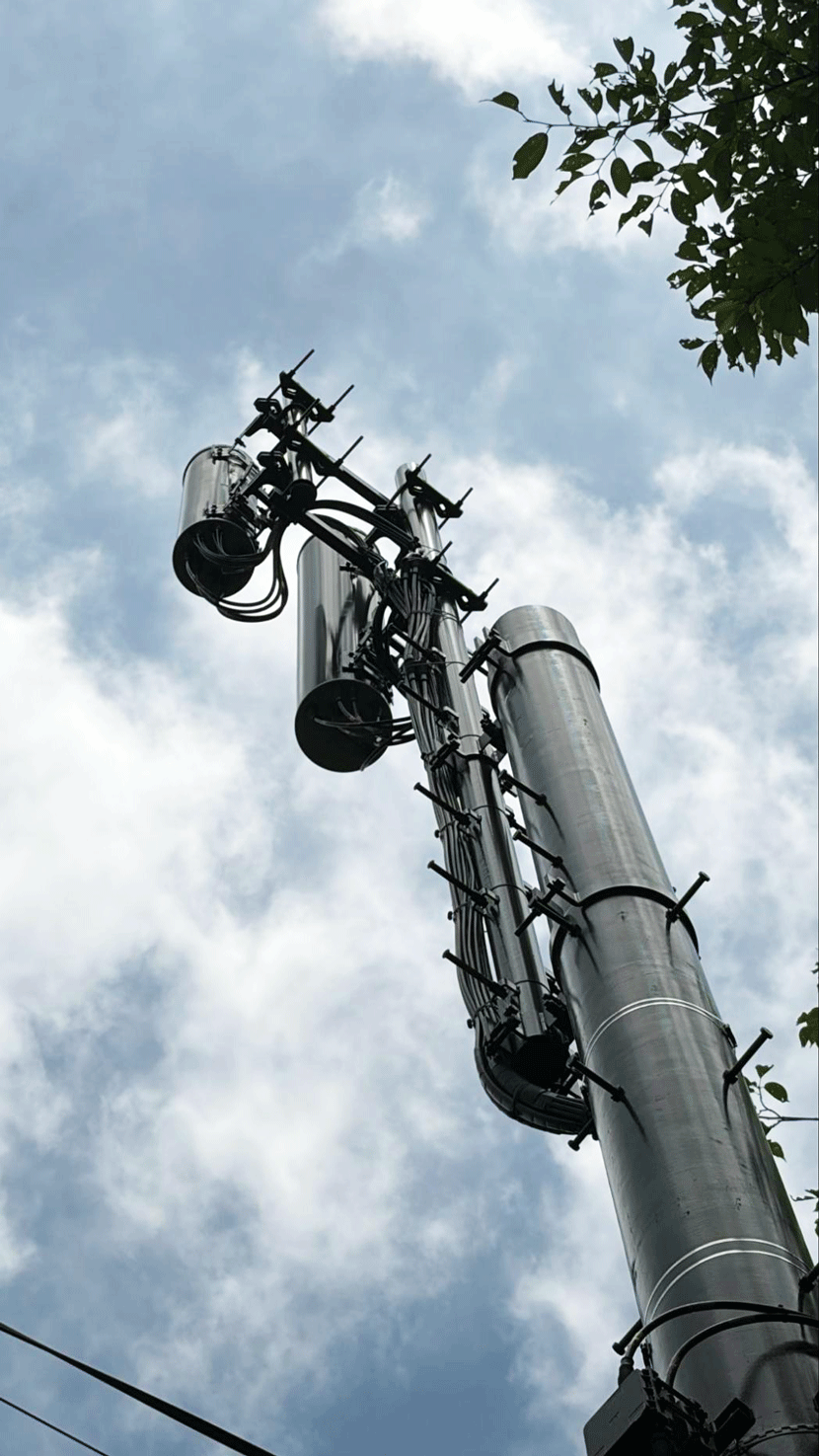
As a result, we were able to build a base station that provides solid coverage around the stage while blending into its surroundings so well that it is barely noticeable from the wooden stage itself. I think we succeeded in achieving both objectives: preserving the historic landscape and providing high-quality connectivity.
How did connectivity change after the new base station began operating?
Kuroyanagi: We saw particularly fast data speeds on Kiyomizu-dera’s wooden stage. Our speed tests confirmed that we achieved connectivity at the highest level of network quality. From a user’s perspective, I think the experience is now comparable to using a smartphone in the center of a major city.
Those are impressive results, even compared with major urban centers. Was this project particularly challenging compared with network measures used at other locations?
Kuroyanagi: Definitely. Kiyomizu-dera is a historically important site, and preserving the landscape is extremely important. That had made it a particularly difficult area to address for many years. With restrictions related to both equipment height and visual impact, one of the biggest challenges was working closely with all the parties involved to identify an appropriate installation site.
Given all of those constraints, being able to install a new base station in the Kiyomizu-dera area was a major achievement for us.
After overcoming a long-standing challenge, you were able to significantly improve connectivity. How do you feel this makes Kiyomizu-dera an even better destination for visitors?
Ito: Kyoto welcomes an enormous number of international visitors. By providing fast and reliable connectivity, we’ve made it easier for people to enjoy sightseeing with their smartphones, whether they’re uploading content to social media, livestreaming, or using map and translation apps. In that sense, I believe better connectivity can help make the overall visitor experience even better.
Kuroyanagi: This was an extremely difficult area to address because of the numerous restrictions on where and how equipment could be installed. As an engineer, it’s incredibly rewarding to have improved connectivity in a place where it was previously difficult for radio signals to reach.
Today, I think SoftBank customers can enjoy much better connectivity around Kiyomizu-dera’s wooden stage. For me, one of the most rewarding parts of this job is being able to build a base station in a place like this so people can use their smartphones comfortably.
Related News


(Posted on September 8, 2026)
by SoftBank News Editors



