
Twenty years have passed since SoftBank Corp. (TOKYO: 9434) entered Japan’s mobile phone market in 2006. Over those two decades, mobile communications have gone through a remarkable transformation.
The “keitai”—feature phones specific to Japan—used mainly for calls and messaging, gave way to smartphones that put the Internet front and center. Today, much of what people do—reading the news, checking the weather, navigating with maps, sharing photos and videos, shopping and making payments—begins with a smartphone.
Looking back, it wasn’t just the device form factors or connection speeds that changed. The Internet moved from the desktop into people’s hands. New smartphone-centric services emerged, transforming daily lives in the process.
So how did the “Mobile Internet Revolution” championed by SoftBank change people’s lives in Japan? SoftBank News looked back at some of the milestones that shaped the current era.
2006-2007: Mobile phones become a gateway to the Internet
Twenty years ago, in 2006, Japan’s mobile phone market was dominated by homegrown “keitai,” including iconic flip phones. In addition to calls and messaging, people could access web services designed for mobile phones, but most people still primarily accessed the Internet with a desktop computer.
Against this backdrop, SoftBank set out to bring the Internet to the mobile phone.
After entering the broadband business in 2001 to expand Internet access in homes across Japan, SoftBank acquired Vodafone K.K., the Japan-based business of Vodafone Group, in 2006 and entered the mobile phone business. This marked the beginning of a new challenge: turning the mobile phone—something people carried with them everywhere—into a more accessible gateway to the Internet.

Press conference announcing the acquisition of Vodafone K.K., March 17, 2006
After entering the market, SoftBank introduced a wide range of innovative mobile phones, including slim handsets and models compatible with “One-Seg,” a mobile terrestrial digital TV broadcasting service.

One initiative that brought the concept of a mobile gateway to the Internet to life was the launch of “Yahoo! Keitai” in October 2006. With the press of a dedicated “Y!” button on their handsets, users could instantly access the “Yahoo! JAPAN” portal, which was synonymous with the Internet in Japan, making it easier and more intuitive for people to go online with their mobile phones.

SoftBank also introduced a series of new ways for customers to pay for mobile phones and services. In September 2006, SoftBank began offering mobile handsets on monthly installment plans. By separating handset costs from communications charges, the new system brought greater transparency to mobile service pricing.
Mobile service plans also changed. In 2007, SoftBank launched the “White Plan,” which, for a basic monthly fee of 980 yen including tax, offered free domestic calls between SoftBank mobile phones during designated hours. The same year also saw the debut of the popular “Shirato Family” series of TV commercials.
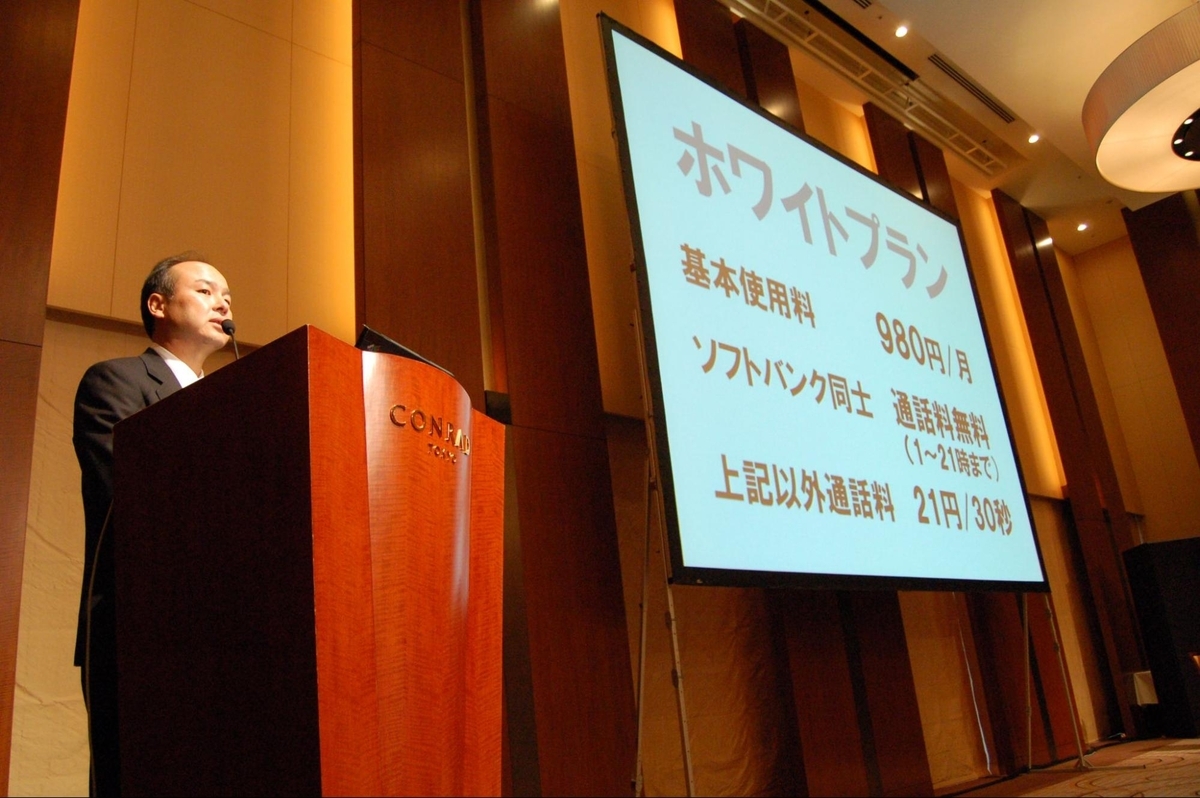
Mobile phones evolved from something people used for calls into an everyday tool for communicating with others and accessing information. Little by little, mobile phones became more integral to daily life.

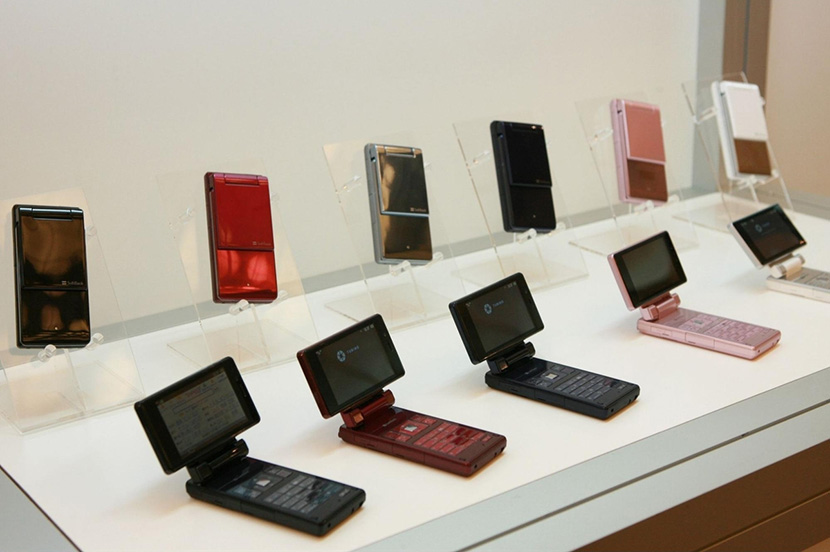

SoftBank unveils mobile phones in an extensive range of colors
2008-2009: Touchscreens transform the mobile Internet experience
In 2008, SoftBank’s efforts to bring mobile phones and the Internet closer together reached a turning point. SoftBank declared the year the beginning of the “Internet Machine” era, envisioning a shift from mobile phones as “voice machines” centered on calls to “data machines” designed for enjoying the Internet.
Devices created with Internet usage in mind began to appear, including the Internet Machine 922SH, which featured a full keyboard so it could be used much like a miniature PC. Then, in July 2008, SoftBank launched the iPhone 3G exclusively in Japan.

Outside the SoftBank Omotesando store on the iPhone 3G launch day
With the iPhone 3G, things that had once required sitting in front of a desktop computer could now easily be done on a device. A large touchscreen made it easy to browse websites, open maps to find directions, listen to music and use apps anywhere.
As the Internet became untethered from a set location, the way people used their time gradually began to change as well.
In 2009, SoftBank declared the beginning of the “Internet Content” era and accelerated efforts to bring a wider variety of mobile content to users. New forms of entertainment designed specifically for the mobile Internet emerged, including the “S-1 Battle,” which allowed users to watch videos of comedy routines on their mobile phones and vote for their favorites. It was a period when the mobile Internet truly began to take root in everyday life.
2010-2013: Photos, videos, maps and more - smartphones open up new possibilities
As smartphones became more widespread, accessing the Internet while on the go became part of everyday life. People began spending more time online and using their devices in more situations, with social media and messaging services such as “LINE” gaining popularity alongside the growing exchange of data-heavy content, such as photos and videos. As a result, the amount of data traveling across mobile networks increased rapidly.
As the mobile Internet became more useful, demand also grew for reliable connectivity outside the home. To support this new way of life, SoftBank announced the “SoftBank Network Enhancement Initiative” in 2010. SoftBank worked to improve its communications network by providing small “femtocell” base stations free of charge for homes and businesses and by expanding its mobile base station infrastructure.

That same year, SoftBank launched its “Global Roaming Data Flat-rate” service, enabling customers to use the Internet on their smartphones while traveling or doing business overseas. The mobile Internet was no longer confined to Japan. SoftBank also began offering the first-generation iPad, giving users a new way to enjoy the Internet and digital content on a screen larger than a smartphone.
The Great East Japan Earthquake underlines the vital role of communications
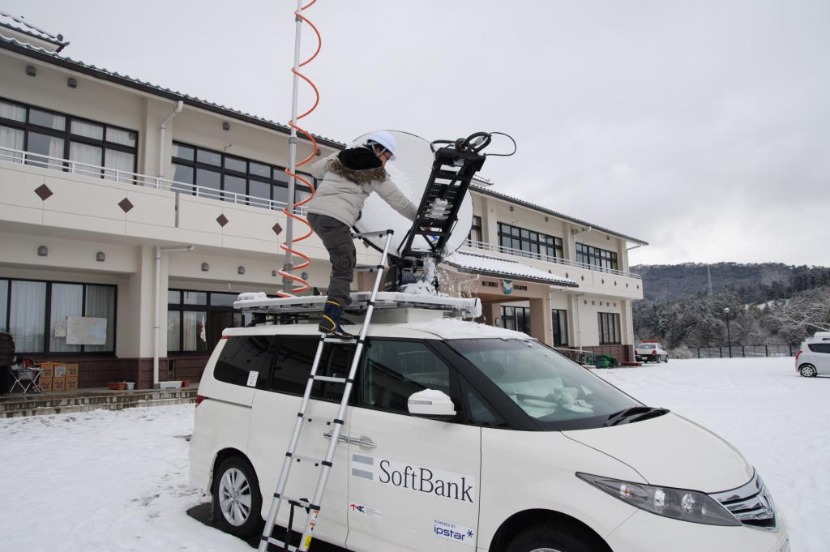
On March 11, 2011, the Great East Japan Earthquake struck Japan. Mobile phones and the Internet, which were increasingly embedded in everyday life as convenient services, took on an even more critical role during the disaster, underscoring the importance of communications in supporting people’s lives. Communications helped people check on family members who were far away, find information needed to evacuate and share updates from disaster-affected areas. SoftBank worked to restore communications networks in affected areas by deploying vehicles with base stations and power supplies, satellite links and other resources.
Lessons from the disaster led to further efforts to strengthen network resilience and disaster response capabilities, including measures to secure backup power for base stations and network centers, and the expansion of equipment used to restore communications during emergencies.

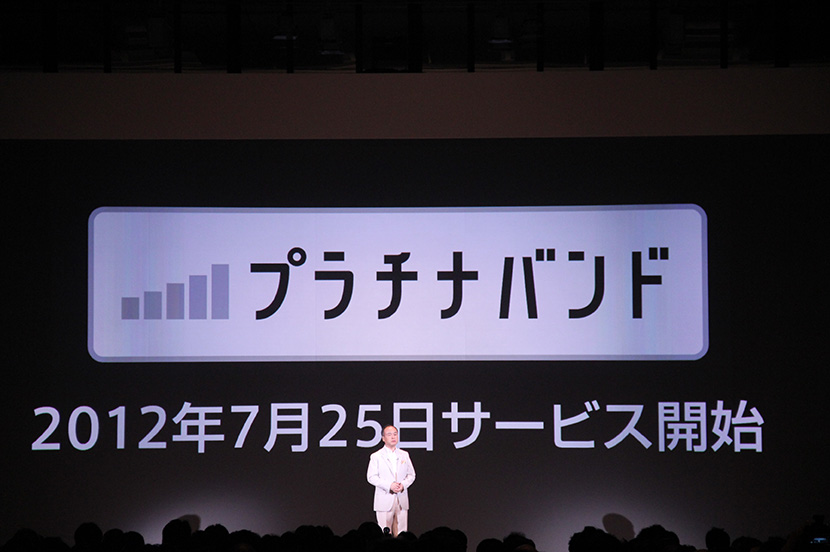
In 2012, SoftBank launched its “SoftBank 4G” service. That same year, it also began offering communications services using the 900 MHz “Platinum Band” of spectrum. Through continued advances in network speed and coverage, SoftBank strengthened its communications infrastructure to support rapidly growing smartphone usage.
2014-2017: Beyond connectivity - smartphones become a tool for everyday life
By the mid-2010s, smartphones were firmly established as an everyday essential.
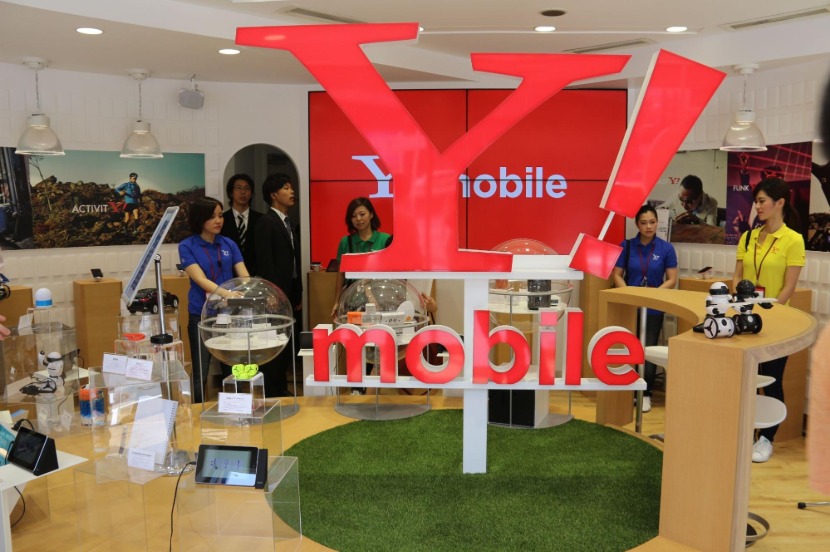
In 2014, a new mobile communications brand, ‘Y!mobile,’ was launched. New ‘SoftBank’ brand plans and communications services tailored to different usage styles also emerged, including “Smartphone Flat-rate” and “America Flat-rate.”
In April 2015, the fixed-line communication companies SoftBank BB Corp. and SoftBank Telecom Corp., as well as Ymobile Corporation, merged with SoftBank Mobile Corp., and in July of the same year, SoftBank Mobile Corp. changed its name to SoftBank Corp. With SoftBank’s mobile and fixed-line communications businesses now operating as a unified company, SoftBank evolved into a provider capable of comprehensively supporting customers’ communications environments—from smartphones to Internet connectivity at home.
By this time, smartphones could do more than ever, better than ever. People could read the news, connect with others on social media, play games and shop. The Internet was beginning to evolve from a place where people simply accessed information into a place where they could take action.
In 2015, SoftBank and Yahoo Japan Corporation (now LY Corporation, referred to below as “Yahoo Japan”) announced the “Mobile E-commerce Revolution.” With “Smart Login,” customers could access services such as “Yahoo! Shopping” on their mobile phones without repeatedly entering their IDs and passwords. A system was also introduced that allowed customers to pay for purchases together with their monthly mobile phone bill.
People could search for something they wanted on their smartphone and buy it right then and there. Online shopping, once largely confined to desktop computers, could now be enjoyed while out on the move.
As watching videos and using social media on smartphones became commonplace, data allowances emerged as a new concern. In 2016, SoftBank launched “GIGA MONSTER,” a service offering large amounts of data for a flat monthly fee at a more affordable price. As users’ lifestyles evolved, SoftBank continued to create an environment where people could use their smartphones more freely without constantly worrying about how much data they were consuming.
2018-2020: Smartphones enable a cashless lifestyle
The role of the smartphone continued to expand.
In 2018, PayPay Corporation, a joint venture between SoftBank and Yahoo Japan, launched its “PayPay” mobile cashless payment service. Smartphones were no longer just a way to search for and purchase products online—they could now be used to pay at physical stores as well. In effect, the smartphone was beginning to take on the role of a wallet.
Soon after its launch, PayPay attracted widespread attention with bold campaigns and promotions, helping QR code payments gain traction as a new way to pay.
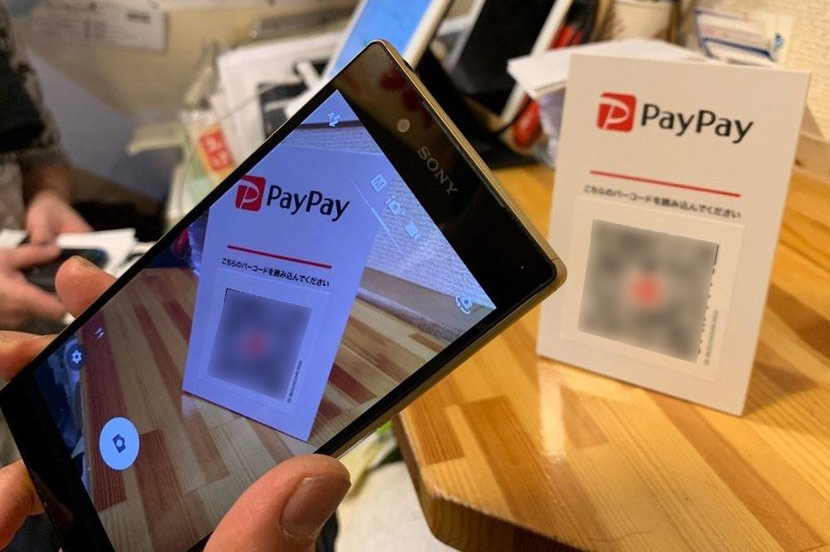
Even the familiar action of taking cash out of a wallet was beginning to be replaced by the smartphone. The mobile Internet was extending beyond information and communication into fundamental everyday activities such as making purchases.
Around this time, SoftBank introduced its “Beyond Carrier” growth strategy. The idea was to use the telecommunications business as a foundation to expand into a wide range of new business fields.
MONET Technologies, established as a joint venture between SoftBank and Toyota Motor Corporation in 2018, advanced initiatives in the mobility field. In 2019, SoftBank made Yahoo Japan a consolidated subsidiary with the aim of strengthening its non-telecommunications businesses and generating synergies.
With the smartphone acting as a hub, services such as shopping, payments and mobility that had previously existed separately were gradually becoming interconnected parts of everyday life. Then, in 2020, “SoftBank 5G” commercial services were launched. With faster speeds and greater network capacity, the possibilities for smartphone content and services expanded even further.
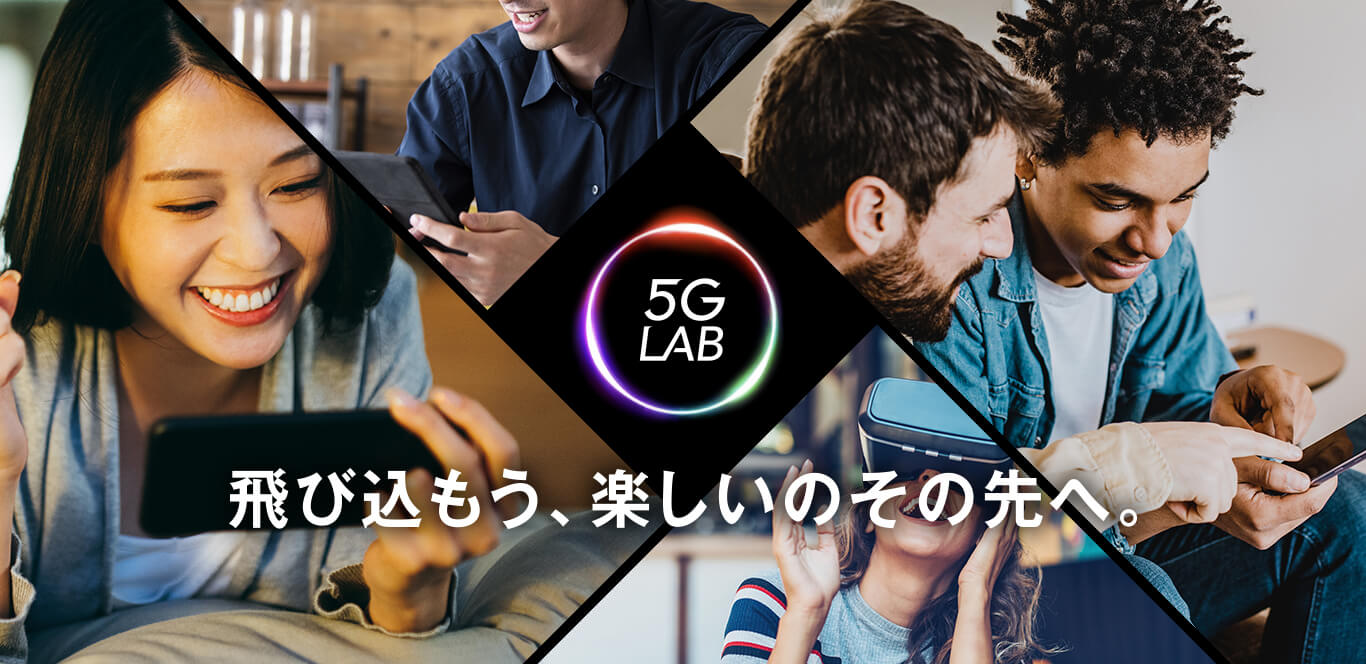
“5G LAB” offered a glimpse of what these new possibilities could look like in practice. Through AR (augmented reality), VR (virtual reality), video that allowed users to enjoy content from different perspectives and other immersive technologies, SoftBank proposed new ways to experience sports and live music events.
2021-2026: Beyond the smartphone - AI starts to transform everyday life
In 2021, SoftBank launched the ‘LINEMO,’ an online-exclusive mobile brand offering customers a new option where everything from choosing a plan to completing various procedures could be done entirely online.
The same year also saw the launch of commercial 5G standalone (5G SA) services, while 3G services were discontinued nationwide in 2024.
Today, another major shift is beginning to reshape the way people interact with digital services: AI.
Until now, using digital services generally meant choosing an app, searching for information and individually operating the device. As generative AI advances, however, it is likely there will be more situations where AI understands what people want to accomplish, finds the information they need and helps them use the right services.
The Mobile Internet Revolution began by making it possible for people to carry the Internet around with them in their pocket. Now, a new chapter is unfolding, one where AI is always close at hand.
Since 2023, SoftBank has been advancing the development of large language models (LLMs) specialized for the Japanese language through its subsidiary SB Intuitions. SoftBank is also developing AI data centers, including one in Tomakomai, Hokkaido, to provide the large-scale computing infrastructure needed to power AI.
In 2024, SoftBank also stepped up development of AITRAS, an integrated AI-RAN solution designed to run AI workloads and Radio Access Network (RAN) workloads on the same infrastructure. As the world moves toward the next era beyond the mobile Internet, SoftBank has started building the infrastructure needed to make AI a part of everyday life.

Image of the Hokkaido Tomakomai AI Data Center, now under construction
Taking connectivity to the next level with a Ubiquitous Network
The mobile Internet has dramatically reduced the limitations on where people can access the Internet. Now, efforts are underway to extend that reach even further.
SoftBank is pursuing what it calls “Ubiquitous Transformation” (UTX), which aims to drive innovation for people and businesses around the world by integrating terrestrial mobile networks with non-terrestrial networks powered by satellites and High Altitude Platform Station (HAPS).
Under its vision for UTX, SoftBank is working to build communications infrastructure that can rapidly restore connectivity during disasters while also enabling smartphones and digital services to be used in places that have traditionally been difficult to cover with terrestrial base stations alone, including mountainous areas and at sea.

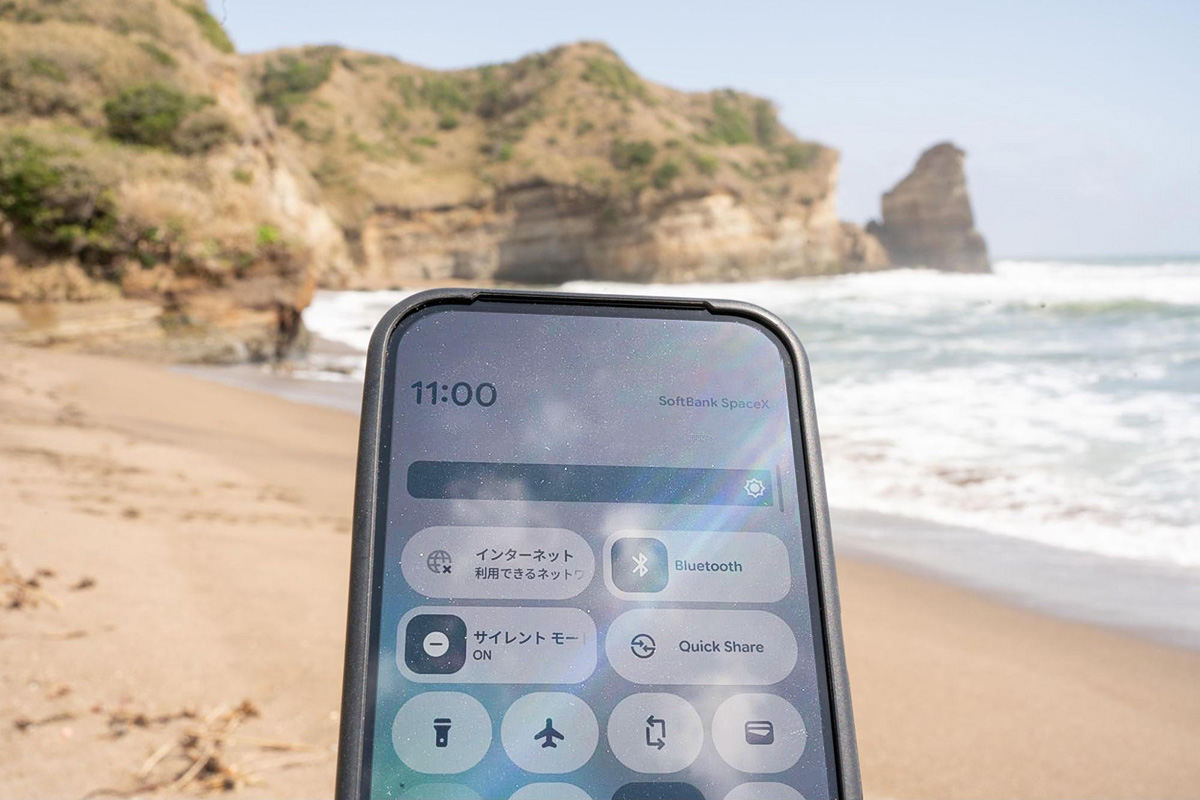
In 2026, SoftBank launched “SoftBank Starlink Direct,” which connects satellites directly to smartphones. Efforts to commercialize stratospheric-based HAPS services are also moving forward.
SoftBank’s goal is to provide an environment where people can access the Internet regardless of where they are. Communications infrastructure that harnesses the sky and space is poised to become another milestone of the Mobile Internet Revolution that supports lifestyles of the future.
Related Articles



(Posted on October 14, 2026)
by SoftBank News Editors



