
Strategy of the Research Institute of Advanced Technology: Taking on the challenge of business creation as a “technology compass”
Vice President & Head
of the Research Institute of Advanced Technology
Ryuji Wakikawa
Q. Please tell us about the background and overview of the Research Institute of Advanced Technology.
We established the Research Institute of Advanced Technology in April 2022. Our Company has long excelled at rapidly launching services that incorporate new technologies. On the other hand, “R&D” was seen as an activity somewhat distant from our business, and we were not always proactive in this area. Because we emphasize speed, we considered acquiring necessary technologies through investment or acquisition of companies that possessed them to be an effective option. However, when our current President & CEO, Junichi Miyakawa, was the CTO (Chief Technology Officer), he set a policy that “R&D is an important investment for the future of the Company and should be pursued
properly.” In response to this policy, the Advanced Technology Division was formed in 2016, and I became its head.
A major achievement during the Advanced Technology Division era was the R&D of “HAPS*1,” or flying base stations. Our Company is a global leader in HAPS R&D, holding the world's largest number of related U.S. patents*2. Additionally, in 2018, anticipating the era of autonomous driving and MaaS (Mobility as a Service), we led the establishment of MONET Technologies Inc., a joint venture with Toyota Motor Corporation, working to create the future of transportation and solve social issues.
Following Miyakawa's appointment as President & CEO in April 2021, the division came under his direct control in April 2022 and was renamed the “Research Institute of Advanced Technology.” Currently, over 70 projects are underway on themes such as “AI-RAN,” “HAPS*1,” autonomous driving, and quantum computers, with more than 150 members engaged.
- [Notes]
-
- *1HAPS (High Altitude Platform Station): generic name for a system that provides telecommunication services over wide areas by operating an unmanned aircraft that continually flies in the stratosphere for extended periods of time like a telecommunication base station.
- *2Using PatSnap's “PatSnap Analytics,” the number of U.S. patents with CPC (Cooperative Patent Classification) H04B7/18504 granted that are still in force is aggregated on a case-by-case basis (as of May 8, 2025).
Q. What are the main differences between SoftBank's Research Institute of Advanced Technology and the research institutes of other companies?
First is the difference in how we set our goals as a research institute. At our Research Institute of Advanced Technology, we set our goal as “bringing technology to market,” in other words, “business creation.” This is a major difference from other companies. I believe it is common for many research institutes at other companies to have hundreds of researchers with doctoral degrees who advance their research based on their own interests, and their performance is evaluated by the papers they publish. Of course, we also value the publication of papers, and we have many cases where our papers are selected as the best at academic conferences, but that is not our top priority.
Second is the motivation we provide to our researchers for business creation. I often tell researchers: “Do not just develop the technology; constantly think about how it will generate revenue. Sketch out a P&L.” Since the researcher is the most knowledgeable and passionate about the technology, we have them build a simple business plan. We believe that if they do not consider the business model and how to bring it to market, the technology will not be commercialized when it is taken to the business divisions.
Third is our personnel composition. The institute is not composed solely of researchers. About half of our members are from business development and legal affairs, which is a feature that allows us to approach things quickly from both technological and business perspectives. If a simple business plan built by a researcher looks promising, these members get involved and begin a detailed
examination. We make the business plan more concrete from the perspectives of market size, potential costs based on detailed amortization, and potential legal risks. Our Company has very strict cost management, so it can be difficult to secure a budget just by saying “Please give us an additional several billion yen for R&D.” However, if we present a concrete business plan and propose that “We expect several tens of billions of yen in revenue, so we would like a business budget of several billion yen,” it becomes easier to get a decision like, “If you have such a solid business plan, you can move forward.”
Fourth is our use of partnerships with other companies. Our policy is not to develop everything in-house; we emphasize improving speed and quality by teaming up with partners. With “business creation” in mind, we carefully examine what our institute should work on as core technology and where we should collaborate with partners, and we strive for speedy R&D.
Q. What is the background that makes such research possible?
The foundation lies in the mindset of our President & CEO, Junichi Miyakawa. Having been a university faculty member and worked on technology development at an automotive manufacturer's research institute and writing papers, I used to think, “If we have good technology, we can make money without making any effort.” However, what I keenly realized after joining this Company is that “Technology is merely a trigger for business success. What is important is the business model you create afterward, how you secure resources, and how you market it.” I learned this through years of working with Miyakawa, thus I am now putting it into practice as the head of the Research Institute of Advanced Technology.
Q. How was the “AI-RAN” concept born?
The “AI-RAN” concept was born as we addressed the massive computation associated with virtualization (realizing with software the processing previously handled by dedicated communications hardware).
In 2019, Rakuten Mobile, Inc. announced that it had achieved virtualization on its network, which became a major topic in the telecommunications industry. Virtualization has significant merits such as flexibly scaling base stations according to mobile traffic demand, cost, and the ease of adding functions via software updates. However, our assessment was that the technology was not yet mature enough to handle the massive traffic by our more than 20 million smartphone subscribers at that time.
So, when we considered how to achieve virtualization in the future, we focused on the GPU. We thought that the technology cultivated in graphics processing and its parallel processing capabilities were well-suited for the massive signal processing of radio units. Initially, the GPU performance was not sufficient, and we could not get the performance we wanted. As we continued through trial and error, NVIDIA announced an AI computing infrastructure equipped with a high-performance GPU, which led to the hypothesis that “If we use this to create a mechanism for signal processing of radio units with AI, we could create something amazing.” This was the catalyst for the birth of the “AI-RAN” concept.
Q. How did you come to work so closely with NVIDIA?
The collaboration with NVIDIA started with a project to provide a cloud gaming service leveraging the ultra-low latency feature of 5G. That project itself did not go very well, but it became an opportunity to deepen our relationship with the company. Also, when I learned that a long-time acquaintance had joined the company to work on initiatives to utilize GPUs for telecommunications, I reached out to explore collaboration.
People often assume, “Masa (Masayoshi Son, Chairman & CEO of SoftBank Group Corp.) has a close relationship with Jensen Huang (Founder, President and CEO, NVIDIA), so it must have started with a word from Masa, right?” But “AI-RAN” is a project that we started from the bottom up. Even when this project was on the verge of being shelved internally, we continued to provide resources in terms of both human resources and funding, and we have been working together for several years, so the relationship of trust between our teams on the ground is very strong.
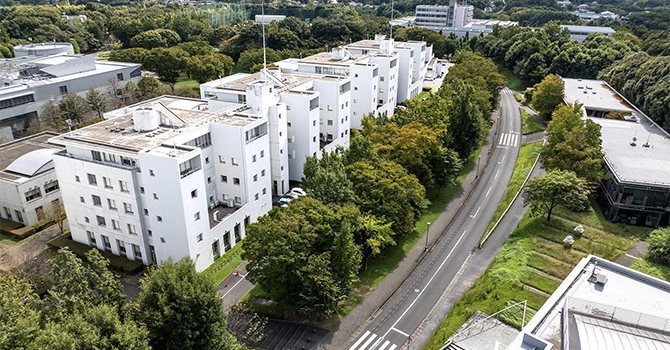
I believe that the reason we were able to reach a position where we can lead globally together with NVIDIA is largely due to our corporate culture. I think other companies also had the idea of using GPUs for telecommunications. However, the speed with which we verified the idea, created an integrated solution product for “AI-RAN” called “AITRAS” for which we have already implemented a demonstration environment in Fujisawa City, Kanagawa Prefecture, was made possible by our culture of emphasizing swift decision-making and investing significant resources in necessary areas.
Demonstration environment for “AI-RAN” implemented in Fujisawa City, Kanagawa Prefecture


Q. Please tell us about “AITRAS” and how you think it will contribute to SoftBank's growth.
“AITRAS,” announced in November 2024, is our original integrated solution that embodies the “AI-RAN” concept we advocate. The diagram below shows the components that make up “AITRAS,” illustrating that we are building it in collaboration with various partner companies. We have Fujitsu Limited for the radio units and RAN L2/L3 software*3, U.S.-based Red Hat Inc. for part of the virtualization platform*4, and NVIDIA for the AI computing infrastructure used as the base hardware. I believe this is a good example of our policy of “not developing everything in-house, but emphasizing improving speed and quality by teaming up with partners.”
On the other hand, to ensure the quality and operational efficiency required of a telecommunications carrier, we are taking the lead in developing the orchestrator that optimizes the entire system and the RAN L1 software*5 based on the NVIDIA AI Aerial platform. This collaboration allows us to achieve carrier-grade (the high quality standards required of a telecommunications carrier) stability and performance, power saving, and efficient allocation of computing resources to AI and RAN in the aforementioned demonstration environment.
There are two main ways the development of this “AITRAS” can contribute to our Company's growth. One is by introducing “AITRAS” into our own mobile network infrastructure, making the mobile network “AI-native.” Not only will the AIs of adjacent base stations be able to collaborate to autonomously provide optimal communication quality, but by turning the mobile network into a small AI data center, we also expect to generate a new revenue source by selling computing resources externally. The other is to sell this “AITRAS” to global telecommunications carriers. In the telecommunications industry, network investment has often been considered from a cost-reduction
perspective, and there have been concerns about the stagnation of innovation in the industry. However, “AITRAS” opens up the possibility of generating new revenue with AI using telecommunications infrastructure. We believe this is a very positive approach that can promote investment and contribute to the sustainable development and revitalization of innovation in the entire telecommunications industry. We are working to introduce it into our own network and sell it to global telecommunications carriers starting in FY2026 at the earliest.
- [Notes]
-
- *3RAN L2/L3 software: software that manages the traffic of data transmission and reception.
- *4Virtualization platform: a system platform for running communication functions on general-purpose servers instead of dedicated hardware.
- *5RAN L1 software: software that handles the most fundamental aspects of communication, such as the physical signal processing for transmitting and receiving radio waves.
The components of “AITRAS” and its development companies

Q. The AI-RAN Alliance was formed in February 2024. What is its aim?
The “AI-RAN” concept has enormous potential, but it would take a long time for SoftBank to realize it alone. Therefore, we launched the AI-RAN Alliance to involve base station vendors and others to unite the entire industry and create a major innovation. In particular, it was important to have major base station vendors such as Nokia (Finland), Ericsson (Sweden), and Samsung (South Korea) participate. As a telecommunications carrier, it is crucial to have base station vendors compete in a healthy manner and to be able to flexibly select the optimal technology. It is very rare for three base station vendors to participate in such an alliance from the outset. However, by appealing to the theme of “AI,” which no one can ignore, and by showing the results of the “AI-RAN” that we had been developing in advance and already running in a demonstration environment, we persuaded them to become Founding Members in just about three months. As a result, when we announced the AI-RAN Alliance at the MWC Barcelona 2024 (one of the world's largest mobile-related exhibitions), we were able to attract a great deal of attention.
Also, the participation of Dr. Alex Jinsung Choi in the AI-RAN Alliance was met with surprise in the industry. He served as the chairman of the O-RAN (Open RAN) Alliance for two years, from June 2022 to June 2024, and has been a leader driving innovation in the industry. I personally persuaded him, saying, “Let's do AI-RAN together.”
More than a year has passed since the announcement of the AI-RAN Alliance, and it has grown to include over 100 member companies and organizations (as of July 2025). We expect this number to continue to increase, and we feel that the ecosystem is expanding rapidly. We have created a wonderful framework, and we want to accelerate the efforts for “AI-RAN” throughout the industry.
Q. Besides “AI-RAN,” what other research areas at the Research Institute of Advanced Technology are you excited about?
Besides “AI-RAN,” I have high expectations for “Free Space Optical Communication” and “quantum computers.”
“Free Space Optical Communication” is a technology that is expected to achieve higher speed, larger capacity, and lower latency communication compared to conventional radio waves. In addition, because the beam is extremely narrow, it is less prone to interference and is difficult to intercept during communication. If this technology is introduced, it will be possible to realize large-capacity communication not only between the ground and low-earth orbit satellites, but also between low-earth orbit satellites and HAPS*1, so I believe we can build a more free and flexible communication network in space.
Regarding “quantum computers,” we are not developing the quantum computers themselves, but rather, we are trying to thoroughly master the quantum computers currently available to deeply understand “what can be done with them.” Having actually used them, I feel that there are still many challenges for practical use, but the speed of technological innovation is extremely fast. Therefore, we are proceeding with R&D with the aim of paving a path to commercialization by around 2030.
Q. Please share your aspirations for SoftBank's mid- to long-term growth.
I believe the role of the Research Institute of Advanced Technology for mid- to long-term growth is to become a “technology compass” that shows the future path for the large ship that is SoftBank. Our Company has a reputation for being very quick at changing course, but as we have grown in size, it takes time to actually change direction. The Research Institute of Advanced Technology will lead the way without fear of mistakes or failures, and I want to guide the way while discerning what lies in the future as we create new technologies ourselves, rather than just following other companies.
I also believe that another role is to produce more “seeds” that will become themes for our future mid- to long-term growth. Like “AI-RAN,” our mission is to find and nurture “seeds” that can become future pillars of our business and pave the way for commercialization, in other words, to “turn 0 into 1.” This will lead to the business units growing “seeds” from “1 to 10, and then to 100.” It is in our Company's DNA to use technology to change conventional wisdom and create new markets, such as the spread of broadband with ADSL technology from 2001 and the first introduction of the iPhone 3G in Japan in 2008. By continuously creating new business seeds from this institute and leading their widespread practical deployment, we aim to constantly provide new value to society and become a driving force for continued growth over the mid- to long-term.


