Contents
- Sep 08, 2026 Update
Special Feature on HAPS
#HAPS
What is HAPS?
High Altitude Platform Station (HAPS) is a communications platform that uses uncrewed aircraft operating in the stratosphere at an altitude of approximately 20 km as airborne base stations to provide wide-area mobile connectivity. By using the same radio frequencies as terrestrial mobile networks, HAPS can provide direct connectivity to existing smartphones and other devices without requiring dedicated terminals.
SoftBank is advancing research and development in aircraft, communications and flight operation technologies, as well as regulatory frameworks, toward the commercialization of HAPS.
1. Introduction to SoftBank's HAPS
High Altitude Platform Station (HAPS) is an innovative technology that uses uncrewed aircraft positioned in the stratosphere, approximately 20 km above the Earth's surface, to provide wide-area communication networks. Unlike satellite phones, HAPS uses the same radio waves as ground-based stations but from a closer distance. This allows for high-speed, stable communication to existing smartphones without the need for specialized devices. As a result, HAPS is gaining attention as a new communication method for areas with insufficient ground infrastructure and as an emergency communication system during disasters.
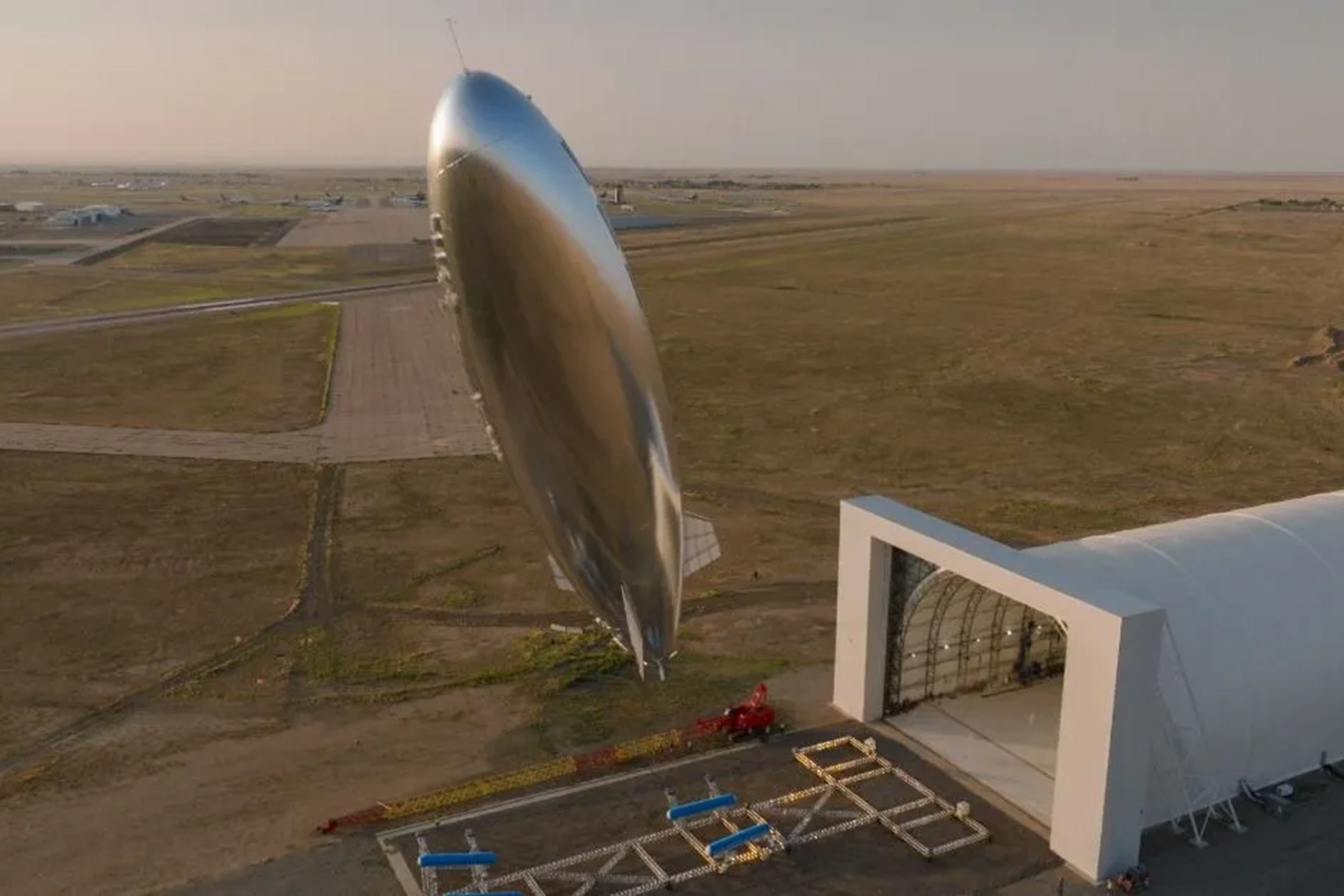
In addition, we successfully provided trial services in preparation for the commercialization of HAPS in Japan using Sceye, Inc.'s LTA (Lighter Than Air)-type*1 High Altitude Platform Station (HAPS). This marked the first successful communications test in Japan using a HAPS operating in Japanese airspace.*2
*1:An LTA (Lighter Than Air)-type HAPS is a lighter-than-air platform that uses buoyancy to remain aloft.
*2:This marks the first successful communications test in Japan between a HAPS and smartphones, as well as between a HAPS and drones. Based on publicly available information as of August 23, 2026 (according to SoftBank research).


SoftBank has been at the forefront of HAPS research and development since 2017, aiming for its early realization. At the Research Institute of Advanced Technology, we are working on various aspects, including aircraft development, component technologies such as motors and batteries, and research on energy efficiency and stratospheric meteorology.


SoftBank
High Altitude Platform Station “HAPS”
#HAPS

Feb 22, 2023
Blog
Toward the Early Realization of Flying Base Stations “HAPS
#HAPS
Sep 03, 2026
Press Release
SoftBank Corp. Achieves Japan's First HAPS Trial Service in Preparation for Commercialization
#HAPS
2. Key Technologies for HAPS
Our HAPS research and development focuses on four main areas:

a) Aircraft Technology
We are developing robust aircraft that can withstand the stratospheric environment while achieving large-scale lightweight designs. This includes the development and improvement of various components such as motors and solar batteries.

Aug 10, 2023
Blog
Development Steps of HAPS Aircraft: Flight Test of Sub-scale Model Aircraft
#HAPS

Jun 27, 2023
Blog
Exploring New Technological Frontiers with Stratospheric Motors
#HAPS

Nov 20, 2023
Blog
The Challenge of Ultra-Lightweight Solar Modules for HAPS
#HAPS

Jun 11,2024
Blog
High-Precision Power Generation Simulation for Solar-Powered HAPS
#HAPS

Nov 01, 2023
Blog
Exploring HAPS' Long-Duration Flight from an Energy Perspective
#HAPS
High-performance batteries are crucial for HAPS operations. SoftBank is also working on developing next-generation batteries with long life and high energy density.

Feb 22, 2023
Blog
SoftBank’s Next-Generation Battery Development
#Next-Generation Battery

Aug 24, 2023
Blog
Successfully Developed All-Solid-State Batteries with High Specific Energy Density - Achieving Specific Energy Density of 300Wh/kg -
#Next-Generation Battery

Nov 20, 2023
Blog
Improvement of Safety by Next-generations Resin Film
#Next-Generation Battery

Aug 07, 2023
Blog
Toward the Establishment of Evaluation Methods for Lithium Metal Batteries for HAPS ~ Charging / Discharging Test and Safety Test in Stratospheric Conditions ~
#HAPS, #Next-Generation Battery

Jul 02, 2024
Blog
Achieving Specific Energy of 350 Wh/kg in All-solid-state Battery: Homogenization Technology of Solid Electrolyte
#HAPS, #Next-Generation Battery
b) Communication Technology
We are developing communication technologies to provide stable services from HAPS. This includes feeder links connecting ground antennas and base stations, service links for providing services, and the utilization of cutting-edge technologies like optical wireless communication.

Dec 06, 2023
Blog
Unlocking the Potential of HAPS with Laser Communication Technology
#HAPS, #Next-Generation Battery
c) Operational Technology
Developing operational technology to fly the aircraft in the stratosphere and maintain stable operations over extended periods is essential. We are also conducting meteorological research to understand the stratospheric environment for safe operations.

Dec 06, 2023
Blog
The Future of HAPS Fleet Operations Ensuring Flight Safety
#HAPS

Oct 16, 2023
Blog
The Role of Aviation Meteorology in Achieving HAPS Flight
#HAPS
d) Regulatory Framework
As HAPS is an innovative approach to delivering communication from large unmanned aircraft in the stratosphere, existing aviation rules are not sufficient. Therefore, we are also promoting the development of new aviation regulations for the commercial deployment of HAPS.

Dec 28, 2023
Blog
SoftBank Takes on the Challenge! Strategy for Establishing a HAPS Aviation System
#HAPS
3. The HAPS Alliance
The HAPS Alliance is an international collaborative organization aimed at promoting the adoption and commercialization of HAPS technology. As a founding member of this alliance, SoftBank collaborates with world-leading companies in the telecommunications, technology, and aviation industries. Together with other member companies, we strive to foster and grow the HAPS market.Through the HAPS Alliance, we are strengthening global partnerships and working towards the widespread adoption of HAPS technology around the world.


HAPS Alliance
At the Research Institute of Advanced Technology, we are engaged in many technological fields beyond those mentioned above. We will continue to promote research and development towards the realization of HAPS, contributing to the development of society.
FAQ of HAPS
A.
HAPS (High Altitude Platform Station) is a communications platform that uses uncrewed aircraft operating in the stratosphere at an altitude of approximately 20 km to provide wide-area mobile connectivity from the sky. Often referred to as a “flying base station,” HAPS is expected to extend connectivity to areas where terrestrial communications infrastructure is limited or unavailable, and to provide an alternative means of communication when terrestrial networks are disrupted by natural disasters or other emergencies.
A.
One of the key characteristics of HAPS is its relatively close proximity to the ground. Operating in the stratosphere at approximately 20 km above the Earth’s surface, HAPS can use the same radio frequencies as terrestrial mobile networks to provide high-speed, stable connectivity directly to existing smartphones and other devices without requiring dedicated terminals.
A.
SoftBank is targeting the launch of commercial HAPS services in Japan from 2027 onward. In August 2026, SoftBank successfully conducted a HAPS trial service off Cape Muroto in Kochi Prefecture, demonstrating stable voice calls and high-capacity data communications between a HAPS operating in the stratosphere and smartphones on the ground. SoftBank will use the flight, operational and communications data and insights gained from the trial to further develop operational frameworks and improve communications quality toward commercial deployment.
A.
SoftBank has been conducting HAPS research and development since 2017, advancing a broad range of technologies required for commercial deployment, including aircraft, communications and flight operation technologies, as well as regulatory frameworks. In August 2026, SoftBank successfully completed a HAPS trial service in Japan that demonstrated not only direct communications with smartphones, but also HAPS-to-drone communications and HAPS-enabled edge computing. Building on these achievements, SoftBank is working toward the commercialization of HAPS services in Japan from 2027 onward.