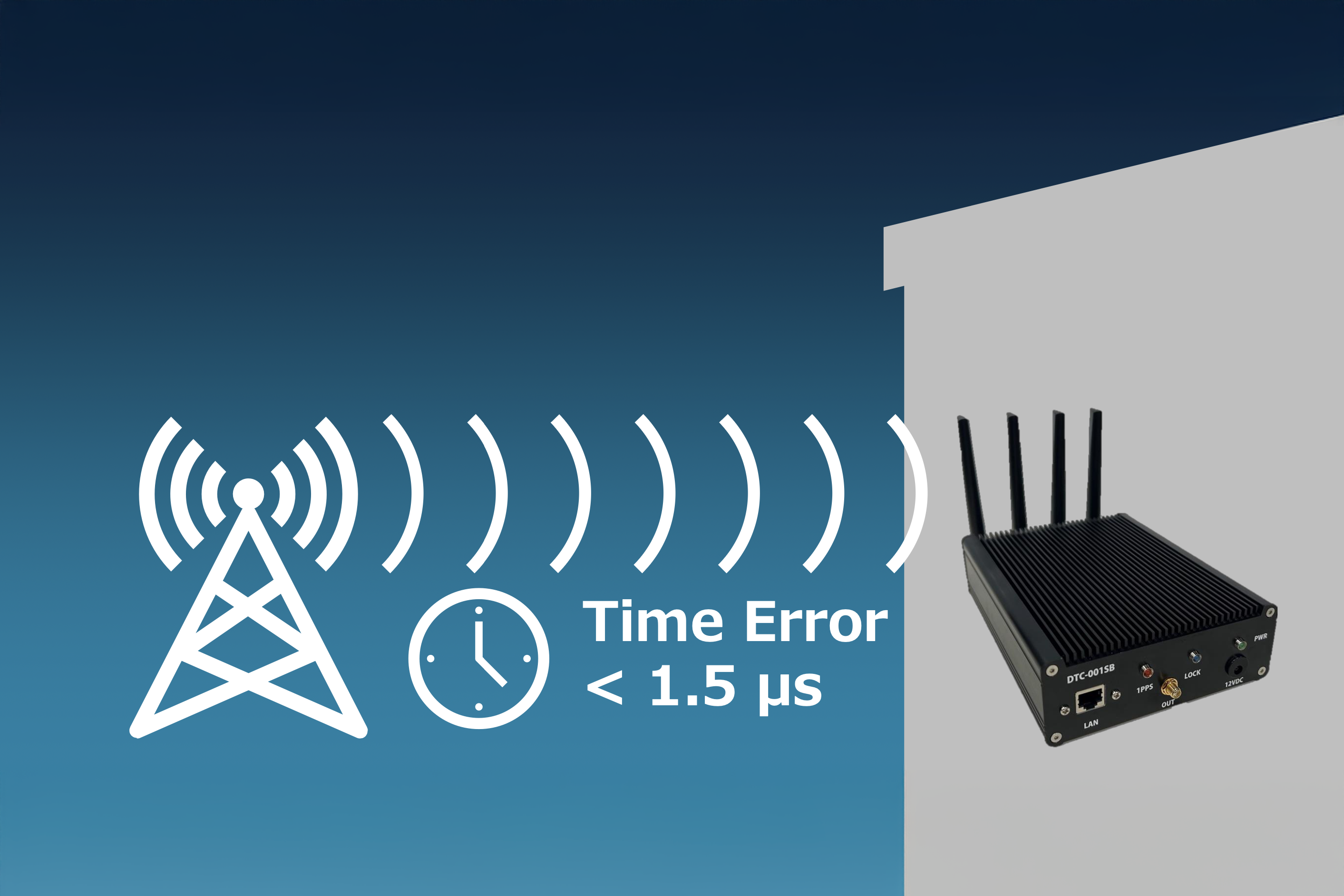
- 01.The Importance of Time Synchronization
- 02.Conventional Time Synchronization Technologies and Their Challenges
- 03.Time Sync with 5G SIB9 - Achieving Microsecond Accuracy Over the Air
- 04.Real-Device Validation on a Campus Testbed
- 05.Use-Case Demonstration - As a Time Source for Indoor Local 5G
- 06.Looking Ahead: Realizing Timing as a Service (TaaS)
1. The Importance of Time Synchronization
In our daily lives, clocks are indispensable. We schedule our movements to make it to meetings on time, and we record dates and times on slips and reports-virtually all daily activities are anchored in “time.”
If those clocks are inaccurate, we could be late even if we move quickly, or we might arrive too early and end up waiting for the meeting room to open. If recorded times are inaccurate, consolidating data from multiple people can become inconsistent and confusing.
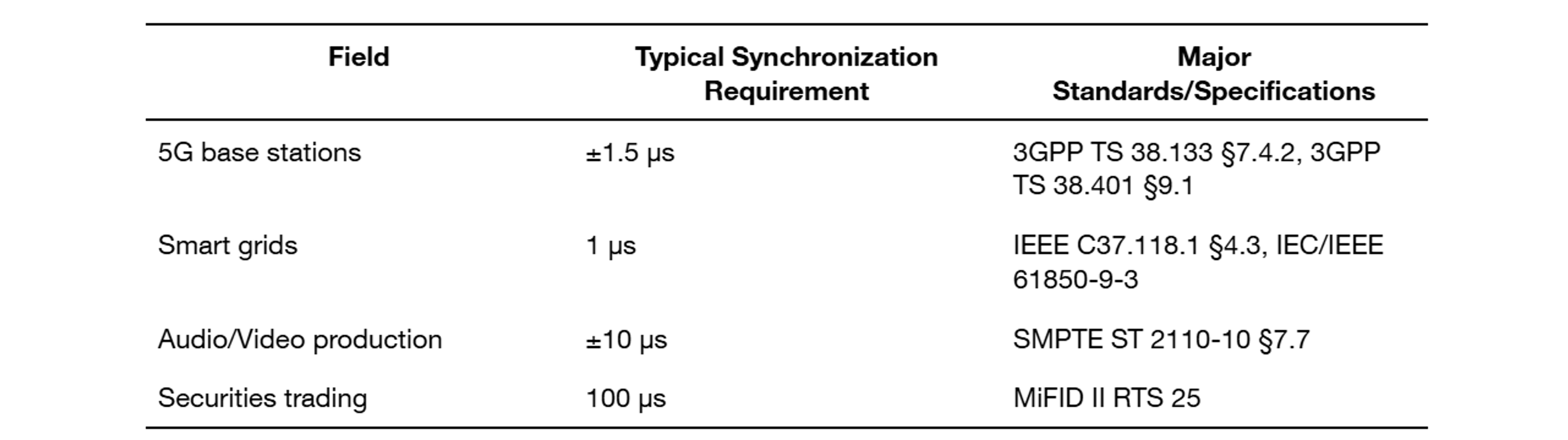
“Accurate timekeeping” is equally important in networked systems. In particular, the following fields demand high-accuracy time synchronization at the microsecond level.
Moreover, with the broader use of AI in IIoT (Industrial Internet of Things) and CPS (Cyber-Physical Systems), sub-millisecond synchronization is becoming increasingly important. Expected benefits include improved AI accuracy via timestamp alignment for multivariate time-series data in sensor fusion, more efficient cooperative control among multiple robots using physical AI, and applications in task management, log analysis, and security auditing for AI multi-agents (agentic AI).
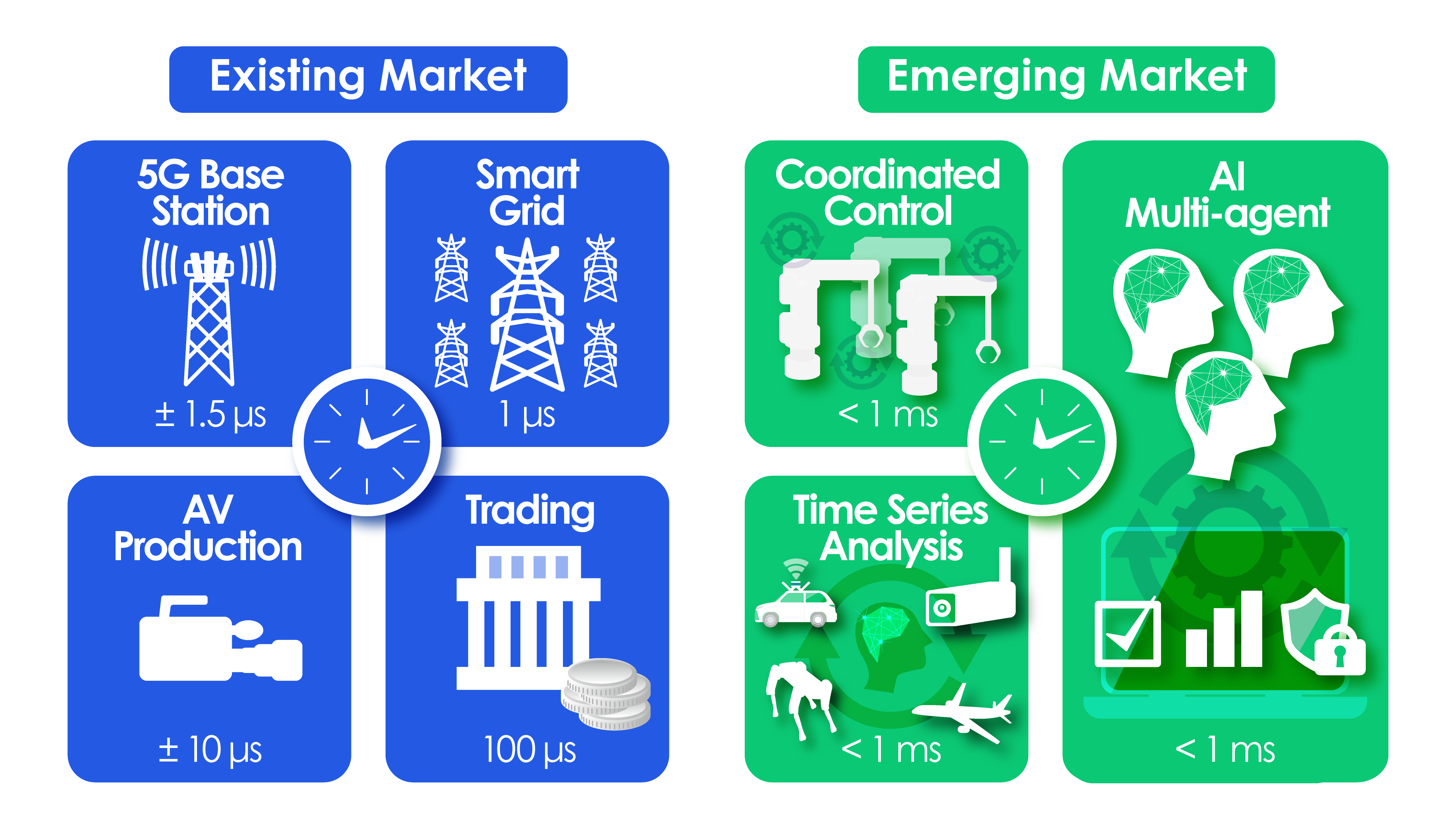
Figure 1: Domains requiring high-accuracy time synchronization
Why Clocks Drift
The primary cause of clock error is variation in the oscillator frequency inside the clock. Temperature changes and aging can slightly shift the oscillation frequency. For example, quartz oscillators in smartphones typically have an accuracy of about ±20 ppm, meaning they can drift by up to 20 µs per second. Left unattended for one hour, the drift can accumulate to as much as 72 ms. This phenomenon is known as clock drift. Technologies that correct such drift and align with an external time reference are what we call “time synchronization.”
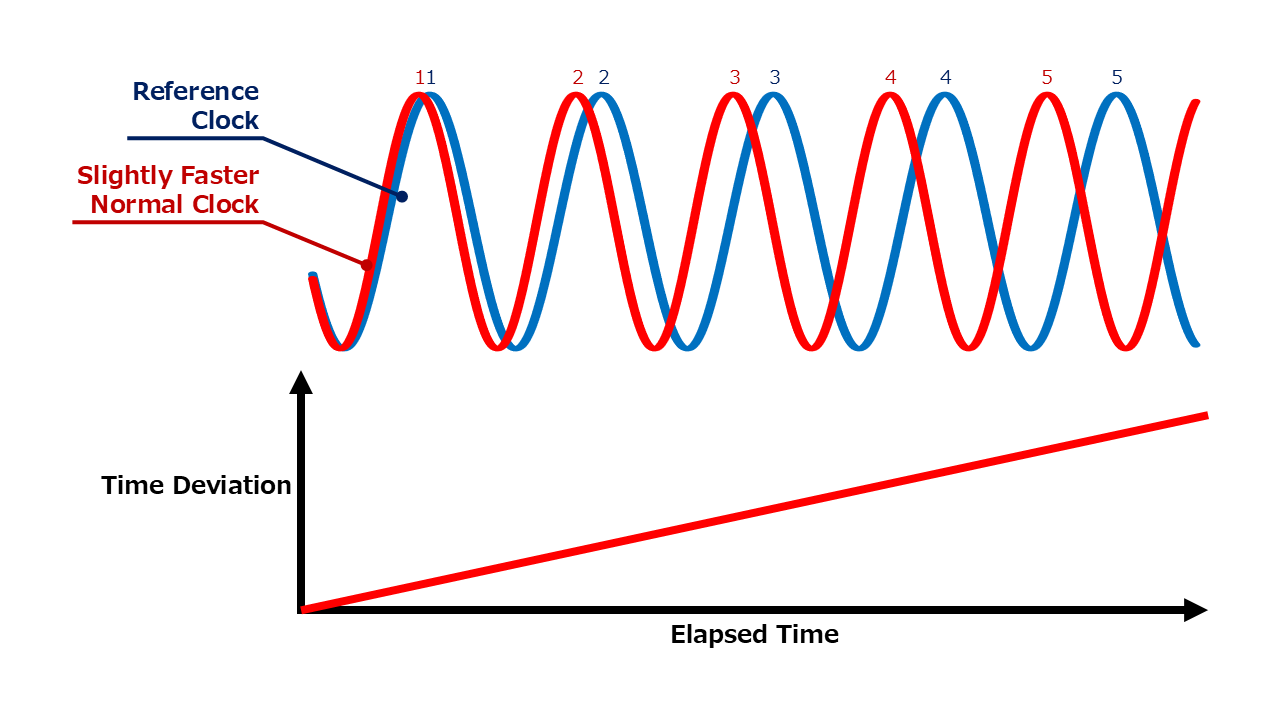
Figure 2. Conceptual diagram of clock drift
2. Conventional Time Synchronization Technologies and Their Challenges
Three methods are widely used today: NTP, PTP, and GNSS.
NTP (Network Time Protocol)
NTP is a protocol for time synchronization over IP (Internet Protocol) networks and can provide relatively easy synchronization to Coordinated Universal Time (UTC) where an internet connection is available. However, its accuracy is limited to on the order of tens of milliseconds, and can worsen to around 100 milliseconds over wireless networks. This is because NTP assumes equal forward and reverse path delays when exchanging time between client and server, so asymmetries introduced by network equipment translate into errors-especially pronounced over wireless links. Consequently, NTP is unsuited for applications requiring high-accuracy time sync. Additionally, on devices like IoT endpoints where low power consumption is crucial, maintaining clock accuracy within a few hundred milliseconds via NTP requires contacting the server every few hours, increasing power draw due to radio module wake-ups and other overheads.
PTP (Precision Time Protocol)
PTP, defined in IEEE 1588, can synchronize a slave clock to a master clock within a local area network (LAN) with sub-microsecond accuracy. By taking hardware-level timestamps and using network elements such as Boundary Clocks and Transparent Clocks to mitigate delay effects, PTP achieves a level of precision that NTP cannot. However, using PTP across the internet-where such equipment support is insufficient-is difficult. To synchronize with UTC, a Grandmaster Clock (GMC) within the LAN must be locked to an external reference such as GNSS.
GNSS (Global Navigation Satellite System)
GNSS refers to systems that enable positioning and time synchronization by receiving radio signals from multiple satellites. Representative systems include the U.S. GPS (Global Positioning System), Europe’s Galileo, and Japan’s QZSS (Quasi-Zenith Satellite System). GNSS allows extremely accurate time sync on the order of tens of nanoseconds. However, receiving satellite signals is difficult indoors, underground, or in tunnels. This necessitates installing an external antenna outdoors and running cables inside-creating significant cost and installation constraints. GNSS is also known to be susceptible to jamming and spoofing.
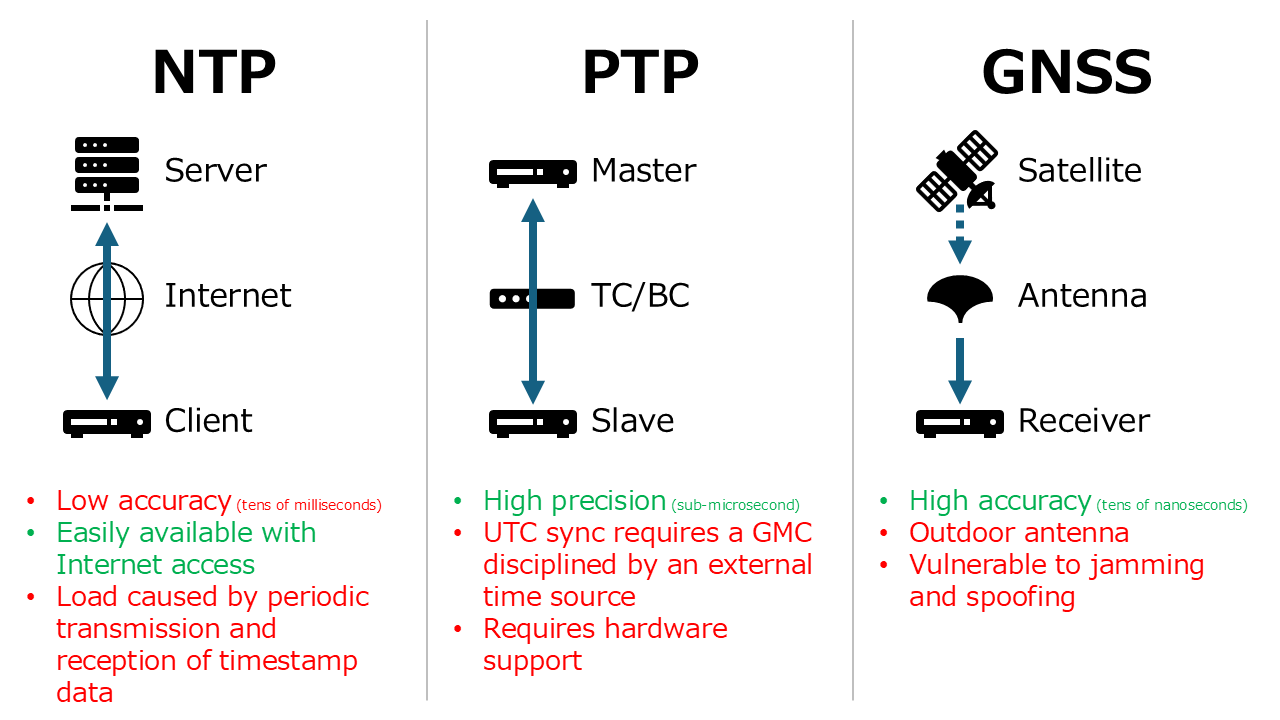
Figure 3: Comparison of conventional time synchronization technologies
3. Time Sync with 5G SIB9 - Achieving Microsecond Accuracy Over the Air
To address these challenges, SoftBank is focusing on time synchronization using SIB9 (System Information Block Type 9) in 5G SA (Stand-Alone). Where 5G SA is available, 5G SIB9 enables over-the-air UTC synchronization indoors or underground. By operating at a layer closer to hardware than the application layer, it provides microsecond-level time distribution. Here is how it works.
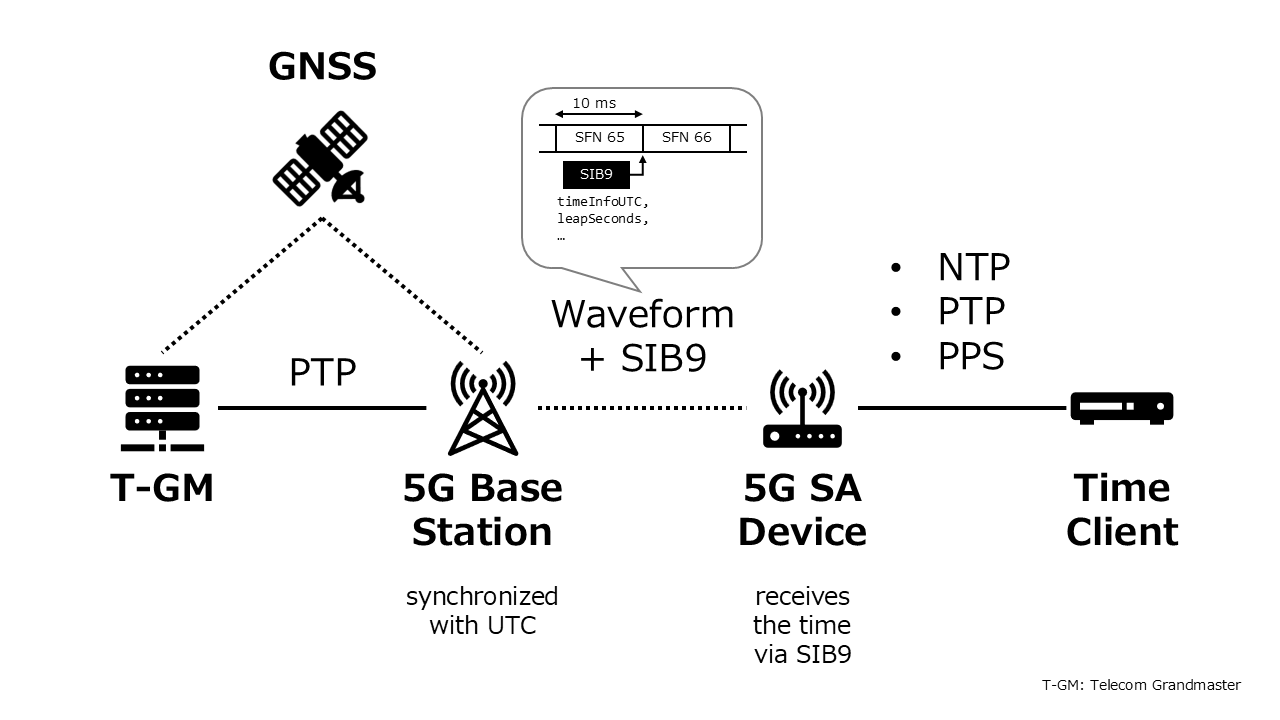
Figure 4: Mechanism of time synchronization using 5G SIB9
Base Station Time Synchronization
5G base stations are time-synchronized using GNSS and/or PTP over the RAN (Radio Access Network). Without proper synchronization, 5G radio faces several issues. For example, in time-division duplexing (TDD), which separates uplink and downlink in time, interference can occur between adjacent base stations. From a spectrum-allocation perspective, TDD bands lack guard bands between operators; unsynchronized neighboring networks risk mutual interference. Therefore, base stations must be synchronized to a common time scale convertible to UTC-making UTC synchronization a requirement.
Radio Synchronization at the Device
Using synchronization signals transmitted by 5G base stations, 5G SA devices (UEs) align their radio frames with the base station. Radio frames have a periodic structure synchronized to a time convertible to UTC, with each frame being 10 ms long. The device then obtains the Timing Advance (TA), a value determined by the radio propagation delay between the base station and UE. Regardless of the duplexing method, TA aligns uplink arrival times from multiple devices at the base station to prevent interference. Whereas Wi-Fi uses CSMA/CA (Carrier Sense Multiple Access with Collision Avoidance) for asynchronous communications, 5G’s synchronized radio operation is a hallmark of mobile networks.
Time Synchronization at the Device via 5G SIB9
The above describes synchronization already used in current 5G communications. When both the base station and device support and use SIB9 in 5G SA, the device receives SIB9 messages and obtains the UTC time corresponding to the immediately following radio frame boundary. In addition to UTC time (in 10 ms units), SIB9 messages include the leap-second information needed to convert to GPS time (3GPP TS 38.331 §6.3.1). As SIB9 is broadcast periodically at intervals configured by the base station, 5G SA devices can maintain synchronization to UTC by acquiring this information. Accuracy is affected by the UE–gNB distance, so applying TA-based compensation can further improve accuracy. A time-synchronized 5G SA device is envisioned to provide UTC-aligned time to connected clients at microsecond order via interfaces such as 1PPS (Pulse Per Second) or PTP.
By opening to customers the time synchronization underpinning 5G services-via 5G SIB9-operators can both contribute to society as time-sync infrastructure providers and create revenue opportunities.
Note: NITZ (Network Identity and Time Zone) is another mobile-network time technology. However, because NITZ has only second-level granularity and is not synchronized to the radio frame, its accuracy is worse than NTP.
4. Real-Device Validation on a Campus Testbed
SoftBank is collaborating with the Keio Research Institute at SFC on the Digital Twin Campus and has built a 5G SA experimental environment at Keio University’s Shonan Fujisawa Campus (SFC). For this study, SoftBank prototyped a device to evaluate high-accuracy time synchronization via SIB9 and conducted real-device validation in the SFC 5G SA environment.
・Measured quantity: 1PPS time difference (delay) relative to a GNSS reference signal generator
・Evaluation metrics: Mean, standard deviation, maximum
・Measurement points: Four indoor locations
・Measurement duration: One hour at each location
・Radio-delay compensation: None
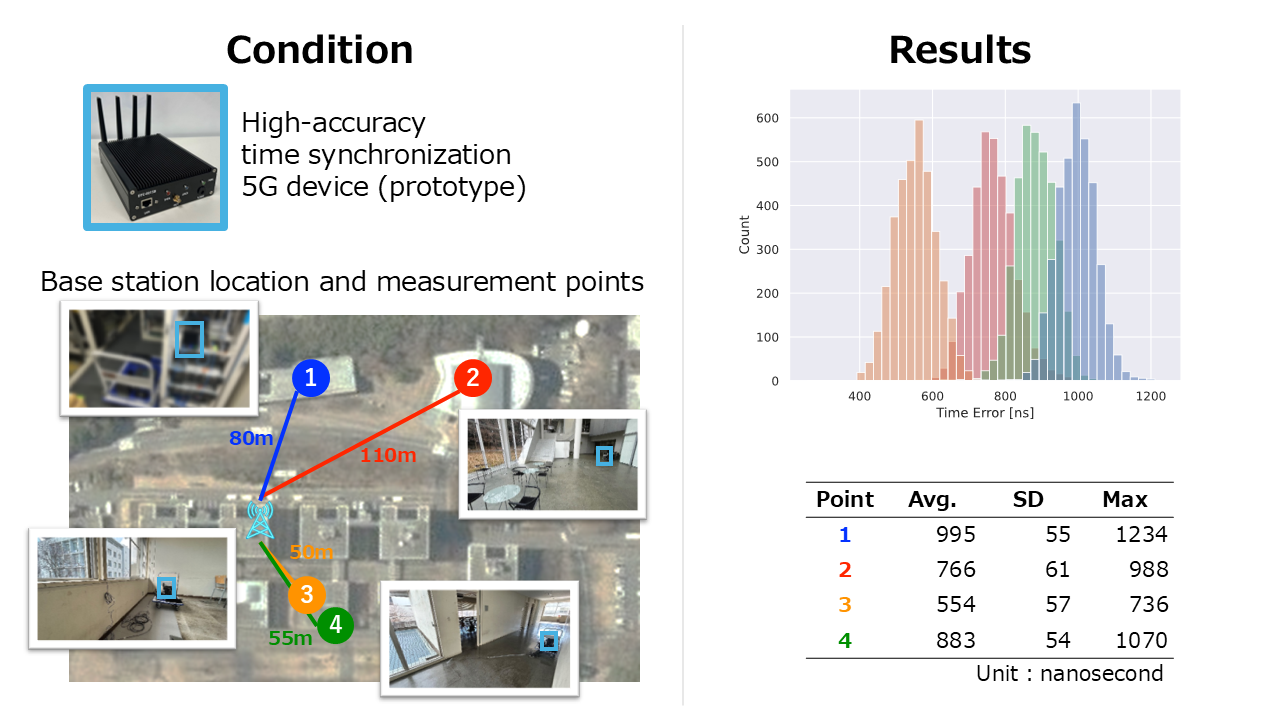
Figure 5: Measurement conditions and results for 5G SIB9 time-sync error at Keio SFC
As a result, we confirmed indoor synchronization with errors under 1.5 µs. Applying TA-based radio-delay compensation is expected to yield even higher accuracy.
5. Use-Case Demonstration - As a Time Source for Indoor Local 5G
SoftBank is conducting a joint study with NHK Technologies to demonstrate a use case in which SIB9 from public 5G SA serves as the time source for indoor Local 5G. Local 5G is a 5G network independently built and operated by enterprises or local governments rather than mobile operators. NHK Technologies is exploring configurations that leverage Local 5G for wireless IP camera systems at sports and event venues. Because Local 5G uses dedicated spectrum, it can provide more stable communications than Wi-Fi or public 5G in environments congested by smartphones and other devices used by spectators and visitors.
Local 5G also uses TDD for duplexing, as public 5G does, so Local 5G base stations must be synchronized within ±1.5 µs of UTC. Traditionally, this required connecting a GNSS antenna co-located with the Local 5G base station. However, when installing Local 5G base stations indoors or underground-where GNSS reception is difficult-an outdoor GNSS antenna and cabling into the facility are needed, creating installation and operational cost challenges. In particular, for temporary deployments such as wireless IP camera systems using Local 5G in indoor gymnasiums, pools, or event halls, permanent GNSS antenna installation is not feasible. This has forced operational burdens such as arranging cable runs from a temporary outdoor GNSS antenna into the venue, or-if a GNSS antenna cannot be connected during use-performing daily multi-hour GNSS synchronization of the GMC during off-hours to maintain GMC holdover performance.
In this joint study, we built a redundant configuration featuring two time sources for the Local 5G base station operated by NHK Technologies: (1) a GMC based on GNSS and (2) a GMC based on SoftBank’s public 5G SA SIB9. The optimal source is automatically selected by PTP’s BMCA (Best Master Clock Algorithm), enabling flexible and stable Local 5G operation using SIB9-based time sync even when GNSS reception is unavailable. Tests in a shielded environment confirmed that video transmission over Local 5G continues uninterrupted even when the time source switches.
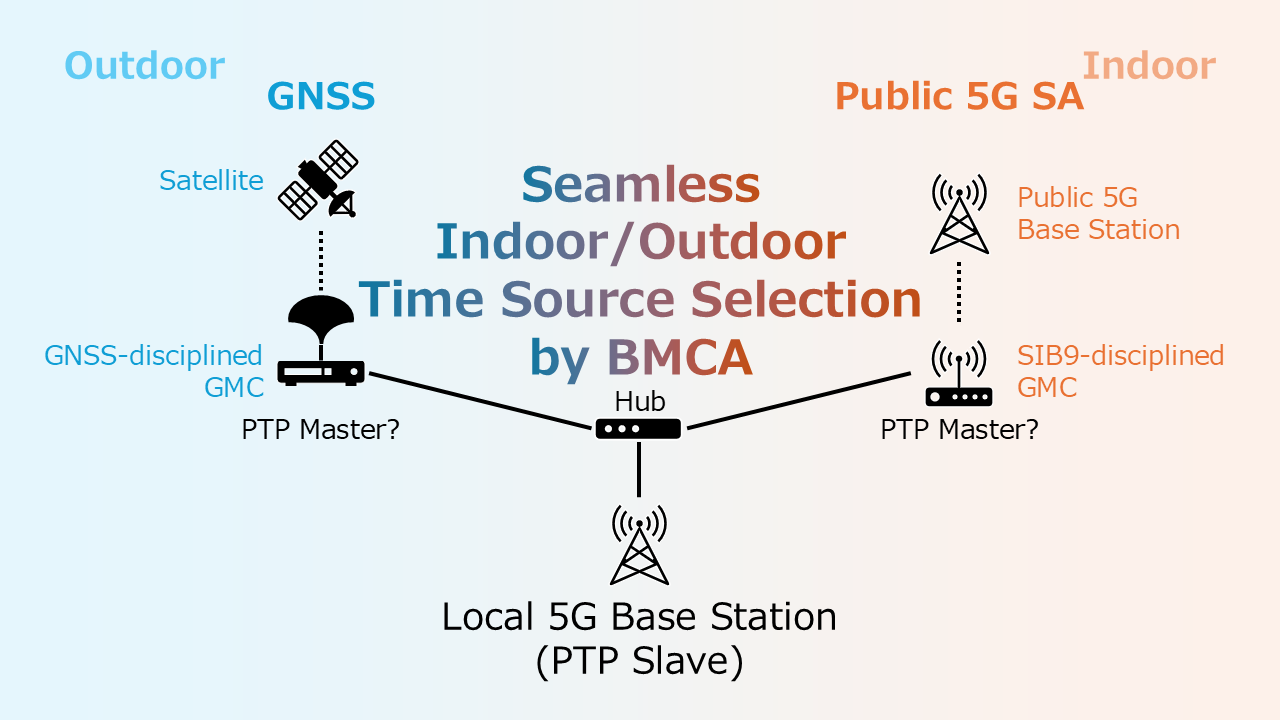
Figure 6: Time-sync configuration for Local 5G base stations that seamlessly selects either GNSS or public 5G SA SIB9 via BMCA as the time source, indoors or outdoors
We will exhibit this joint demonstration at Inter BEE 2025. Please visit our booth.
Dates: Wednesday, November 19 – Friday, November 21, 2025, 10:00–17:30 (closes at 17:00 on the 21st)
Venue: Makuhari Messe
Booth: NHK Technologies “The Potential of Local 5G: Demonstration” (Hall 8, Booth No. 8501)
6. Looking Ahead: Realizing Timing as a Service (TaaS)
5G SIB9 is one of the few technologies that can deliver high-accuracy time synchronization over the air even in indoor environments where GNSS signals are hard to receive. Because 5G is a synchronized radio system and live public 5G base stations are aligned to UTC, it can distribute high-accuracy UTC time to 5G SA devices. Leveraging this existing infrastructure as a time service is a key strength.
In real-device validation using an experimental test station on our campus testbed, we confirmed indoor time-sync error below 1.5 microseconds relative to an outdoor base station. In joint research with NHK Technologies, we also verified the effectiveness of SIB9 as a time source for indoor Local 5G base stations.
Just as human society runs on synchronized wristwatches and wall clocks, future cooperation among AI and robots will also presume a shared time base. Sub-millisecond precision will be required for sensor timestamps and control scheduling, making high-accuracy, trustworthy time synchronization indispensable. Such mechanisms will extend beyond data centers and factories into cities, homes, and mobility-the environments close to our daily lives. As a platform for this expansion, 5G SIB9, capable of delivering accurate time both indoors and outdoors, is a compelling option.
Looking ahead, we aim to commercialize TaaS (Timing as a Service) using 5G SIB9, advancing validations on commercial base stations, exploring additional use cases, and studying business models.
Writer : Hiroki Goto
References
・Nokia, “5G time service,” Nokia White Paper, 2023. https://www.nokia.com/asset/210965/.
・Andrea Dalla Torre (u-blox Italia), “Accurate time distribution using Cellular radio signal,” ATIS Workshop on Synchronization and Timing Systems (WSTS), 2023. https://wsts.atis.org/presentation/accurate-time-distribution-using-cellular-radio-signal/..
・D. P. Venmani, F. Zerradi, F. Hamma, B. Jahan and K. Singh, “Timing-As-A-Service (TAAS): Over-the-Air Synchronization method for Industrial IoT,” 2024 IEEE Virtual Conference on Communications (VCC), NY, USA, 2024, pp. 1–6, doi: 10.1109/VCC63113.2024.10914433.
The English translation was generated by an AI tool. In case of any inconsistency, the Japanese version shall prevail.