- 01.AI for Science: How AI Is Transforming Science and Society
- 02.AlphaFold: A Symbol of AI for Science
- 03.Neural Network Potentials: Extending the Capabilities of AI Demonstrated by AlphaFold to the World of Atoms and Molecules
- 04.SoftBank’s Initiatives: Accelerating AI for Science with Quantum Computing
- Blog
- Computing
Bridging AI for Science and Quantum Computing to Translate Scientific Research into Industrial Applications
#QuantumTechnology #QuantumComputing #AI #AIforScience
Aug 19, 2026
SoftBank Corp.
1. AI for Science: How AI Is Transforming Science and Society
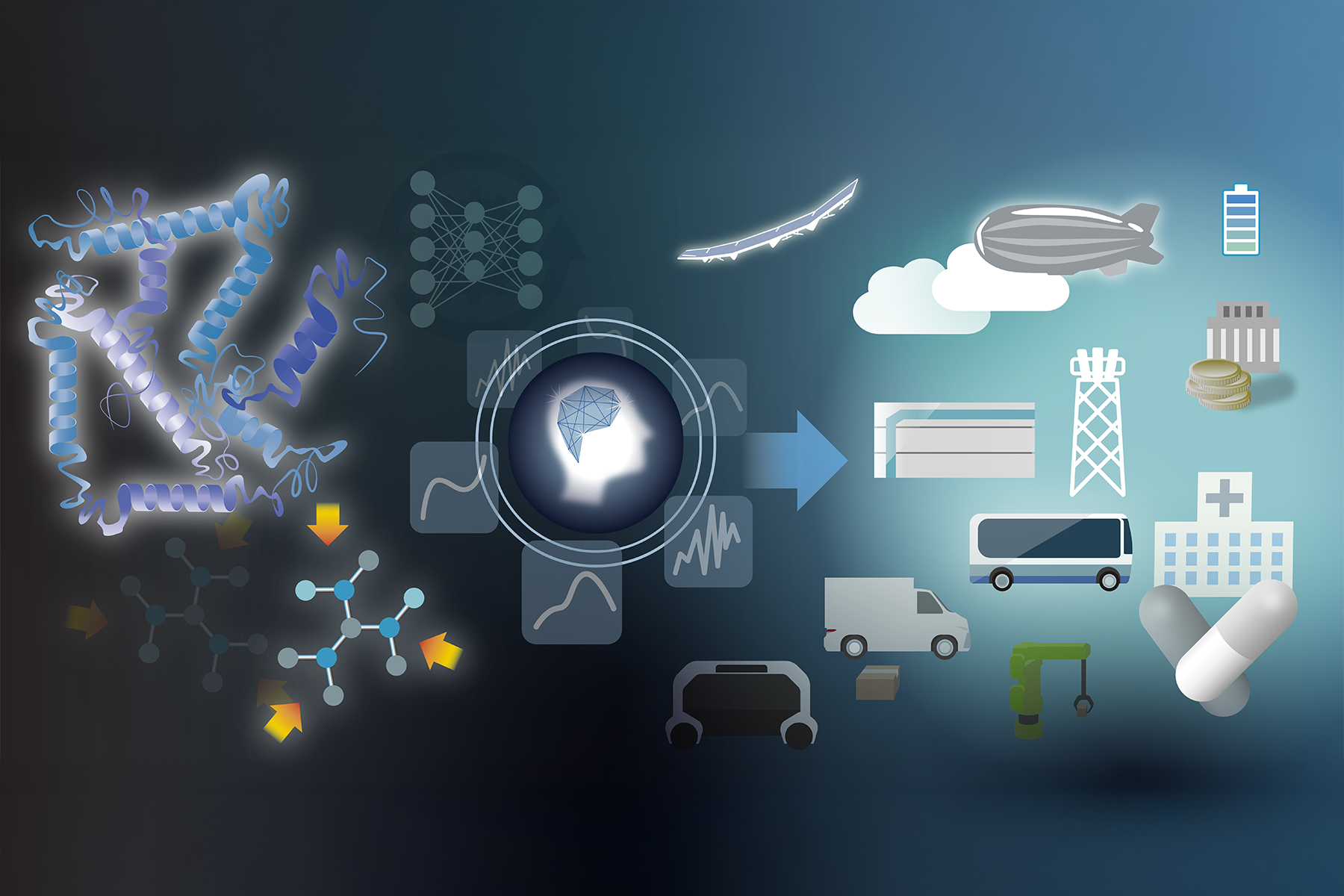
Under its vision of “Activate AI for Society,” SoftBank aims to apply AI across a wide range of industries and use it to help address societal challenges. One approach attracting growing attention is “AI for Science,” which applies AI to scientific research.
AI for Science refers to the use of AI to enhance and accelerate the scientific research process itself. Today’s societal challenges include the need to achieve decarbonization in response to climate change, ensure a stable energy supply, and develop treatments for diseases for which effective therapies have not yet been established. Addressing these challenges requires the development of new materials and medicines. By searching vast numbers of candidates and rapidly predicting their properties, AI could support the development of materials that help reduce carbon dioxide emissions or capture carbon dioxide, longer-lasting and higher-performance batteries, and new medicines for diseases that have historically been difficult to treat.
The importance of AI for Science is also being recognized at the national level. In June 2026, Japan’s Ministry of Education, Culture, Sports, Science and Technology and Ministry of Economy, Trade and Industry announced a Japan–U.S. strategic partnership aimed at linking Japan’s AI for Science initiatives with the “Genesis Mission”*1 led by the U.S. Department of Energy (DOE). The use of AI, scientific data, and computational resources to accelerate research in materials, energy, biotechnology, and other fields is becoming an important part of international science and technology strategy [1].
*1 : The Genesis Mission is a national initiative led by the U.S. Department of Energy that uses AI and large-scale computing infrastructure to accelerate the solution of important challenges in energy, science, and technology. See the website for details.
Concrete initiatives are also emerging in industry. On July 20, 2026, CuspAI, which specializes in AI-powered materials discovery, announced the launch of the “AI Materials Foundry.” This global initiative aims to bring together AI, materials data, computing resources, experimental facilities, and expertise in materials science to accelerate the discovery cycle from materials design and simulation to synthesis-route planning and experimental validation. More than 45 companies, universities, and research organizations are participating as founding members, with SoftBank Corp. joining as a Founding Partner [2].
This blog explains the technologies that support AI for Science and their industrial impact, using protein structure prediction in the life sciences and atomistic simulation in materials development as examples. It also introduces SoftBank’s initiatives to advance AI for Science by combining AI, large-scale computing infrastructure, high-performance computing (HPC), and quantum computers.
2. AlphaFold: A Symbol of AI for Science
Half of the 2024 Nobel Prize in Chemistry was awarded to David Baker “for computational protein design,” while the other half was jointly awarded to Demis Hassabis and John Jumper “for protein structure prediction.” Hassabis and Jumper received the prize for their work on AlphaFold, an AI model developed at Google DeepMind. Google DeepMind views AI as a tool for solving fundamental scientific challenges and positions AlphaFold as a blueprint for this approach [3].
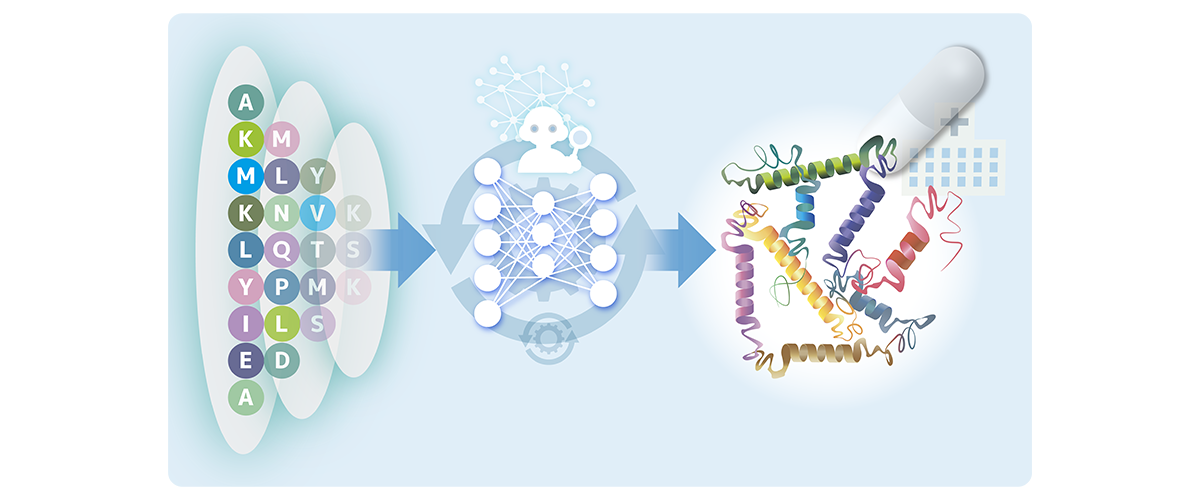
AlphaFold is an AI model that predicts the three-dimensional structure of a protein from the sequence of amino acids that make up the protein (Figure 1) [3]. Proteins form characteristic structures as their amino acid chains fold into complex shapes, and these shapes are closely related to their functions. Understanding a protein’s three-dimensional structure can therefore contribute to research on disease mechanisms, drug discovery, food science, and enzyme development.
Traditionally, determining protein structures experimentally could require considerable time and repeated trial and error. AlphaFold2 [4] made it possible to predict structures that can serve as starting points for research, even for proteins whose experimental structures are unavailable. This has expanded the range of proteins that can be studied through functional analysis, drug-target assessment, and the search for potential drug compounds.
Figure 1. Conceptual illustration of AlphaFold predicting a protein structure from an amino acid sequence
AlphaFold has continued to evolve. In 2024, AlphaFold3 [5] was announced, extending prediction beyond isolated protein structures to complexes in which proteins interact with drug-like molecules and other biomolecules. This has broadened the potential application of structure-prediction AI to more practical areas, including drug discovery.
The industrial development of these technologies is progressing in two major directions.
The first is the development of proprietary drug-discovery technologies by private companies. Isomorphic Labs, an Alphabet subsidiary established on the foundations of DeepMind’s research, is developing its own AI drug-discovery technologies with AlphaFold-related advances as one of their foundations. It is also conducting collaborative research with major pharmaceutical companies such as Eli Lilly and Novartis. These activities demonstrate that technologies related to AlphaFold are beginning to move beyond academic research and into corporate drug-discovery programs [6].
The second direction is open science, which seeks to make high-performance structure-prediction models broadly accessible. The AlphaFold3 model parameters and their outputs are subject to non-commercial-use restrictions, creating limitations for companies wishing to use them directly. In contrast, commercially usable open-source models such as OpenFold3-preview [7] and Boltz-2 [8] have been released. Like AlphaFold3, these models can handle complexes containing multiple types of biomolecules. The expansion of open science is expected to lower the barriers to introducing structure-prediction AI into corporate research and development and to accelerate the industrial application of AI for Science.
The industrial value of these structure-prediction models lies not in eliminating experiments, but in expanding the range of proteins that can be studied using structure-based analysis and screening, including proteins for which structural information has previously been unavailable. By comparing more candidates computationally, researchers may be able to determine more quickly which targets should be investigated in detail and which compounds should proceed to experimental testing.
3. Neural Network Potentials: Extending the Capabilities of AI Demonstrated by AlphaFold to the World of Atoms and Molecules
Just as AlphaFold has expanded the range of proteins for which structural information can be used, AI technologies are beginning to enable types of exploration in materials development that were previously limited by computational cost.
The performance of a material depends not only on the elements it contains, but also on their proportions, atomic arrangements, surfaces, defects, and other structural characteristics. The number of possible candidates is therefore enormous, making it impractical to synthesize and experimentally test every one. Virtual screening is consequently used to evaluate material candidates computationally before experiments and to narrow them down to the most promising options.
Understanding material properties in detail requires an understanding of atomic motion that cannot be directly observed. In a battery, for example, ions move through the material, while on the surface of a catalyst, molecules adsorb and undergo chemical reactions.
One method for reproducing such phenomena computationally is quantum chemistry calculation*2. Starting from atomic arrangements, quantum chemistry calculations can be used to investigate how atoms move and how readily chemical reactions may occur. However, these calculations are computationally expensive. Evaluating large numbers of material candidates or simulating systems containing many atoms can therefore require extremely long computation times.
*2 : Quantum chemistry calculation is a computational method based on quantum mechanics that determines the electronic states of matter.
One technology designed to address this limitation is the neural network potential (NNP). An NNP uses machine learning to learn the results of quantum chemistry calculations. Once trained, it can predict calculation results for new atomic configurations much faster than running the corresponding quantum chemistry calculation directly. This makes NNPs suitable for evaluating large numbers of candidates and performing large-scale atomistic simulations (Figure 2).
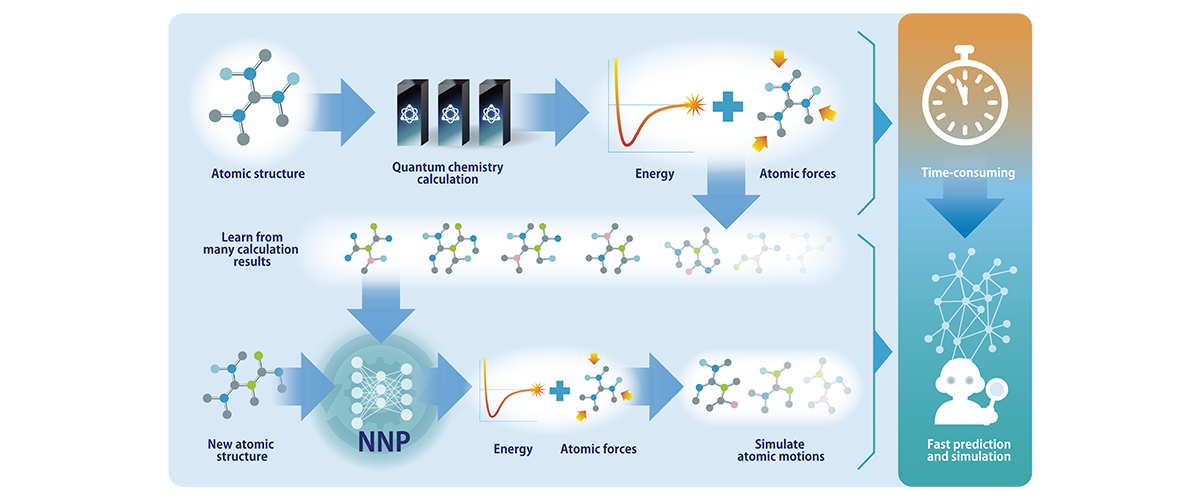
Figure 2. The role of quantum chemistry calculations in neural network potentials
Major global AI companies have entered the field of NNP development and are creating foundation models to support atomistic simulation and materials exploration.
Meta FAIR Chemistry was an early driver of this trend. In 2020, its Open Catalyst Project released OC20, a quantum chemistry dataset covering catalyst surfaces and adsorbed molecules [9]. Using this dataset, Meta developed GemNet-OC, an NNP model designed for catalyst systems [10].
In 2025, Meta released UMA, a general-purpose NNP that can handle a wide range of domains, including molecules, materials, and catalysts. UMA combines high prediction accuracy with fast inference and is one of the leading general-purpose NNP models currently available [11].
Microsoft Research’s MatterSim is another general-purpose NNP. By learning from quantum chemistry calculations performed under diverse conditions, MatterSim enables simulations covering nearly all elements and a broad range of temperatures and pressures [12].
The application of NNPs is also expanding beyond catalysts and materials into the life sciences. Google DeepMind proposed GEMS, a method for constructing NNPs for large molecular systems such as proteins [13].
AlphaFold and NNPs support different stages of drug discovery. AlphaFold predicts the shapes of proteins whose three-dimensional structures have not yet been experimentally determined, thereby expanding the range of proteins that can be investigated in detail as potential drug targets.
NNPs, by contrast, simulate how proteins and potential drug molecules move and interact. They can therefore support the selection of promising drug candidates and the process of improving those molecules. AlphaFold supports the stage in which researchers seek to understand a target protein, while NNPs support the stage in which drug candidates are evaluated and optimized.
Industrial use of NNPs is also progressing. Matlantis is a commercial atomistic simulation platform built around NNP technology and has been adopted by more than 150 companies and research organizations, primarily in Japan. Publicly available use cases describe the application of its fast NNP simulations to catalysts, batteries, automotive materials, chemicals, semiconductor processes, and other fields [14].
AlphaFold and NNPs address different problems and use different model architectures. Nevertheless, they share an important source of industrial value: both enable researchers to include candidates that were previously excluded because of insufficient information or excessive computational cost, and both help accelerate decisions about which candidates should proceed to experiments.
4. SoftBank’s Initiatives: Accelerating AI for Science with Quantum Computing
As the examples of AlphaFold and NNPs demonstrate, the value of AI for Science does not arise from AI models alone. It emerges from an end-to-end process in which models learn from scientific data, evaluate large numbers of candidates, and connect their results to decisions about subsequent calculations and experiments.
Expanding this process to more candidates and larger systems requires computing infrastructure capable of training and running AI models. In addition to the large-scale computational resources provided by its AI data centers, SoftBank is using quantum computers in its initiatives to advance AI for Science.
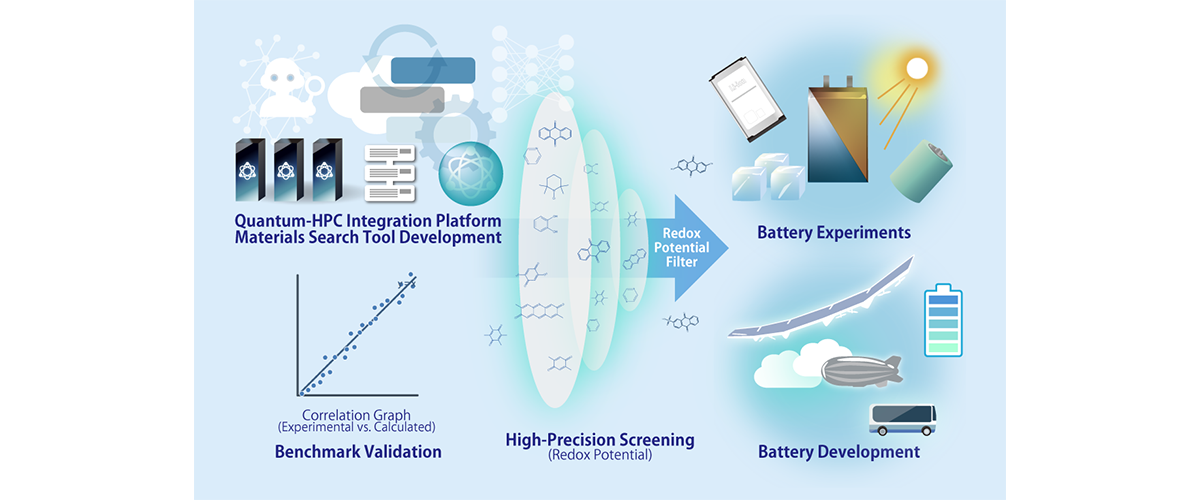
SoftBank is conducting research on the use of quantum computers to predict material properties that are difficult to calculate with high accuracy using quantum chemistry methods on conventional computers. Specifically, through joint research with Center for Quantum Information and Quantum Biology (QIQB) at the University of Osaka, SoftBank has developed a quantum chemistry method that integrates quantum computers with HPC. As part of Test User Program*4 of JHPC-quantum—the quantum-HPC hybrid platform development project*3—SoftBank built a workflow using IBM Heron, supercomputer Fugaku, and the SoftBank AI Data Center. Using this workflow, we calculated the redox potentials of multiple organic molecules and evaluated the correlation between the calculated and experimental values. In this research, calculations were carried out in a regime exceeding 50 qubits, where conventional supercomputers face computational limitations in both exact calculations that account for all possible electronic configurations and quantum-circuit simulations that reproduce the operation of a quantum computer*5. Redox potential is an important indicator for evaluating the voltage characteristics of next-generation battery materials, the risk of degradation in organic semiconductors, and the reactivity and toxicity risks of redox-active drug candidates. By incorporating performance predictions based on such high-accuracy calculations into screening workflows, we aim to accelerate the development of new materials and medicines (Figure 3).
*3 : For details on JHPC-quantum, see the relevant press release (Japanese only).
*4 : For details on the Test User Program, see the relevant press release (Japanese only).
*5 : References: “Toward Practical Materials Screening Beyond 50 Qubits Enabled by QSCI-AFQMC in a Quantum-HPC Workflow”, presented at The First RIKEN Quantum International Workshop on Frontiers of Quantum Computing Applications and Quantum-HPC Integration and “The Frontiers and Future of Chemical and Materials Simulation through Quantum-HPC Integration,” published in the April 2026 issue of Frontier, the journal of the Japan Society of Theoretical Chemistry.
SoftBank has also begun using NNPs to predict material properties at the SoftBank AI Data Center. Going forward, SoftBank aims to train NNPs on high-accuracy results obtained through quantum-computing calculations. The objective is to enable NNPs to reproduce the knowledge obtained from high-accuracy calculations at much higher speed, thereby establishing a computing platform capable of efficiently evaluating larger systems and a greater number of material candidates.
Figure 3. Conceptual illustration of battery-material screening using a quantum-HPC integrated workflow
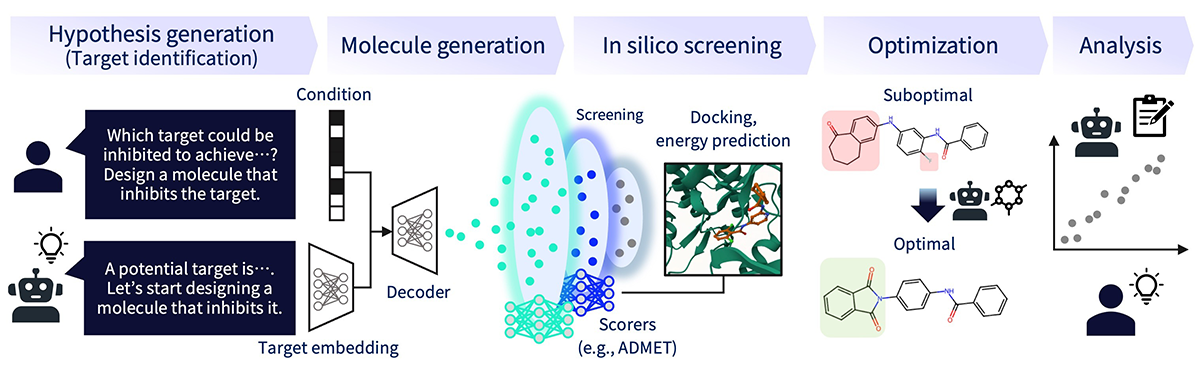
SB Intuitions has been leveraging SoftBank's computational infrastructure to advance AI for Science research in drug discovery, materials science and other fields. Our development includes AI-driven hypothesis generation, molecule generation*6, molecule screening, and optimization techniques*7. We have also been building multi-agent systems that integrate their individual capabilities (Figure 4). In collaboration with high-precision computational screening methods described throughout this blog, we are actively exploring applications to address societal challenges.
*6 : Reference: high-speed, low-toxicity peptide generation model
*7 : Reference: combining LLMs with Bayesian search for lead optimization
Figure 4. Conceptual illustration of AI applications in drug discovery
SoftBank and SB Intuitions aim to combine AI, large-scale computing infrastructure, and quantum computers to realize AI for Science that connects scientific discoveries to the development of new materials and medicines—and ultimately to value for industry and society.
Co-authors
SoftBank Corp. Product Research & Development Division, Quantum Technology Division
Yuki Kishida
Toshihiro Aoki
Yoshi-aki Shimada
Yosuke Komiyama
SB Intuitions Corp. R&D Division, AI4Science Team
Kaushalya Madhawa
Jun-Jin Choong
Hikaru Shindo
Shuan Chen
Yiming Zhang
Yuna Oikawa
Takashi Fujiwara
Keisuke Ozawa
References
[1] Ministry of Education, Culture, Sports, Science and Technology. 日本のAI for Scienceの取組と米国の「ジェネシス・ミッション」との連携に向けた日米戦略的パートナーシップについて, 2026[2] CuspAI. CuspAI Launches ‘AI Materials Foundry’ a Global Network to Accelerate Breakthrough Discoveries, 2026
[3] Google DeepMind. https://deepmind.google/science/alphafold/
[4] J. Jumper, R. Evans, A. Pritzel, T. Green, M. Figurnov, O. Ronneberger, K. Tunyasuvunakool, R. Bates, A. Žídek, A. Potapenko, A. Bridgland, C. Meyer, S. A. A. Kohl, A. J. Ballard, A. Cowie, B. Romera-Paredes, S. Nikolov, R. Jain, J. Adler, T. Back, S. Petersen, D. Reiman, E. Clancy, M. Zielinski, M. Steinegger, M. Pacholska, T. Berghammer, S. Bodenstein, D. Silver, O. Vinyals, A. W. Senior, K. Kavukcuoglu, P. Kohli, D. Hassabis, Nature 2021, 596, 583–589.
[5] J. Abramson, J. Adler, J. Dunger, R. Evans, T. Green, A. Pritzel, O. Ronneberger, L. Willmore, A. J. Ballard, J. Bambrick, S. W. Bodenstein, D. A. Evans, C.-C. Hung, M. O’Neill, D. Reiman, K. Tunyasuvunakool, Z. Wu, A. Žemgulytė, E. Arvaniti, C. Beattie, O. Bertolli, A. Bridgland, A. Cherepanov, M. Congreve, A. I. Cowen-Rivers, A. Cowie, M. Figurnov, F. B. Fuchs, H. Gladman, R. Jain, Y. A. Khan, C. M. R. Low, K. Perlin, A. Potapenko, P. Savy, S. Singh, A. Stecula, A. Thillaisundaram, C. Tong, S. Yakneen, E. D. Zhong, M. Zielinski, A. Žídek, V. Bapst, P. Kohli, M. Jaderberg, D. Hassabis, J. M. Jumper, Nature 2024, 630, 493–500.
[6] Isomorphic Labs. https://www.isomorphiclabs.com/partnerships
[7] The OpenFold3 Team. https://github.com/aqlaboratory/openfold-3
[8] S. Passaro, G. Corso, J. Wohlwend, M. Reveiz, S. Thaler, V. R. Somnath, N. Getz, T. Portnoi, J. Roy, H. Stark, D. Kwabi-Addo, D. Beaini, T. Jaakkola, R. Barzilay, bioRxiv 2025, preprint, DOI:10.1101/2025.06.14.659707.
[9] L. Chanussot, A. Das, S. Goyal, T. Lavril, M. Shuaibi, M. Riviere, K. Tran, J. Heras-Domingo, C. Ho, W. Hu, A. Palizhati, A. Sriram, B. Wood, J. Yoon, D. Parikh, C. L. Zitnick, Z. Ulissi, ACS Catal. 2021, 11, 6059–6072.
[10] J. Gasteiger, M. Shuaibi, A. Sriram, S. Günnemann, Z. W. Ulissi, C. L. Zitnick, A. Das, Trans. Mach. Learn. Res. 2022.
[11] B. M. Wood, M. Dzamba, X. Fu, M. Gao, M. Shuaibi, L. Barroso-Luque, K. Abdelmaqsoud, V. Gharakhanyan, J. R. Kitchin, D. S. Levine, K. Michel, A. Sriram, T. S. Cohen, A. Das, S. J. Sahoo, A. Rizvi, Z. W. Ulissi, C. L. Zitnick, Adv. Neural Inf. Process. Syst. 2025, 38, 129391.
[12] H. Yang, C. Hu, Y. Zhou, X. Liu, Y. Shi, J. Li, G. Li, Z. Chen, S. Chen, C. Zeni, M. Horton, R. Pinsler, A. Fowler, D. Zügner, T. Xie, J. Smith, L. Sun, Q. Wang, L. Kong, C. Liu, H. Hao, Z. Lu, arXiv 2024, preprint, arXiv:2405.04967.
[13] O. T. Unke, M. Stöhr, S. Ganscha, T. Unterthiner, H. Maennel, S. Kashubin, D. Ahlin, M. Gastegger, L. Medrano Sandonas, J. T. Berryman, A. Tkatchenko, K.-R. Müller, Sci. Adv. 2024, 10, eadn4397.
[14] Matlantis. https://matlantis.com/