Contents
- Blog
SoftBank’s Disaster Preparedness Initiatives
#Other #DisasterSolutions
Oct 02, 2026
SoftBank Corp.
Japan is a country frequently affected by natural disasters. Earthquakes, tsunamis, typhoons, torrential rain, heavy snowfall, and various other natural disasters occur throughout the country, significantly impacting people’s daily lives as well as social and economic activities almost every year. In recent years, disasters have also become increasingly severe and frequent, including record-breaking rainfall caused by linear rainbands and large-scale typhoons. Against this backdrop, society as a whole must further strengthen its disaster preparedness efforts.
During a disaster, accurate and rapid information sharing is essential to protecting people’s safety. Communications serve as a critical lifeline in a wide range of situations, including confirming the safety of family members and loved ones, obtaining evacuation and weather information, and supporting coordination and rescue activities among local governments, medical institutions, fire departments, police, and other disaster-response organizations. For this reason, it is particularly important for communications networks to remain connected during disasters.
To fulfill this social responsibility, SoftBank is implementing a wide range of disaster preparedness measures, including improving the disaster resilience of telecommunications facilities, introducing network redundancy, strengthening measures against power outages, and maintaining restoration equipment that utilizes mobile base stations and satellite communications. SoftBank is also exploring the use of next-generation non-terrestrial network (NTN) technologies, including HAPS (High Altitude Platform Stations), as it works to further strengthen the resilience and robustness of its communications infrastructure.
SoftBank will continue to provide communications services that customers can use with confidence even during disasters and will advance its disaster preparedness initiatives as a telecommunications operator committed to supporting the safety and security of society.
1. Land-Based Initiatives
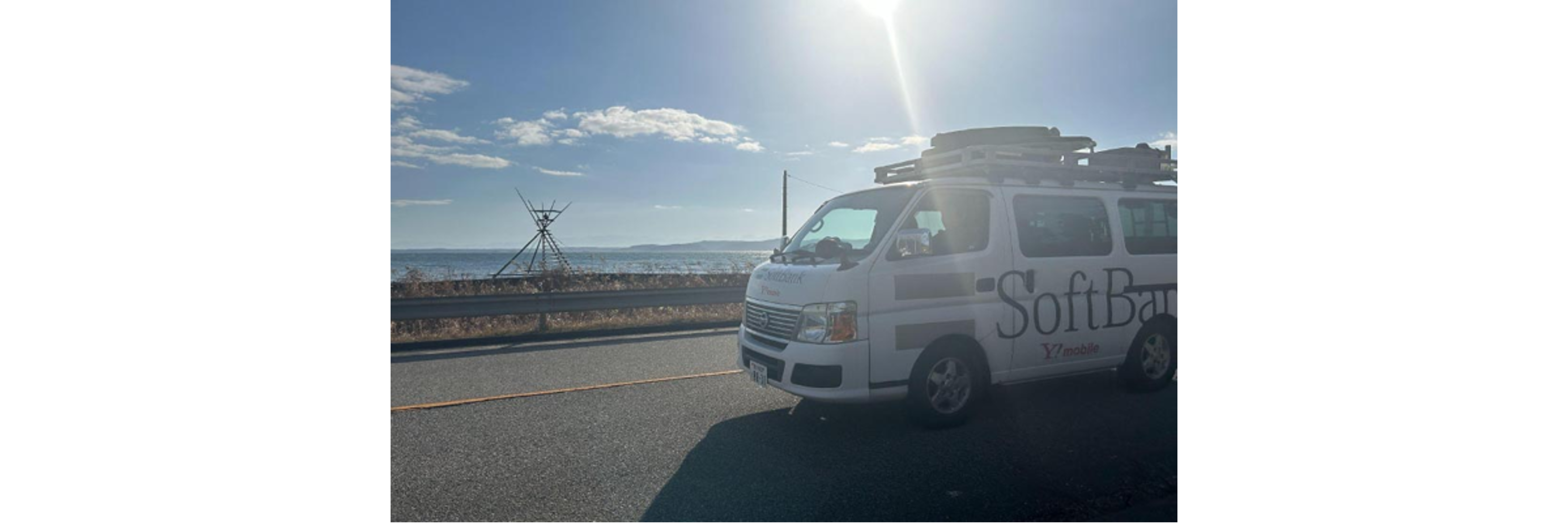
To ensure the continued availability of communications services during disasters, SoftBank takes a variety of precautionary measures under normal conditions, including improving the disaster resilience of telecommunications facilities, introducing network redundancy, and strengthening measures against power outages.
In disaster-affected areas, SoftBank rapidly deploys equipment such as mobile base station vehicles and portable base stations, as well as restoration personnel, while also providing emergency power using portable generators. Through these efforts, SoftBank works to restore communications services as quickly as possible. Going forward, the company will continue to strengthen its facilities and enhance its operational capabilities with the aim of building networks that are even more resilient to disasters.
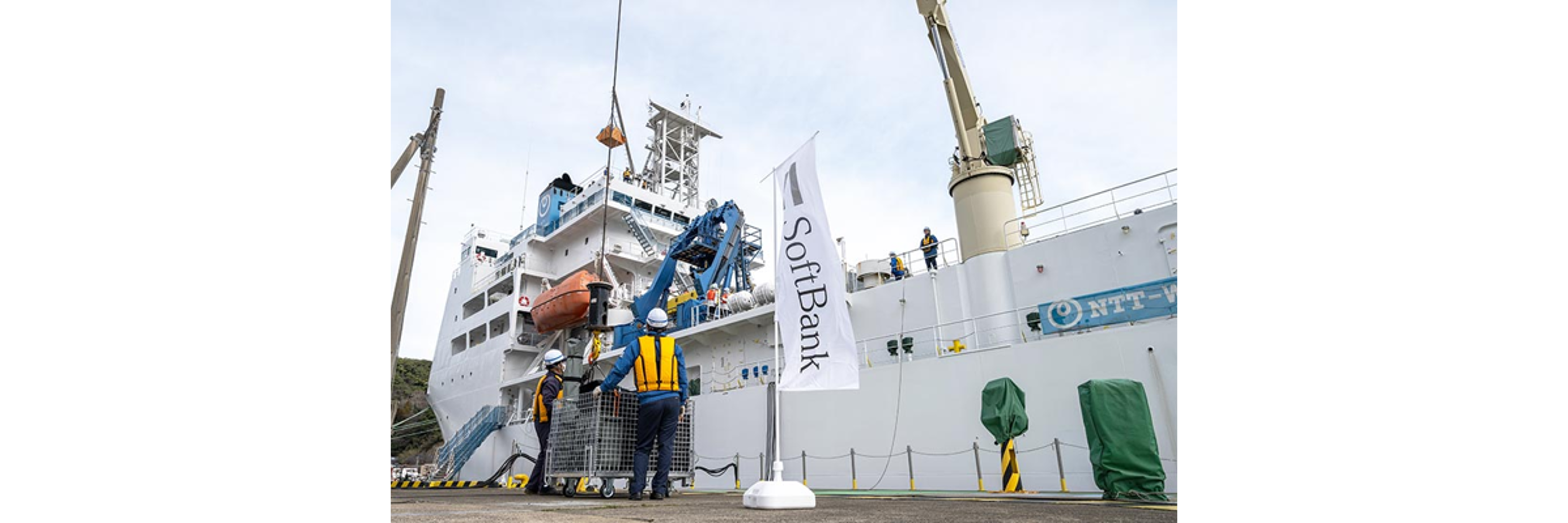
By responding flexibly from the sea, SoftBank can complement terrestrial networks and enable faster restoration. The company will continue to further strengthen these capabilities going forward.
2. Maritime Initiatives
During large-scale disasters, damaged roads and widespread power outages may make it difficult to carry out restoration activities from land. To prepare for such situations, SoftBank has implemented initiatives to install base stations aboard vessels and provide communications services from offshore locations.
3. Aerial Initiatives
To ensure communications even when telecommunications facilities are damaged across a wide area or when affected locations are difficult to access from the ground, SoftBank provides communications services using satellite communications and drones. Drone base stations have already been deployed at 10 locations across Japan.
Going forward, SoftBank will incorporate next-generation non-terrestrial network (NTN) technologies, including HAPS (High Altitude Platform Stations), as it works toward the realization of broader and more flexible communications infrastructure. The company will also continue research and demonstrations of technologies that can provide communications coverage from the air.


4. Collaboration Among Telecommunications Operators
During large-scale disasters, it may be difficult for a single telecommunications operator to restore communications services quickly on its own. Telecommunications operators therefore work together and make mutual use of their respective networks and facilities to help ensure that customers can regain access to communications services as quickly as possible.
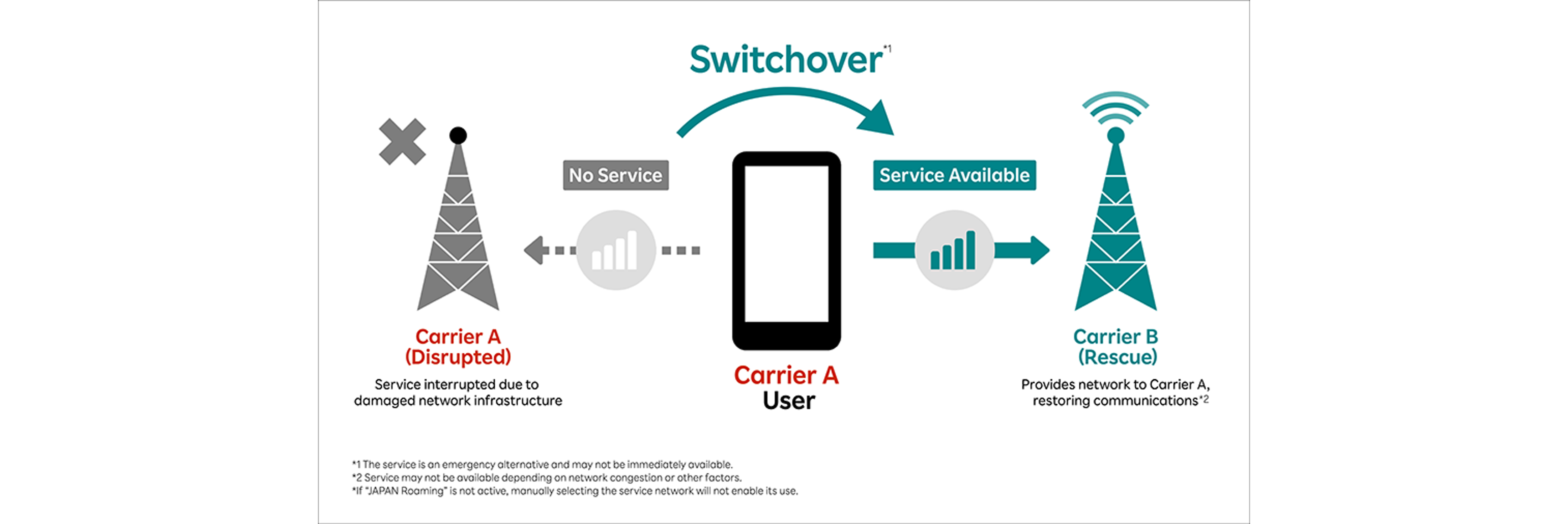
For example, the maritime communications services described in Section 2 are also provided through cooperation among telecommunications operators. In April 2026, SoftBank also launched “JAPAN Roaming™,” a service that enables customers to use the communications networks of other operators during disasters.
Cooperation among operators is also being strengthened through initiatives such as the mutual use of facilities and information sharing. Through these efforts, telecommunications operators work to minimize communications disruptions in disaster-affected areas and help maintain the communications infrastructure needed for residents to confirm the safety of loved ones, gather information, and support the activities of local governments and disaster-response organizations.
SoftBank will continue to deepen collaboration among telecommunications operators as it works toward the realization of an even more robust communications infrastructure.