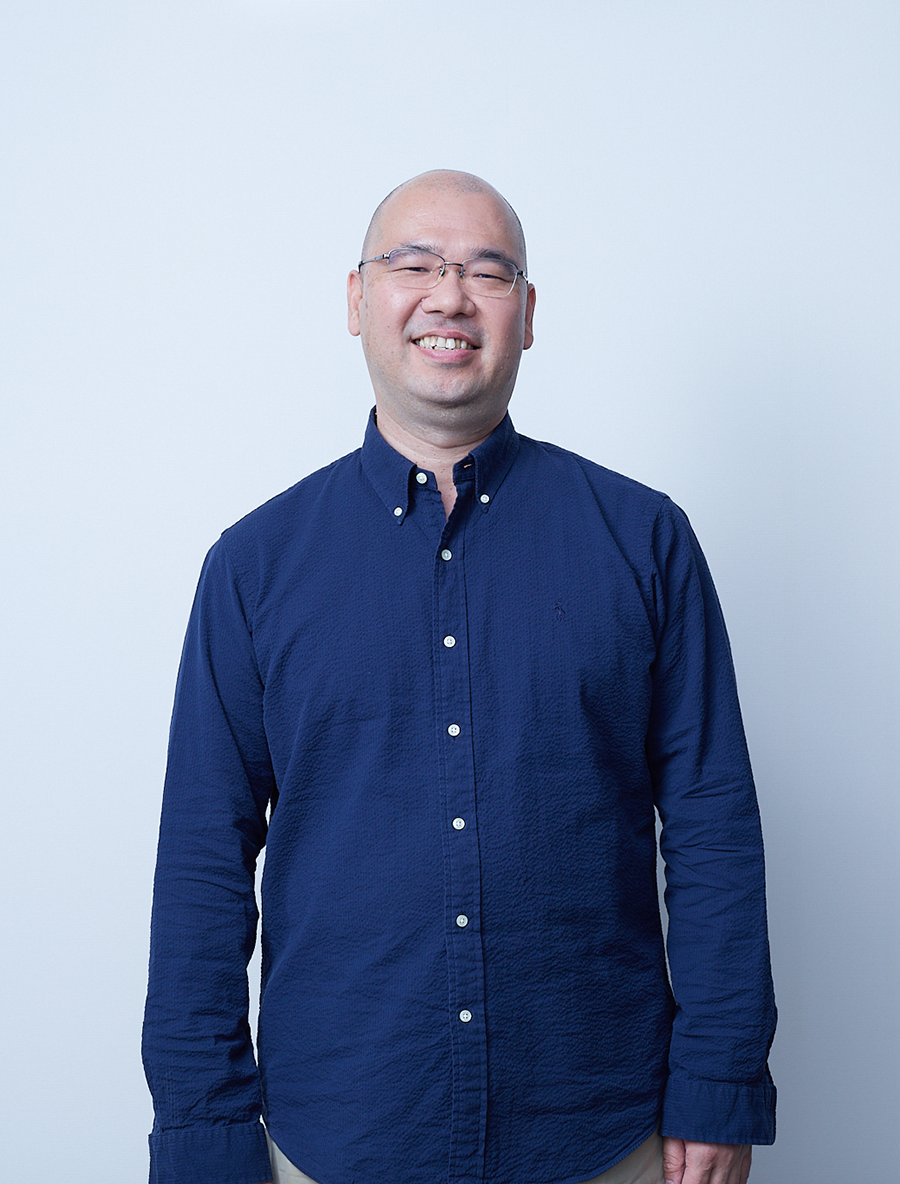
Can Quantum Computers Improve Delivery?
Our Journey from the NEDO Challenge to an Excellent Research Award

#QuantumTechnology #QuantumComputing

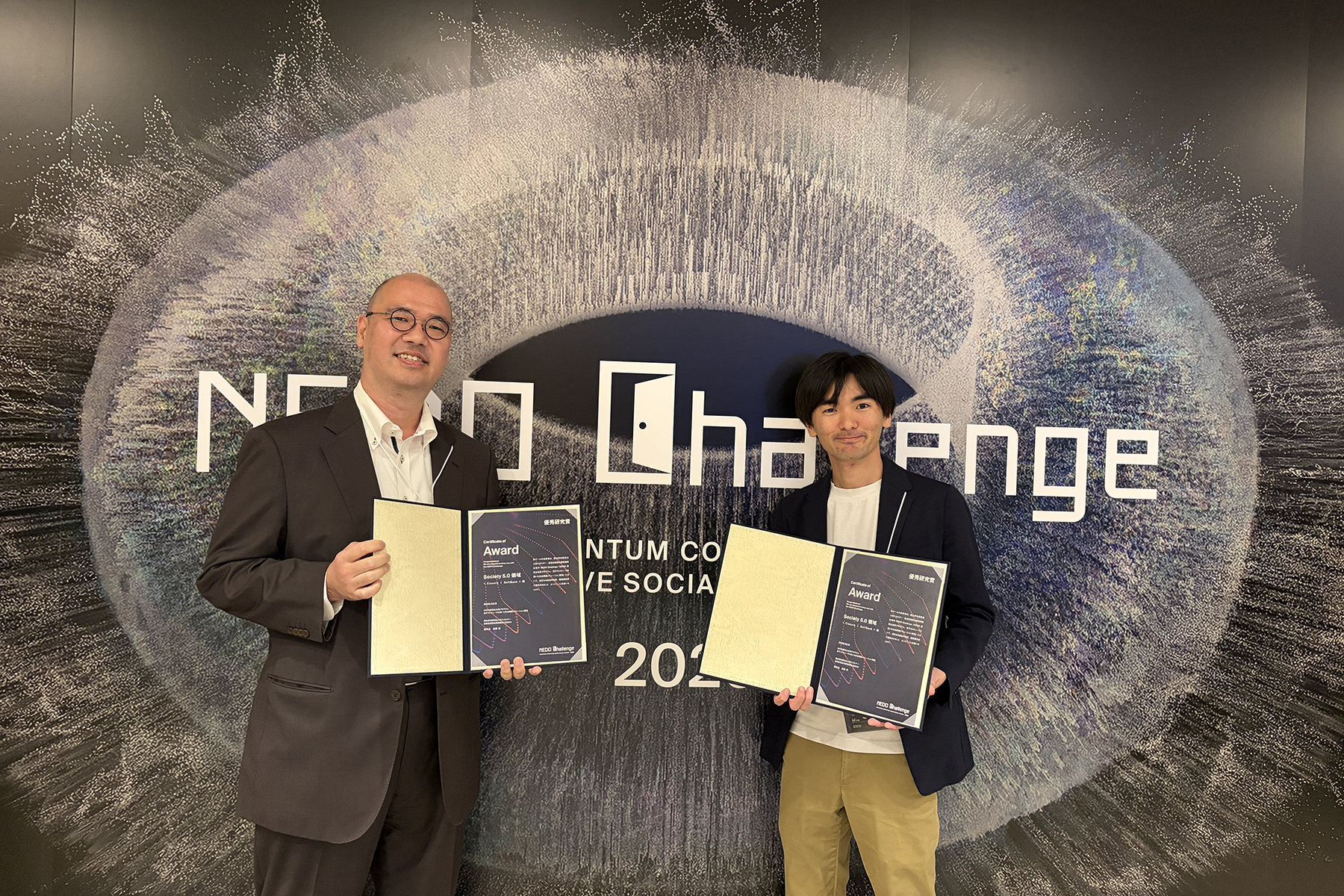
Commemorative photo at the award ceremony on October 15, 2026, holding the award certificate.

At the award ceremony on October 15, 2026, celebrating our Excellent Research Award.

Hello, I'm Sasaki.
Our joint team from Classiq and SoftBank took part in NEDO Challenge Season 1 and received an Excellent Research Award!

Thank you to all my teammates and everyone who supported our work.
Our theme was planning drone deliveries using quantum computers.
That might sound a little complicated.
But this isn't an article about the technical details of how quantum computers work. Instead, I'd like to look back on our journey from joining the challenge to receiving the award: what we worked on, what we struggled with, and what we took away from it.

1. It Started with an Invitation from Classiq

We have been collaborating with Classiq on our quantum computing business for some time.
Classiq is a startup that develops software for quantum computers. One of its strengths is technology that takes a description of a quantum computation, automatically builds the quantum circuits needed to run it, and optimizes them for efficient execution.
This reduces the need to assemble every low-level operation by hand, making it easier to focus on what you want the computer to calculate. Another feature is the ability to generate circuits tailored to different quantum computers.

While working together in this area, Classiq invited us to join the NEDO Challenge with them. That was how our challenge began.
The NEDO Challenge is an initiative to apply quantum technology to real-world problems facing society.

Another attraction was access to computing resources for our research.
There is a difference between studying quantum computers or designing computational methods and actually running those methods on real hardware. Some things only become clear when you try, and some challenges only emerge through hands-on use.
Having access to that environment was one of the reasons we decided to apply.

The topic we chose was drone delivery.
Within our company, there was already a team working on practical uses of drones and demonstration trials. Being able to speak with them directly and work on a problem connected to real-world operations was another reason we chose this topic.

2. Planning the Route, Not Flying the Drone

When you hear "drone delivery," you might picture research into building drones or flying them.
Our work focused on an earlier step: planning the deliveries.

Imagine delivering packages to several locations in a single flight. There are two main questions to consider.
Which delivery locations should be visited together, and in what order?
Grouping nearby locations seems sensible, but there is also a limit to how much weight a drone can carry. As the number of delivery locations grows, the number of possible combinations becomes enormous.

Of course, conventional computers can already produce good delivery plans. There are excellent methods available.
So, is there room to bring quantum computers into the process?
That was what we wanted to investigate. We did not carry out real drone deliveries. Instead, we evaluated delivery planning through computation.

3. Quantum Computing Doesn't Automatically Mean Better Results

Our research followed a cycle: meeting once or twice a month to discuss the work, running experiments individually, and bringing our results together.
But the results were not always what we had hoped for.
Sometimes, even after introducing quantum computing, the existing methods performed better. We changed the conditions and compared again, but still struggled to outperform them. We saw results like that, too.
Simply using a quantum computer does not automatically improve performance.

And even when the numbers did improve, that was not the end of the story.
Were we comparing under the same conditions? Which part of the method made the difference? Was the improvement due to quantum computing, or to some other change we had made?
"It worked," "it was useful," and "it improved because of quantum computing" are three different claims.
Separating these questions and checking each one was an important part of our work.

4. Giving Conventional and Quantum Computers Different Roles

Our approach was not to replace the entire delivery-planning process with quantum computing.
Instead, we gave conventional and quantum computers different roles.

First, a conventional computer divides the delivery locations into broad geographic regions.
Next, within each region, we use a quantum computer to calculate how "similar" the delivery locations are to one another (using "quantum kernel values," which quantify the overlap between quantum states). The comparison uses information such as each location's position and its distance from the delivery hub.
Finally, a conventional computer uses those comparison results to refine the groups and improve the order in which the locations are visited.
In other words, the quantum computer handled the comparisons used to group delivery locations.

Using this approach, we evaluated delivery planning for 1,921 locations in Setagaya Ward, Tokyo. Using two methods, we were able to run a total of 215,310 pairwise comparisons on real IBM quantum hardware rather than a simulator.
This is one of the achievements I particularly want to share.
We were able to incorporate today's quantum computers into part of a city-scale delivery-planning process, rather than just a small example.

However, we have not demonstrated that quantum computing outperforms conventional computing. Further investigation is still needed.
I want to be clear about both what we achieved and what we cannot yet claim.

5. From Experiments to a Report of Around 60 Pages

We eventually brought all those experiments and discussions together in a report of around 60 pages.
Research does not end once the calculations run and the results are in.
What problem did we tackle? What did we try, and what happened? What can we conclude, and what remains unresolved? Organizing all of this so others can understand it is part of the work, too.

We all had busy schedules, but we kept running experiments, sharing results, and continuing our discussions. To me, seeing that process through to the end was just as valuable as receiving the award.
These results were not any one person's achievement. We built them together as a team.

6. Beyond the Award Ceremony: Interviews and a TV Appearance

Our work led to an Excellent Research Award, and we attended the award ceremony on October 15, 2026.
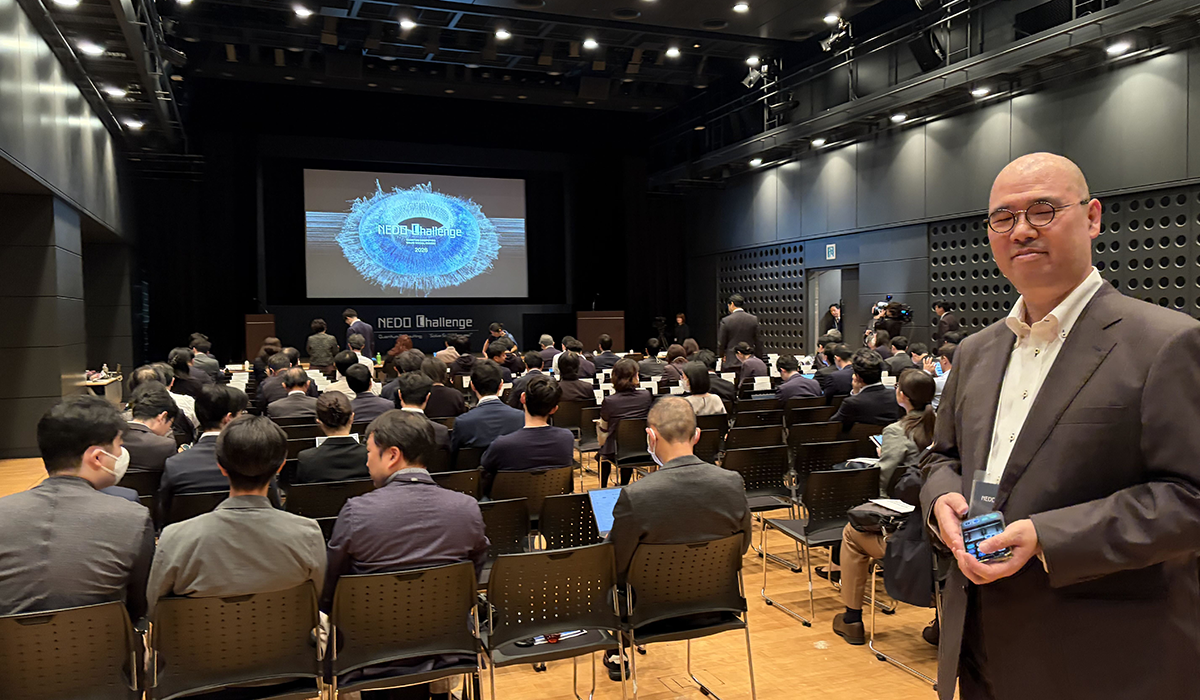
The award ceremony on October 15, 2026, brought together participants working on a wide range of research topics.
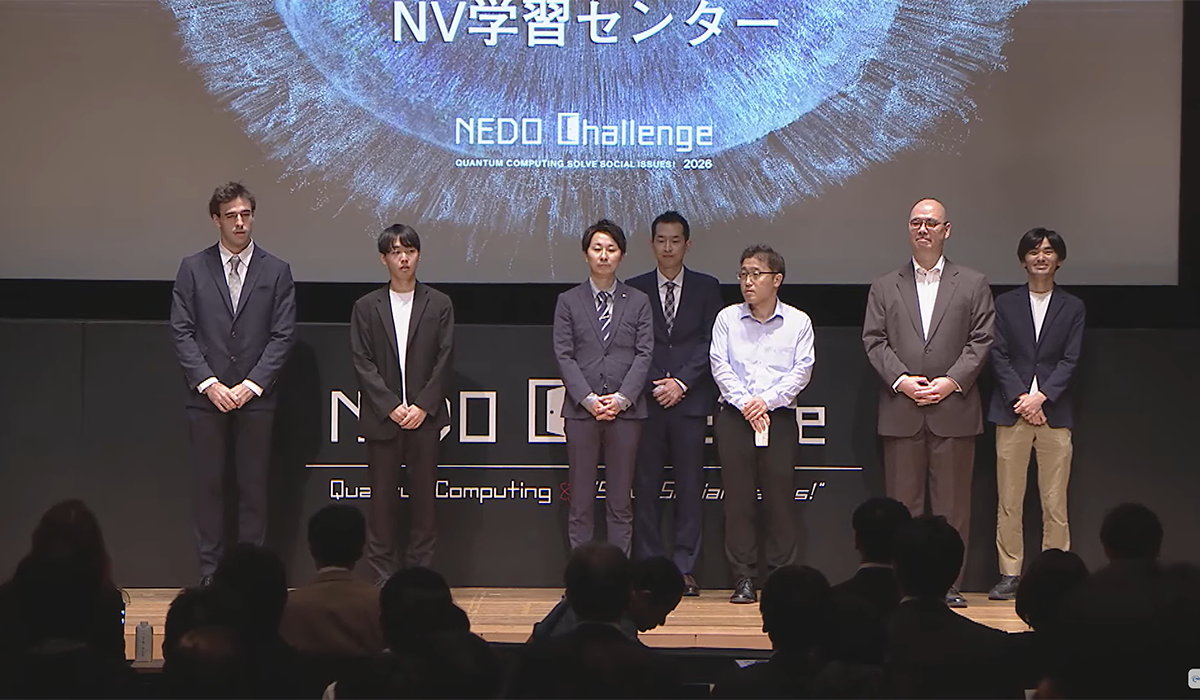
The award ceremony on October 15, 2026, brought together participants working on a wide range of research topics.

On stage at the award ceremony on October 15, 2026 (from the event video stream).

On stage at the award ceremony on October 15, 2026 (from the event video stream).

At the ceremony, we not only learned about other teams' research but also had the chance to talk with fellow researchers about the difficulties they had faced and what they wanted to try next.
It was an opportunity to speak with people we would rarely meet otherwise, as fellow participants in the same challenge. That was another benefit of taking part.

A TV Interview the Day Before the Ceremony

The day before the ceremony, on October 14, 2026, we were interviewed for television. The segment aired the following day, October 15, on TV Tokyo's WBS. It was an experience well outside our usual research activities.
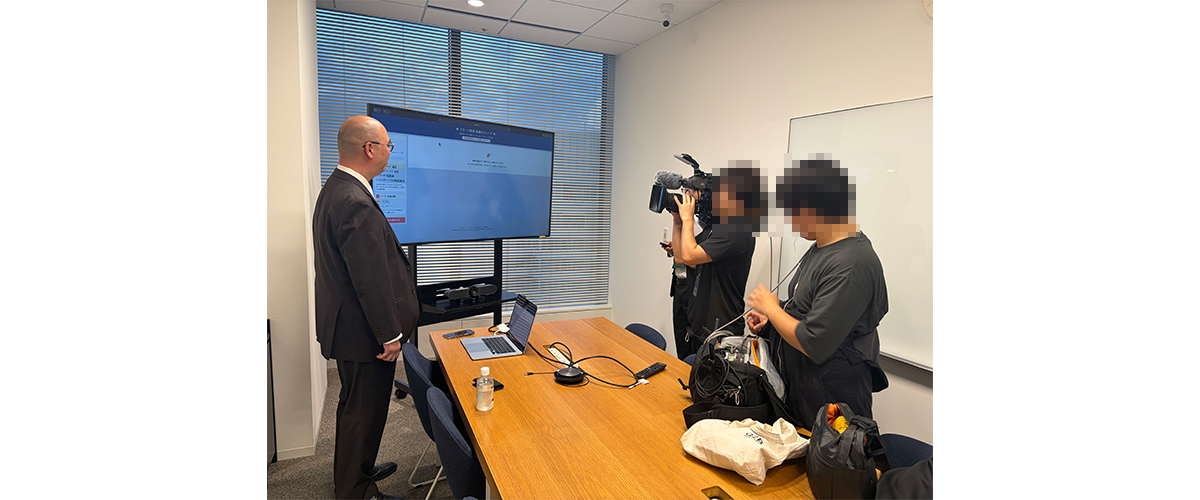
During the TV interview on October 14, 2026, we used a screen to explain our research.

During the TV interview on October 14, 2026, we used a screen to explain our research.

Doing research and explaining it to people without specialist knowledge are two different things.
We had to explain what we had achieved and what it could be useful for without relying on technical jargon. Having the opportunity to communicate beyond our lab and team was another memorable part of the experience.

Later, I also had the opportunity to speak at Quantum Computing EXPO 2026. Alongside the research itself, gaining experience in sharing our work with a wider audience was a major takeaway. I feel that this challenge gave us much more than research results and an award.
7. After the Award: Working with the People Who Will Use the Technology

This challenge reminded me how difficult quantum technology can be. At the same time, I learned that even with today's hardware, there are things we can try by rethinking how we break down problems and combine quantum computing with existing methods.

I have also realized that advancing the technology is only part of the task. Just as important is thinking through solutions together with the people who actually face these challenges.
Good numerical results may not be enough: practical use can come with additional requirements. The problems people actually face may also be different from the ones we have assumed.
That is why, as we continue our research, I want to create more opportunities to talk with the people who would use the technology.

Receiving this award marked a milestone and gave me confidence.
But what stayed with me even more was the experience of working through trial and error with the whole team and seeing it through to the end.
To all my teammates, the companies that provided computing resources, NEDO and the organizers, and everyone who supported our work: thank you once again!

Acknowledgements

Part of the results of this research were obtained with support from the “NEDO Challenge, Quantum Computing "Solve Social Issues!"” by NEDO (New Energy and Industrial Technology Development Organization) under Japan's Ministry of Economy, Trade and Industry.

Author

Toshihiro Sasaki

Toshihiro Sasaki

Quantum Technology Division, SoftBank Corp.
Toshihiro Sasaki has been engaged in quantum computing research and development since 2023. Working on quantum chemistry calculations and combinatorial optimization problems such as delivery planning, he has taken projects from algorithm implementation through to verification on real quantum hardware. He is currently helping build a quantum-HPC integration platform that connects SoftBank's AI data centers and quantum computers over a high-speed, low-latency network and offers it to users as an easy-to-use cloud service (PaaS). As the developer responsible for the platform's backend, he aims to quickly turn use cases from a wide range of industries into reality and deliver them to users.

Research Areas
研究概要