目次
- Blog
- Wireless, Network, Computing
AITRAS Orchestrator: Optimizing AI and RAN Resources
#AITRAS #AI-RAN #Nokia #RedHat
Jul 11, 2025
SoftBank Corp.
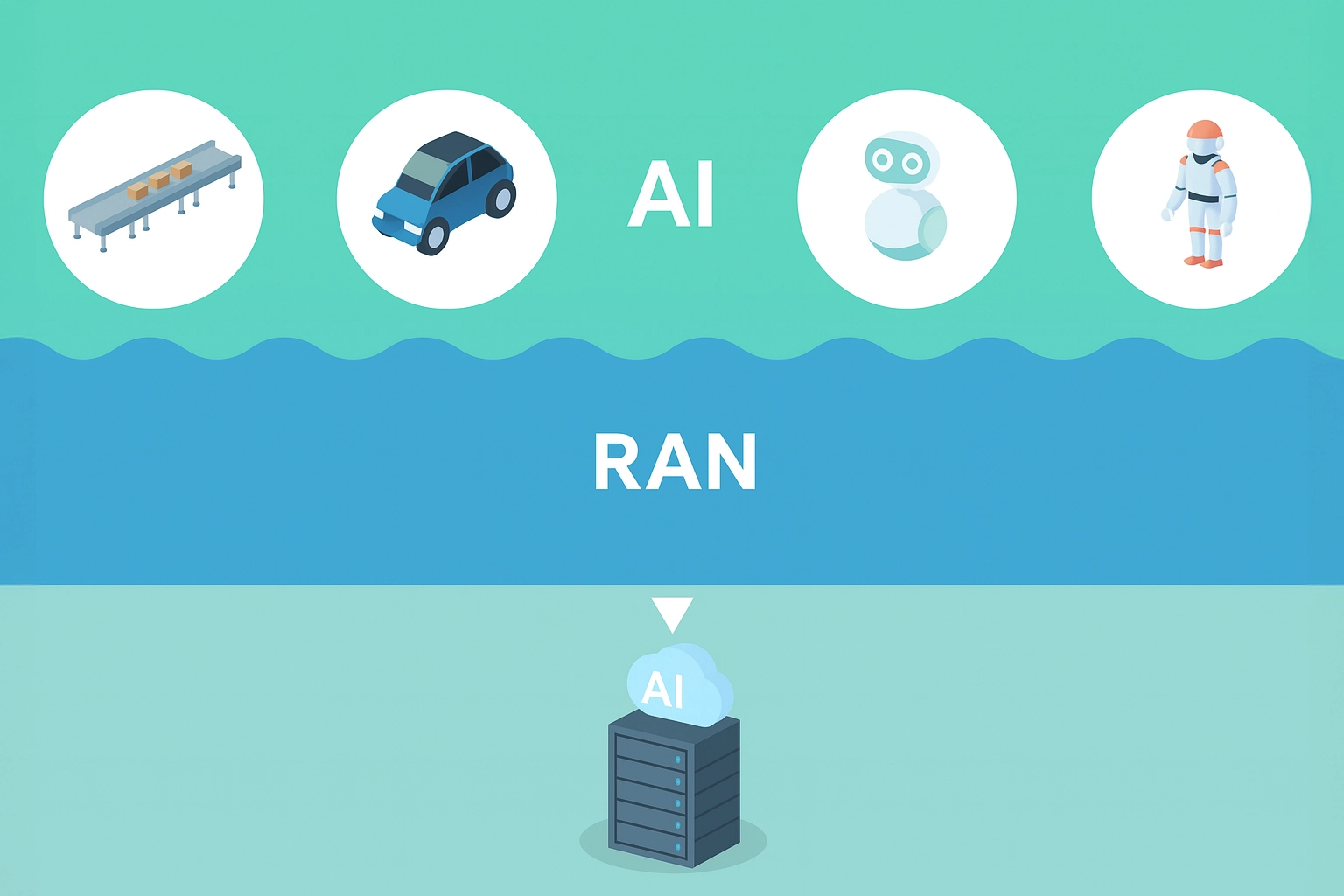
1. Advancing the Integration of AI and RAN with AITRAS
As AI-RAN emerges as a next-generation social infrastructure in the AI era, SoftBank is taking the lead with the development of its pioneering solution: AITRAS.
At the heart of AITRAS lies the concept of “AI and RAN”, which integrates artificial intelligence (AI) and radio access networks (RAN) on a common computing platform. This architecture enables advanced, dynamic optimization of resources between AI and RAN functions.
A key component of this system is the AITRAS Orchestrator, which intelligently allocates and optimizes computing resources in real time to meet the demands of both AI and RAN workloads. This orchestration ensures overall system flexibility and efficiency.
This article introduces two collaborative development efforts that demonstrate the practical application of AITRAS:
・Joint development with Nokia:
A case study showcasing how AI and RAN functionalities are implemented on a single server.
・Joint development with Red Hat:
A project that integrates power consumption metrics into the AITRAS Orchestrator.
2. Joint Development with Nokia: Unifying AI and vRAN on a Single Server
Nokia advocates for a flexible RAN architecture known as AnyRAN, compatible with diverse CPU environments such as x86 and Arm. Leveraging this flexibility, SoftBank and Nokia have collaboratively developed a system where both AI and vRAN workloads coexist on a single GPU server, with resources dynamically optimized through AITRAS.
Three types of servers were utilized in verification tests to assess the effectiveness of the AI and RAN integration:
・NVIDIA GH200-based Server:
Deployed with Nokia’s RAN software and AI applications on Red Hat OpenShift, this server simultaneously runs RAN and SoftBank’s proprietary AI workloads.
・AITRAS Orchestrator Server:
Monitors CPU and GPU usage and dynamically allocates resources based on AI and RAN demand.
・Nokia’s *EMS Server “MantaRay”:
Gathers vRAN metrics such as device count and throughput, providing essential data to the AITRAS Orchestrator for intelligent resource management.
*EMS = Element Management System
2.1 Illustrated Guide:Dynamic Control of CPU/GPU Resources
The integration with Nokia’s MantaRay allows for real-time monitoring of network conditions, such as the number of connected user equipment (UE) and throughput, as well as predictions of future RAN traffic demands.
As shown in Figure 1, when the number of users decreases, AITRAS reduces resources allocated to RAN and reallocates GPU capacity to AI processing. When RAN traffic increases again, resources are seamlessly returned. This dynamic responsiveness demonstrates the system’s ability to optimize performance according to real-time demands.

Figure 1. Real-time CPU/GPU Resource Allocation in Action
3. Joint Development with Red Hat: Power Optimization Using Kepler
SoftBank envisions deploying AITRAS-based GPU data centers across Japan. However, maintaining stable operations at scale requires significant power consumption. To address this, SoftBank and Red Hat jointly developed a power optimization solution within AITRAS.
3.1 AI and RAN on a Common Computing Platform with Red Hat
Figure 2 illustrates the system architecture. AI and RAN applications operate as containers on Red Hat OpenShift, while Red Hat Advanced Cluster Management for Kubernetes enables unified control across multiple regional data centers.

Figure 2. Red Hat System Architecture in AITRAS
3.2 Introducing the Power Monitoring Tool “Kepler”
Kepler, or Kubernetes-based Efficient Power Level Exporter, is a project founded by Red Hat’s emerging technologies group with early contributions from IBM Research and Intel. It is a community-driven, open source project that captures power-use metrics across a wide range of platforms, focusing on reporting, reduction and regression so enterprises can better understand energy consumption. By leveraging Kepler with AITRAS and Red Hat OpenShift, it becomes possible to visualize the power usage of applications running on AITRAS at the Pod level. Figure 3 illustrates how Kepler monitors and tracks power consumption for each Pod.

Figure 3: Visualizing Power Consumption with Kepler
Leveraging Kepler’s capabilities, we designed a demonstration scenario to visualize and manage power consumption across different server clusters within a data center. The setup was as follows:
・Cluster 1: Powered exclusively by fossil fuel-based energy
・Clusters 2 and 3: Powered by renewable energy sources
In this context, where environmentally sustainable operations are prioritized, there is a clear need to favor Clusters 2 and 3 when deploying applications. Based on this need, the AITRAS Orchestrator was configured to allocate workloads to the most suitable clusters.
Figure 4 compares the results of application deployment with and without Kepler-based power-awareness. In the left diagram, where Kepler is not used, Cluster 1 (fossil fuel-powered) is heavily utilized. In contrast, the right diagram—where Kepler is introduced—shows that Clusters 2 and 3 are preferred, allowing for maximum utilization of renewable energy.
This demonstration confirms that by incorporating Kepler into the orchestrator, AITRAS can achieve not only optimized workload management but also more eco-friendly and energy-efficient data center operations.

Figure 4. Cluster Energy Usage Comparison With and Without Kepler Integration
4. Looking Ahead: Toward Commercial Deployment
The development of AITRAS is more than a technical endeavor—it’s a bold initiative to build a sustainable AI-driven infrastructure on a nationwide scale.
The successful implementations with Nokia and Red Hat showcase the practical potential of AITRAS in real-world scenarios. Moving forward, SoftBank aims to expand these achievements by deepening collaborations with a broader range of partners and accelerating the social implementation of AITRAS.
Related press releases issued by SoftBank:
SoftBank Corp. and Nokia Achieve AI and vRAN Coexistence with Automated Optimal Resource Allocation on a Single Server
https://www.softbank.jp/en/corp/news/press/sbkk/2025/20250303_02/
SoftBank Corp. and Red Hat Develop Solution to Optimize Power Consumption in AI-RAN Data Centers
https://www.softbank.jp/corp/news/press/sbkk/2025/20250303_03/
Related press releases issued by Red Hat:
Red Hat and SoftBank Corp. Implement AI-RAN to Optimize Network Performance and Sustainability
https://www.redhat.com/en/about/press-releases/red-hat-and-softbank-corp-implement-ai-ran-optimize-network-performance-and-sustainability