
Image of server installation
To realize its long-term vision of becoming a provider of next-generation social infrastructure for a society that coexists with AI, SoftBank Corp. (TOKYO: 9434) is advancing a wide range of initiatives, including the buildout of distributed AI data centers.
To fully automate these state-of-the-art facilities, robots will play a major role. So how is SoftBank making them more “robot friendly”?
A cableless design to enable robotic automation
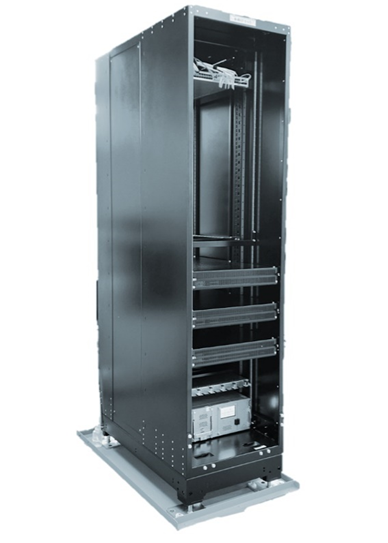
SoftBank-developed server rack
In September 2025, SoftBank announced it developed a new server rack with a cableless structure specifically designed to enable the robotic automation of data center tasks, including the installation and removal of servers, replacing faulty units, and conducting inspections.
Until now, a major obstacle to automation in data centers has been loads of cables packed inside server racks. Dense cabling makes it difficult for robots to correctly identify and handle equipment within racks, which impacts their accuracy and efficiency. To overcome this issue, SoftBank’s server rack uses a cableless design that eliminates the need for power and communication cabling. This enables robots to perform tasks—such as server installation and replacement—efficiently and smoothly, without having to manipulate or get around cables.
Key features of the “robot-friendly” server rack

Image of the rack connecting to a server
With proprietary adapters and internal structures designed and developed by SoftBank, the new rack enables the cableless installation of general-purpose servers, offering high versatility.
The rack also adopts a “bus bar” system that supplies power directly through metal bars at the rear, a “blind-mate” connector that allows simple insertion of water-cooling components for liquid cooling, and an optical connector that utilizes optical signals for communication. Taken together, these features enable cableless power, cooling and communication.
SoftBank will test the new rack by integrating it with robots in real-world environments. In collaboration with partner companies, SoftBank also plans to further advance automation in its data center operations by developing Autonomous Mobile Robots (AMRs) and Automated Guided Forklifts (AGFs).
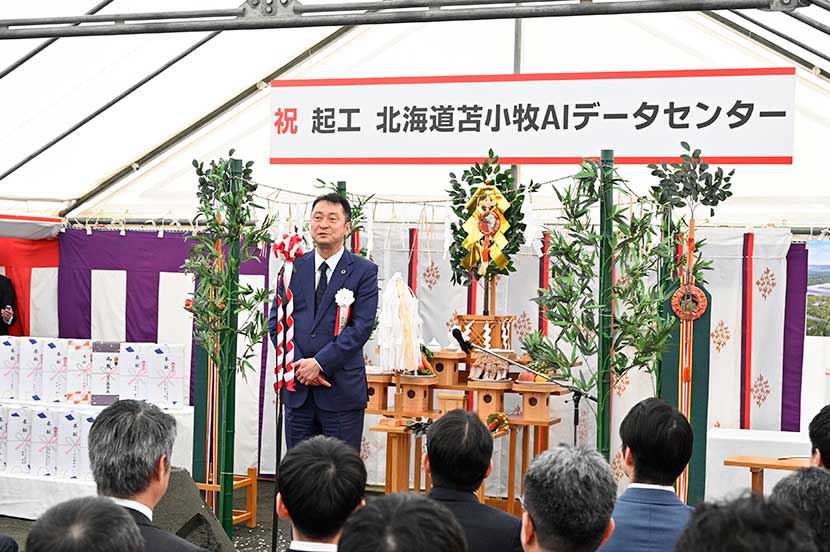
These initiatives will form part of SoftBank’s efforts to implement robotic automation at the Hokkaido Tomakomai AI Data Center, which is scheduled to start operating in fiscal 2026 (the year ending March 31, 2027).
Related News

(Posted on September 17, 2025)
by SoftBank News Editors



