
“On the Frontlines” is a series that takes a closer look at SoftBank Corp. (TOKYO: 9434) employees in the field or behind the scenes to showcase their expertise, passion and dedication to their work. In this installment, we followed Suzuka Hoshino, who works at SoftBank’s Network Center in Hiroshima Prefecture. Now in her fifth year at the company, she is responsible for maintaining power, air conditioning, fire safety and security systems at network facilities—the very infrastructure that keeps communication networks running smoothly. SoftBank News asked her about her daily work routine, the appeal of working in a regional hub and what keeps her motivated.
Suzuka Hoshino
Chugoku and Shikoku Maintenance Section, WestJapan Network Center
Network Operations Division, Technology Unit, SoftBank Corp.
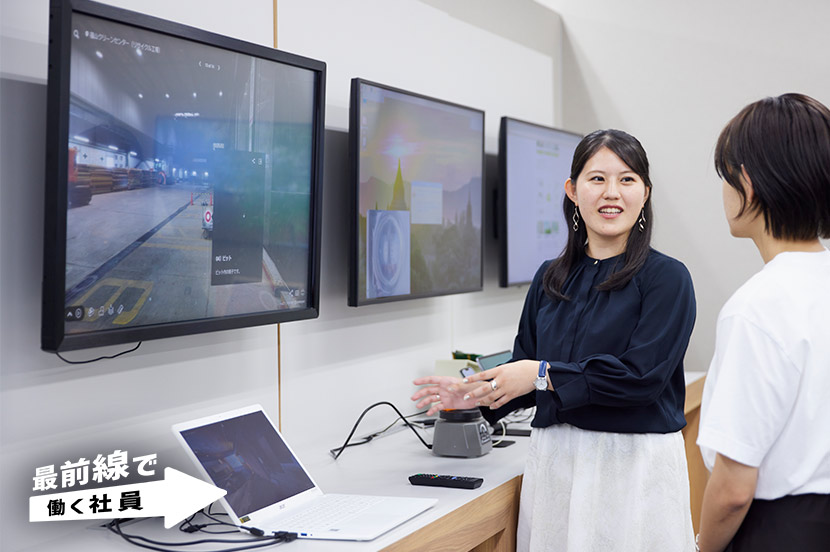
Originally from Fukuoka Prefecture, Hoshino joined SoftBank in 2021 as a Network Engineer. On her days off, she enjoys driving and going to concerts.
Performing essential network maintenance tasks, from system upgrades to troubleshooting

Tell us about your background and place of work.
Hoshino: I joined SoftBank in 2021 as a new graduate and am now part of the Network Operations Division. Our team is responsible for maintaining and managing communication equipment inside the Network Center for the Chugoku and Shikoku regions. These centers are vital nodes located across Japan that support all of SoftBank’s wireless and fixed-line communication services.
Transmission devices within each Network Center relay communication data across Japan. These devices interconnect nationwide, passing data along like a relay baton. They form the backbone of SoftBank’s entire communication network and the very ‘heart’ of our operations, so we monitor and manage them 24/7.
What does a typical day look like?
Hoshino: My main responsibilities include the maintenance of fire safety systems, security equipment, and other building facilities within the Network Center. I also handle fault response and equipment replacement projects when systems become outdated. A typical day for me is as follows.
A day in the life

9:00 Start work, review procedures and prepare for on-site tasks
After arriving at work, I start by checking emails and reviewing new estimates or construction documents. If there was a facility issue the night before, I make sure I understand what happened. In the afternoon, we have an equipment replacement project for the main power-receiving system that supplies electricity to the entire building, so I carefully review the work procedure document. I go through diagrams, equipment names, and power system schematics one by one, verifying that they match the actual on-site configuration. I also check for any unclear expressions that might confuse the technicians as it’s crucial to ensure the work can proceed safely and accurately.


12:00 Lunch Break
When I first joined, I used to bring my own lunch. But lately I’ve been going out to eat more often. There’s a great “okonomiyaki” (Japanese savory pancake) restaurant near the Network Center, and I often go there with my colleagues.


13:00 Supervising equipment replacement work
In the afternoon, I supervised a scheduled equipment replacement, following the procedure manual I reviewed earlier. Regular replacements are necessary to prevent breakdowns caused by aging equipment.


I monitor progress step by step, comparing each procedure against the manual, especially during power-switching operations. Safety is our top priority, so we check voltage levels, verify that there’s no risk of electric shock, and make sure no transmission devices are affected by the power transfer. These checks are done in collaboration with a number of people.


16:00 Weekly team meeting
Once a week, we hold a regular meeting with our entire team to share updates. We review the progress of ongoing construction and inspections, discuss upcoming schedules and identify potential challenges. The meeting also provides a chance for members to bring up any issues they encountered on-site and brainstorm so we can come up with solutions together.


17:00 Coaching junior colleagues
When instructing members new to the team, I make sure they understand why certain checks are necessary, not just how to perform them. For example, during inspections, I explain the underlying safety and communication implications so they can think and act purposefully. Over time, this helps them develop the ability to make independent judgments in the field.


17:45 Night shift: staying prepared for emergencies
During the night shift, we’re essentially on standby. We have time to eat, rest and sleep as usual. Each member takes turns covering the night shift about twice a month. New graduates in the Chugoku–Shikoku region typically take on night shift duties about six months after joining.

If an alert indicates something’s wrong with the equipment, first I check the monitoring system to determine the cause and location. Then I head to the site to perform a visual inspection and handle the first-response measures. Depending on the nature of the issue, we may also coordinate with contractors or monitoring teams to bring operations back to normal.
The first step toward safety: “Keep checking until you’re fully convinced”

Can you give us some more details about your current responsibilities?
Hoshino: Since joining the company, I’ve consistently been engaged in work that ensures the safe operation of communication equipment. Within the Network Center, the air conditioning systems that cool the communication devices play a crucial role. My main duties include managing facilities such as air conditioning and fire prevention systems that protect the transmission equipment supporting communication. I handle a wide range of tasks that cover responding to equipment issues, conducting inspections, ordering replacements for aging systems, reviewing construction manuals and supervising on-site work.
Safety must always be a top priority in your line of work. How do you keep it in mind?
Hoshino: At SoftBank, we have a company-wide rule called the “Ten Fundamental Safety Principles.” They outline the basics of safety management, such as pre- and post-work checks and hazard prediction. Our team has created a localized version tailored to on-site conditions, and every member keeps a copy attached to the back of their smartphone so they can review it anytime.

Personally, I always make sure to conduct checks until I’m fully convinced that everything is OK. Even a small oversight can lead to a major problem, so I never ignore the slightest sense of discomfort. If I have any doubts about the order of procedures in a manual, I check directly with the contractor. I believe that truly understanding what you’re doing before you start is the very first step toward ensuring safety.
Is there any project you took the initiative on?
Hoshino: The rooms used for night duty are spaces where we spend long hours, so it’s essential to create an environment where everyone can feel comfortable and safe. I proposed and helped lead a project to convert a storage room into a new women’s night-duty room while working closely with related departments and contractors.
We reused the existing air conditioning system while designing the layout, selected furniture and equipment, and adjusted the lighting switch placement. The result was a comfortable, secure space where anyone can rest and work with peace of mind. Taking the initiative to identify a problem and turn it into a solution boosted my confidence—and it made the workplace better for everyone. Through this experience, I realized that my role isn’t just to maintain the safety of facilities, but also to create an environment where people can work with confidence and perform at the highest level.
What do you enjoy most about working in Hiroshima?
Hoshino: Hiroshima is a very convenient city with an excellent public transportation system that includes streetcars running through the city center. My commute is smooth and rarely congested. The workplace atmosphere is also very warm. We even have casual gatherings like “takoyaki” (savory batter balls) parties for team building.
How do you like to spend your time off?
Hoshino: Lately, I’m really into driving. I often use car-sharing services to go on trips with friends or junior colleagues. Driving along the Seto Inland Sea or through nature-rich areas helps me refresh and recharge. Since moving to Hiroshima, I’ve also started going to baseball games more often because the stadium is close to the office. I’m originally from Fukuoka, so I’m a Fukuoka SoftBank Hawks fan. I quietly support them among all the Hiroshima Carp fans around me (laughs).


What are your future career goals?
Hoshino: I really enjoy working with environmental infrastructure—such as building systems, power supplies, and air conditioning equipment that support communication networks. I want to continue building my experience in this field. Right now, my main focus is maintaining facilities, but in the future, I’d like to work in a department that designs and implements new systems.
My long-term goal is to become an engineer who can leverage on-site experience to design and propose systems that enhance both safety and efficiency. By combining perspectives from both the operations and implementation sides, I hope to contribute to building facilities that are not only reliable, but also smarter and more sustainable.

Related Articles

(Posted on November 26, 2025)
by SoftBank News Editors



