Going to and working at the office is no longer what it used to be. In addition to providing comfort and supporting changing workstyles, buildings need to address broader social challenges, such as labor shortages driven by an aging population, rising operational costs. They also need to facilitate the transition to a decarbonized society.
To meet these evolving needs, Tokyu Land Corporation, Tokyu Community Corp., SoftBank Corp. and its group company SynapSpark Ltd. signed an agreement in August 2025 to jointly realize a next-generation building concept called “Autonomous Building.”
SoftBank News spoke with representatives from the four companies to learn more about the initiative and their vision for the future.
Optimizing all aspects of building management by using data and AI
Proposed by SoftBank, Autonomous Building is a next-generation smart building that continuously evolves through the use of AI, IoT, and a Building OS. Conventional smart buildings have faced challenges such as limited interoperability between internal building systems and externally developed applications. This has made it difficult to analyze building-wide data or improve operational efficiency. Interoperability issues have also prevented buildings from benefiting from the latest technologies, often resulting in a gradual decline in their asset values over time.
As a core function, the Autonomous Building concept embeds a mechanism that centrally manages and connects data from various building systems—including air conditioning, lighting, and security cameras—that were previously optimized independently. The framework enables the real-time, holistic optimization of equipment operation and energy usage across the entire building. In addition, by linking with externally developed applications, buildings can operate on their own autonomously and continuously evolve by expanding their functionality over time.
Demonstration launched at Tokyo Portcity Takeshiba in 2023
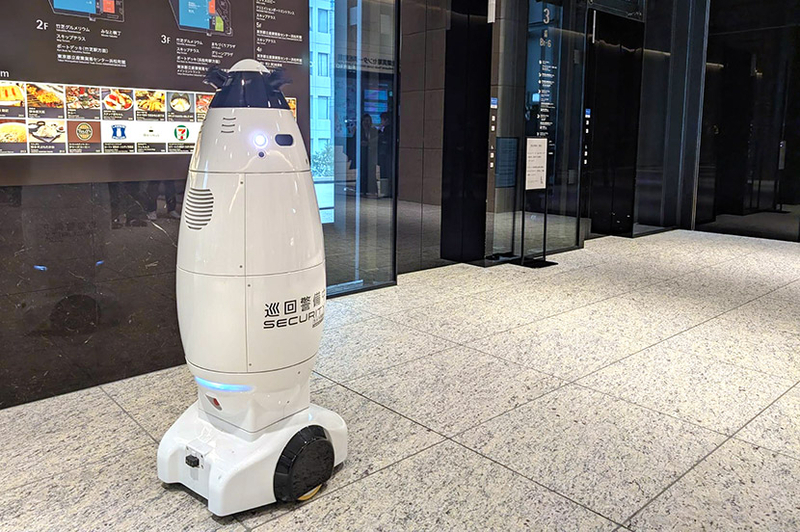
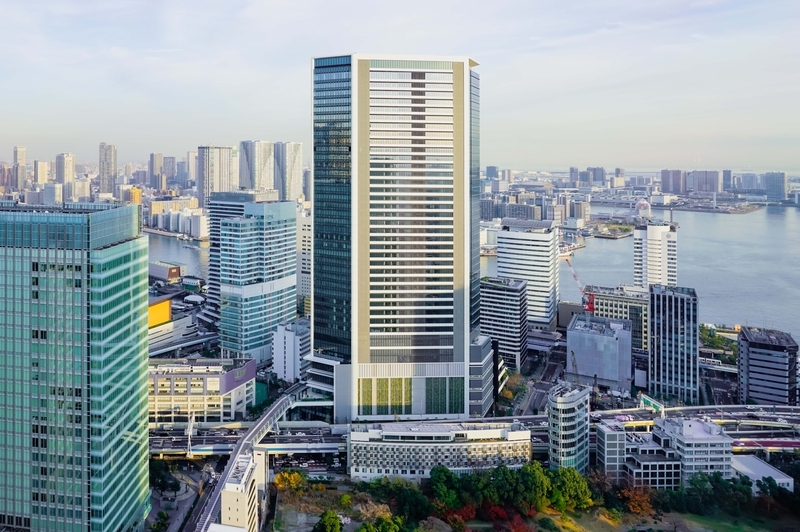
At Tokyo Portcity Takeshiba, where SoftBank’s headquarters is located, demonstrations have been underway since 2023 to optimize building management operations, including cleaning, security and energy management, through data integration. The office complex is equipped with IoT sensors and security cameras, and cleaning and security robots have been in operation since 2020.
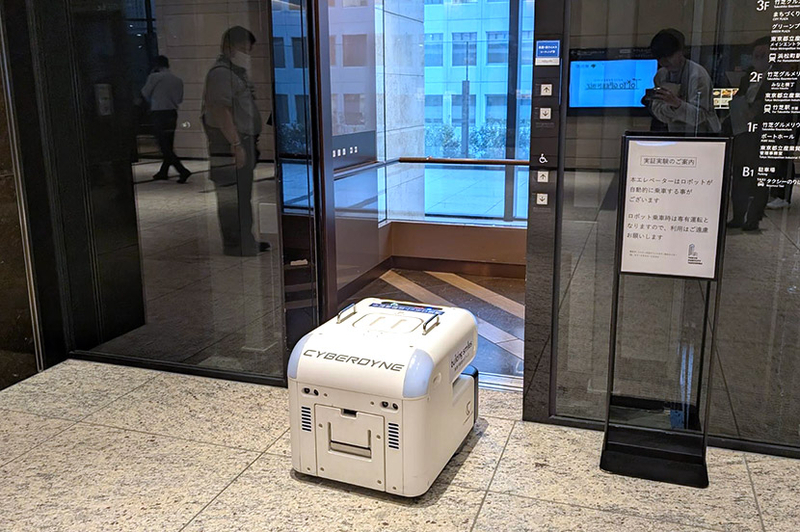
A cleaning robot integrated with the building’s elevator system
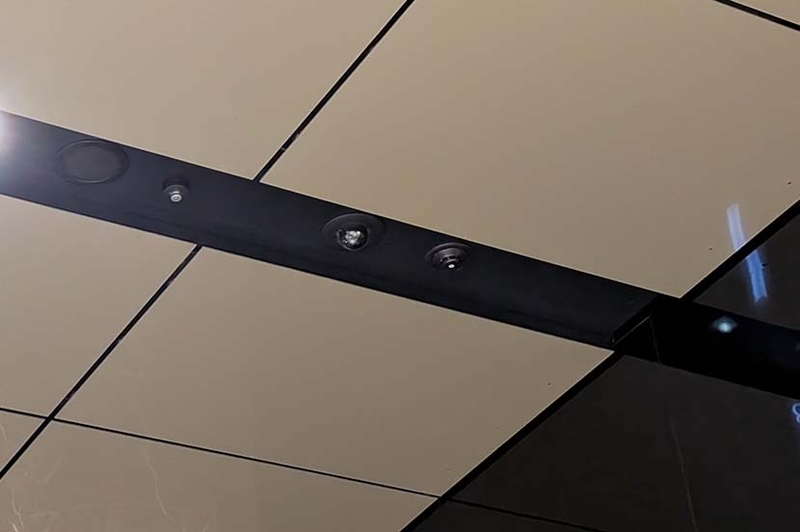
A sensor camera installed in the ceiling
Data collected from cleaning robots, security robots and approximately 1,400 sensors installed throughout the building is visualized and can be monitored around the clock from the building management control room.
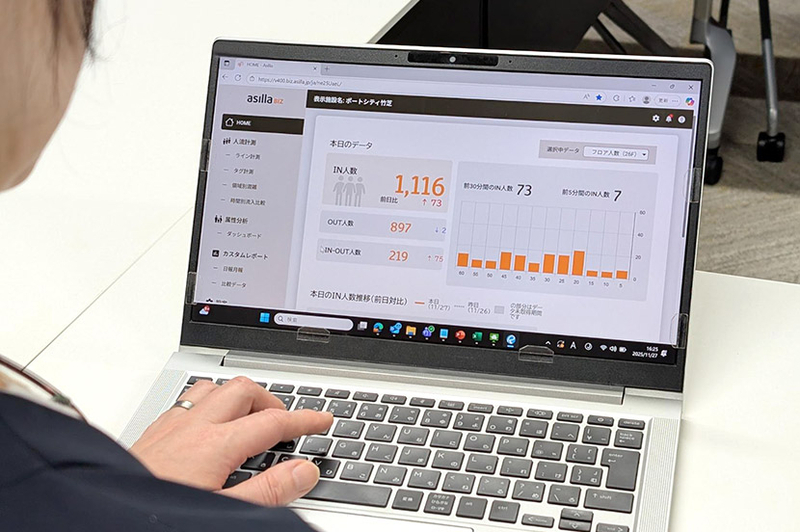
When the building first opened in 2020, efforts focused on collecting data, such as congestion levels and vacant space, and delivering that information to both building managers and users. In the following years, the team explored ways to further leverage this data for building maintenance use cases.
One example includes using sensor data on restroom usage and trash bin levels to optimize cleaning frequency and waste collection timing. As a result, Tokyo Port City Takeshiba has successfully reduced cleaning staff working hours, cut CO₂ emissions by approximately two tons annually and reduced water usage by about 82,000 liters per year.
Combining Expertise to Realize Autonomous Buildings
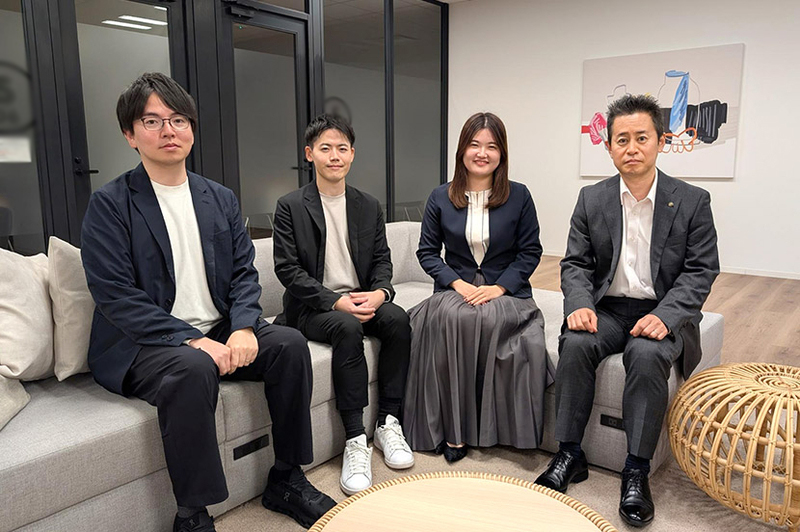
From left: Shingo Ueda of SynapSpark, Shota Taguchi of SoftBank, Rino Sasaki of Tokyu Land and Shigeru Hisaeda of Tokyu Community
What role is each company playing in this initiative?
Sasaki (Tokyu Land): Tokyu Land’s primary role as a facility operator is to provide fields for demonstration, such as the Tokyo Portcity Takeshiba and Shibuya Solasta buildings, where new trials will begin. These locations allow us to collect the data needed to advance this initiative.
Hisaeda (Tokyu Community): Our role at Tokyu Community is to contribute expertise for on-site management. We want to connect the know-how we’ve accumulated, such as what’s required to manage buildings effectively and how maintenance should be carried out, to the Autonomous Building framework.
Taguchi (SoftBank): SoftBank provides the Building OS and services that use sensors and AI to detect, visualize, and systematize building management know-how. Together with IT professionals specializing in AI, networks and system integration, we’re working to implement this concept in the real world.
Ueda (SynapSpark): To realize Autonomous Buildings, it’s essential to analyze the unique characteristics of each building. Types of equipment, configurations, and available sensor data vary from building to building, so we aim to apply SynapSpark’s expertise in architecture and IT to develop use cases tailored to each facility.
How did this partnership come about?
Sasaki (Tokyu Land): Our primary goal is to join forces so we can make the Autonomous Building concept a reality. This is not something a single company can achieve on its own. Through this agreement, we’ve created a framework that combines each company’s strengths. Since Tokyo Portcity Takeshiba opened in 2020, we’ve worked closely together on smart building operations and have seen SoftBank’s exceptional ability to drive initiatives and create new value within the IT industry. That experience led us to continue working together.
Taguchi (SoftBank): Since launching our smart city business in 2020, we’ve been applying AI and platform technologies to buildings. Real estate assets aren’t rebuilt frequently, so we want to provide a mechanism that continuously enhances building value using SoftBank’s technology to increase satisfaction for both building occupants and management companies.
Hisaeda (Tokyu Community): Building management faces serious challenges such as labor shortages and rising personnel costs. The Autonomous Building concept can address these issues. Even in situations where labor is limited, we believe the framework can provide effective alternatives.
As more employees return to the office, how is office demand changing?
Sasaki (Tokyu Land): After remote work became widespread during the pandemic, we’re now seeing a trend of employees returning to the office. More tenants are thinking carefully about why employees should come to the office. It’s no longer enough to simply provide office space—we need to clearly offer reasons and provide value that makes people want to be there.
Ueda (SynapSpark): As more companies look to bring employees back to the office, the value we can offer lies in creating office environments and shared spaces that align with user needs, backed by data. In that sense, enhancing building value through smart, software-driven solutions is becoming increasingly important.

What does the future hold?
Sasaki (Tokyu Land): In the long term, we’re also looking toward “group management,” where multiple surrounding buildings are managed collectively at a higher level. For now, our focus is on improving management efficiency on an individual building basis while enhancing user comfort and adding value. By taking steady steps, we aim to firmly establish the Autonomous Building concept.
Taguchi (SoftBank): By combining the expertise of all four companies, we want to implement the Autonomous Building concept and develop an industry-leading service. As these smart buildings become more widespread, we hope to contribute to solving social challenges such as labor shortages due to an aging population, rising operational costs, and the shift toward a decarbonized society.
Related Articles
(Posted on January 23, 2026)
by SoftBank News Editors



