Press Releases 2026
SoftBank Corp. Achieves Japan's First Mobile Connectivity
Using a Disaster Relief Unit
Mounted on a Large Remotely Piloted Aircraft
- SoftBank Corp. completed process that encompassed Japan-manufactured pod housing communication equipment to aircraft integration and airworthiness approval
- Confirmed establishment of communication coverage area on ground from altitude of 3,000 meters
- Aiming for real-world deployment as a solution for emergency mobile communications during disasters
October 2, 2026
SoftBank Corp.
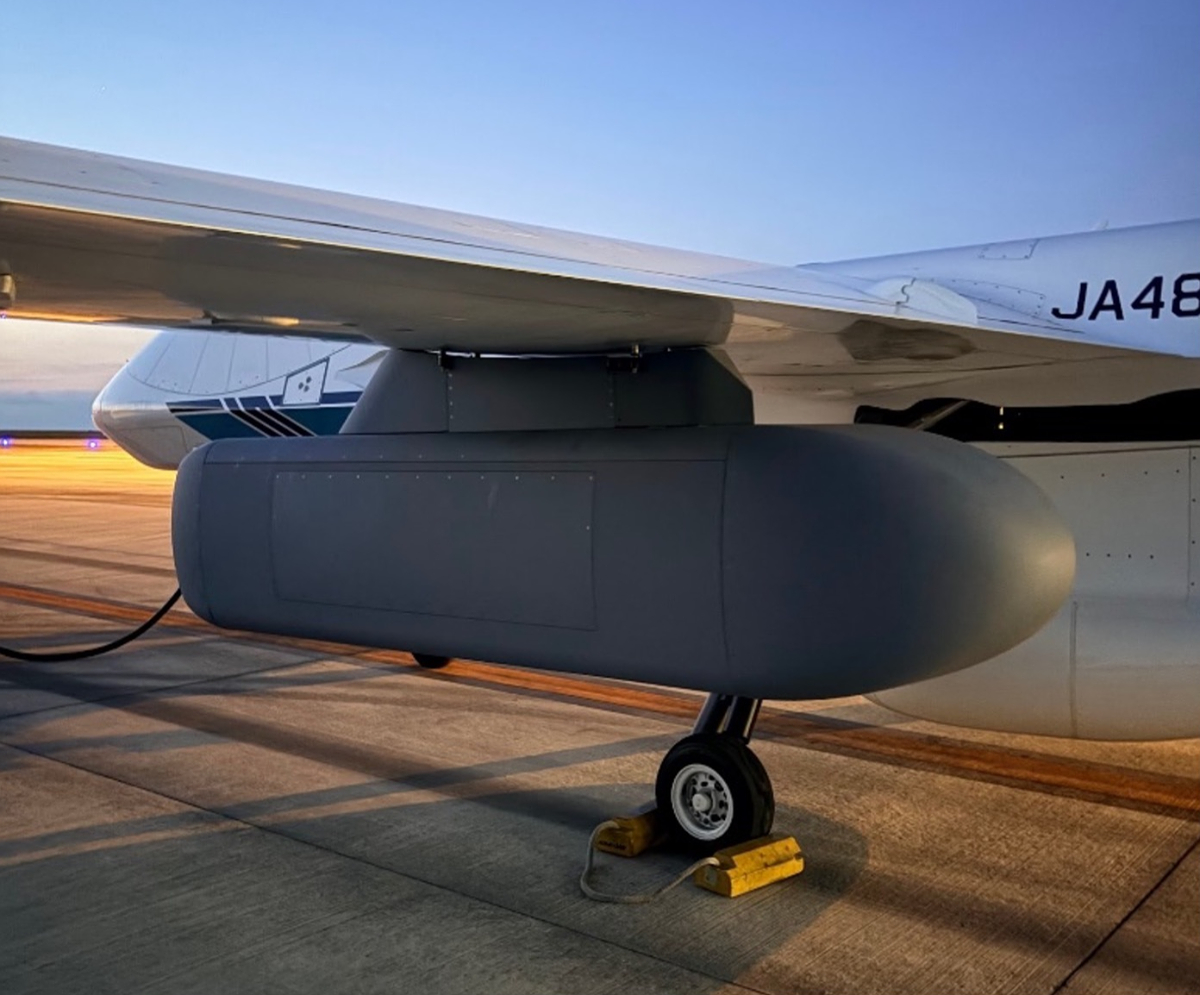
SoftBank Corp. (President & CEO: Junichi Miyakawa, "SoftBank") announced it conducted a verification trial to provide mobile communications from the air by housing a communication unit (Disaster Relief Unit Pod, "DRU Pod"), designed and manufactured in Japan, and mounting it on a large remotely piloted aircraft system (Remotely Piloted Aircraft System, "large RPAS"), with the goal of rapidly establishing temporary communication coverage on the ground when terrestrial networks are disrupted during large-scale disasters. By transmitting radio waves from a large RPAS flying at an altitude of 3,000 meters, SoftBank successfully established a ground communication area with a diameter exceeding 5 km. This verification trial marks the first time in Japan* that mobile communications have been successfully provided from the air using a DRU Pod designed and manufactured in Japan for a large RPAS.
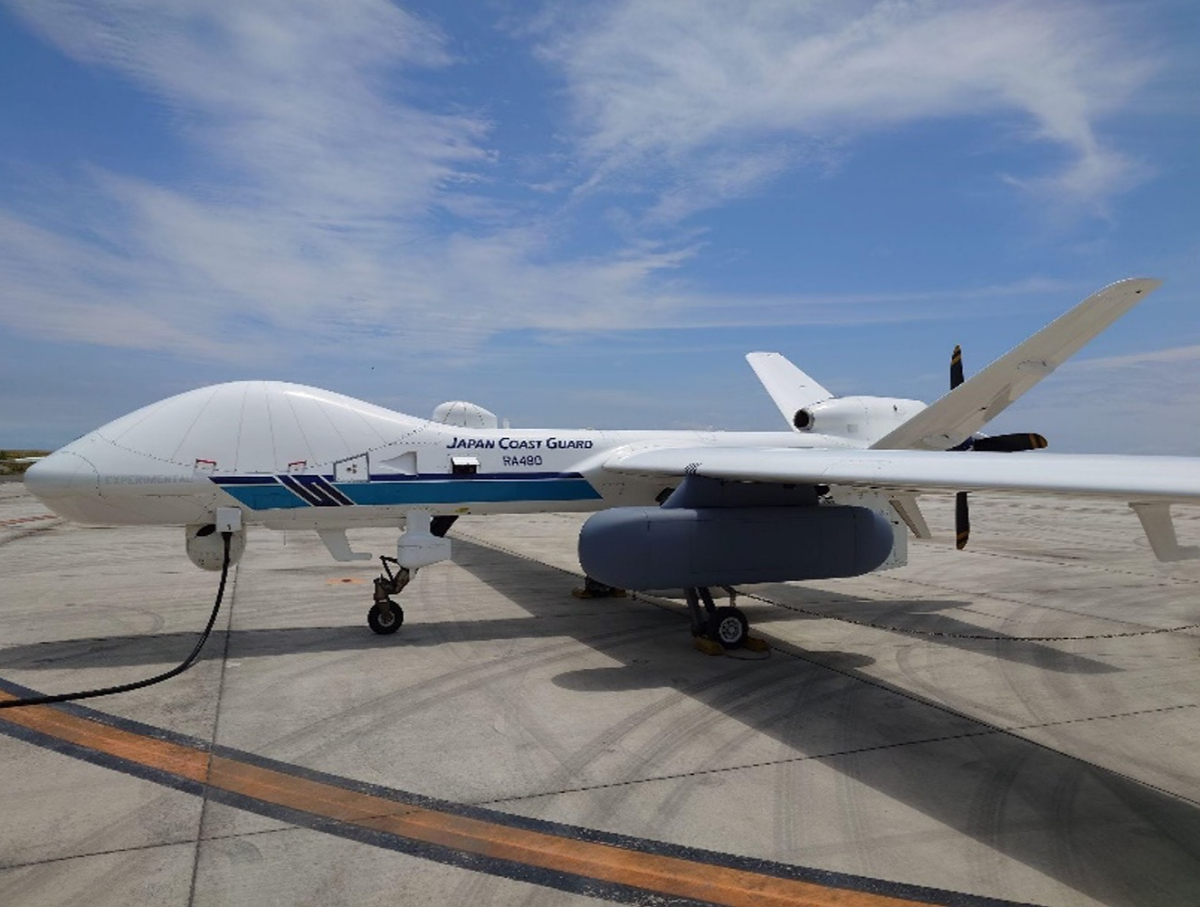
In conducting this verification trial, SoftBank completed a series of processes required for practical deployment, including conformity verification for manufacturing of the DRU Pod in Japan, integration into the aircraft, confirmation of flight safety, and obtaining airworthiness approval for the aircraft equipped with the DRU Pod. This verification trial was conducted using a large RPAS owned by the Japan Coast Guard (JCG) through inter-ministerial cooperation between the Ministry of Internal Affairs and Communications (MIC) and the JCG.
The success of this verification trial is expected to accelerate the early realization of an emergency coverage solution during disasters using large RPAS as communication platforms. Going forward, utilizing the data and insights gained from this trial, SoftBank will continue to advance the development of related technologies and study operational methods, aiming for the real-world deployment of emergency coverage solutions during disasters.
- [Note]
-
- *Based on publicly available information as of October 2, 2026 (according to SoftBank research).
- *
1. Background and purpose of verification trial
In recent years, there are growing concerns that terrestrial communication networks could become unavailable or difficult to use over long periods and wide areas due to large-scale disasters such as earthquakes and typhoons. SoftBank is advancing initiatives to quickly establish temporary communication coverage during such emergencies. As part of these efforts, with the cooperation of Kuroshio Town, Hata District, Kochi Prefecture, SoftBank conducted a technical verification trail in March 2026 to establish communication coverage on the ground from the air by mounting the DRU Pod on a helicopter. Building on the results of that verification, SoftBank conducted this trial by mounting the DRU Pod on a large RPAS, with a view toward the practical deployment of emergency network coverage solutions during disasters.
In addition to inter-ministerial cooperation between MIC and JCG, this verification trial was conducted with the cooperation of U.S.-based General Atomics Aeronautical Systems, Inc. ("GA-ASI"), using the GA-ASI SeaGuardian (MQ-9B) large RPAS owned by the JCG. This series of initiatives, including the trial, was carried out as part of a commissioned research project titled " Development of Aerial Mobile Network Systems for Rapid Coverage Restoration in Disaster-Affected Areas (JPJ012368C07601)," which was selected in 2023 under the "Beyond 5G (6G) Fund Program" promoted by MIC through the Information and Communications Fund established at the National Institute of Information and Communications Technology (NICT).
2. Process from DRU Pod manufacturing to airworthiness approval
For this verification trial, SoftBank manufactured the DRU Pod housing communication equipment and antennas in Japan based on GA-ASI's design data and quality requirements, and completed the following processes required for flight verification. As a result, SoftBank gained knowledge related to the technology, quality, and certification required to safely mount self-developed communication equipment onto a large RPAS.
Conformity verification:
During manufacturing, conformity verification was conducted for raw materials, manufacturing processes, functionality, and configuration management to confirm that the product met designated design, manufacturing and quality requirements.
Aircraft integration and flight safety confirmation:
To mount the DRU Pod onto the large RPAS, evaluations of thermal environments, electromagnetic compatibility (EMC), and other factors were conducted to integrate it into the aircraft. Following ground functional checks and preliminary safety reviews required for test flights, safety confirmation tests were conducted on the ground and in the air. These tests confirmed that the effects of mounting the DRU Pod on aircraft stability, maneuverability, vibration characteristics and existing aircraft systems were within a range that did not interfere with safe operation.
Acquisition of airworthiness approval:
Following an evaluation by GA-ASI based on manufacturing records, aircraft integration analysis, safety evaluations, and ground/flight test results of the DRU Pod, airworthiness approval was obtained for the aircraft configuration equipped with the DRU Pod. This enabled flight verification for providing mobile communications with the DRU Pod mounted on the aircraft.
3. Trial overview and system configuration
In this verification trial, the DRU Pod manufactured by SoftBank in Japan was mounted on GA-ASI's large RPAS, which flew in a circular pattern at an altitude of 3,000 meters off the coast of Kuroshio Town, Kochi Prefecture, to evaluate the formation of a ground communication area and communication quality.
Network architecture:
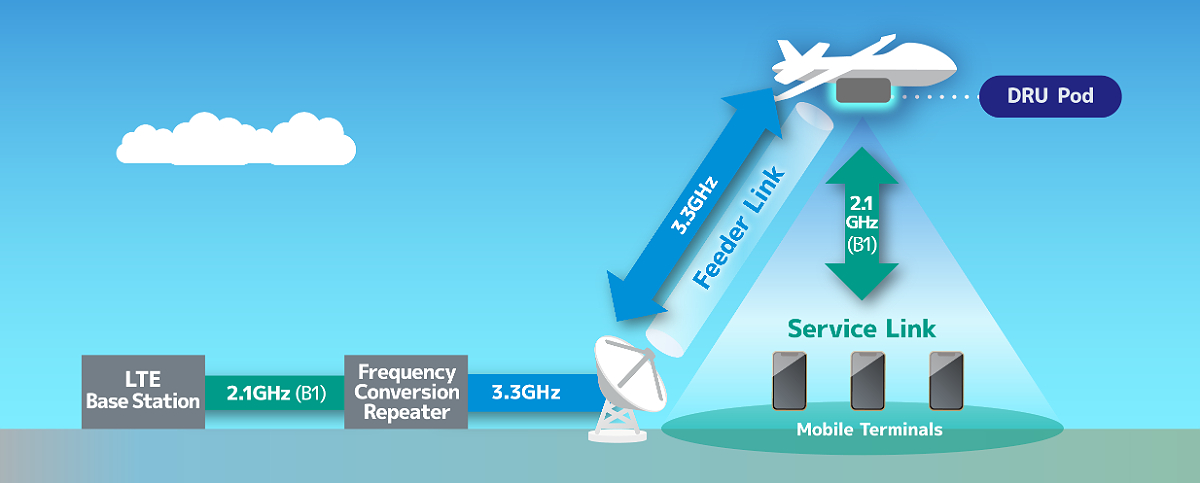
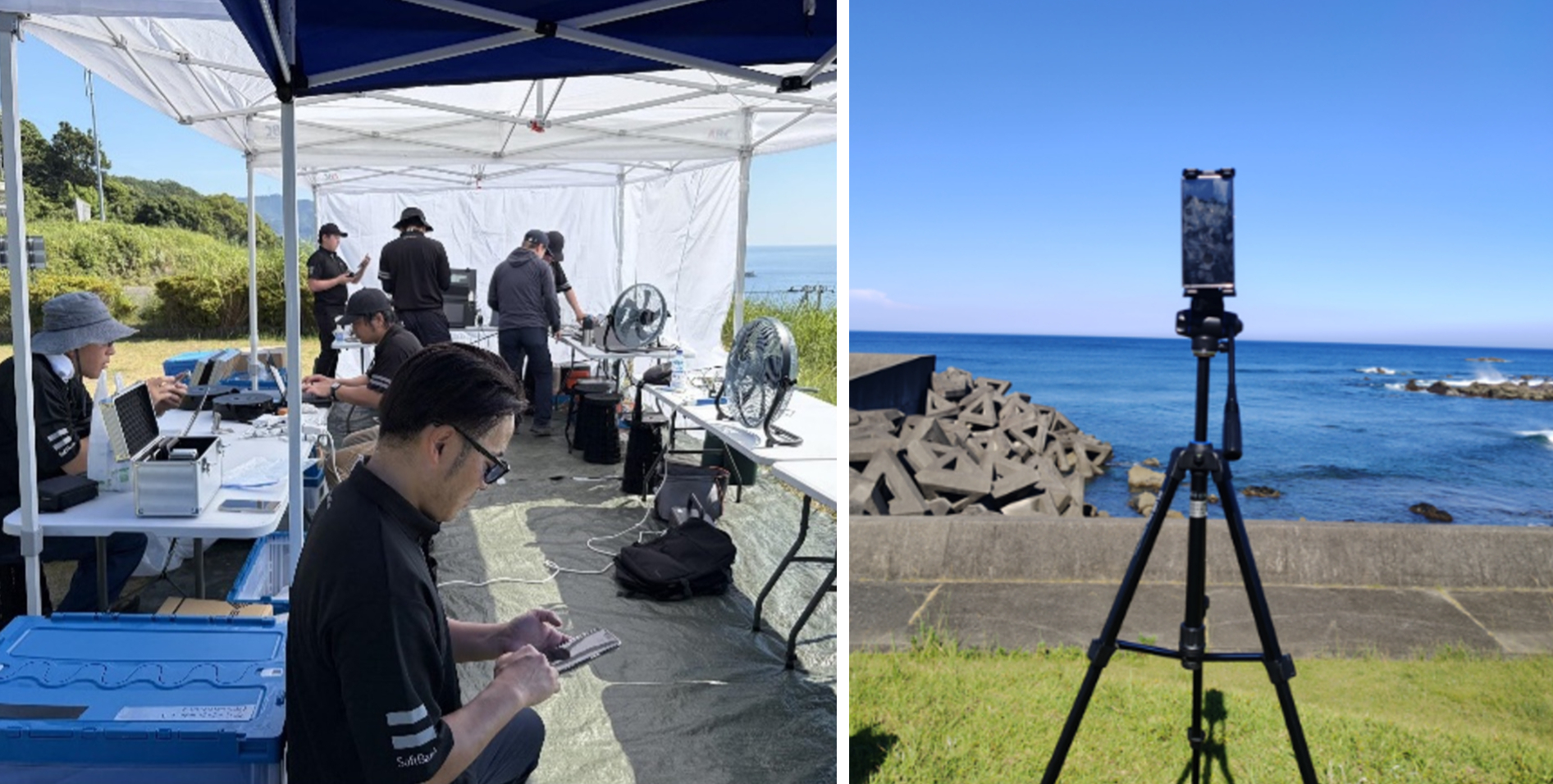
On the ground, a gateway (a ground station connected to a base station) consisting of an LTE base station and a frequency conversion repeater was established. For the feeder link connecting the DRU Pod and the gateway, radio waves in the 2.1 GHz band output from the ground base station were converted to the 3.3 GHz band by the frequency conversion repeater and transmitted to the airborne aircraft. Furthermore, the communication relay equipment inside the DRU Pod mounted on the aircraft converted the signals back to the 2.1 GHz band to provide communication services to mobile terminals on the ground via the service link.
Utilization of gimbal technology:
The feeder link and service link antennas housed inside the DRU Pod utilized gimbal technology that compensates for aircraft motion in real time. This enables the antennas to continuously point toward the ground gateway and service area regardless of changes in aircraft attitude or turbulence during flight.
4. Verification results:
By transmitting radio waves from an altitude of 3,000 meters, SoftBank confirmed that a communication area with a diameter exceeding 5 km could be established on the ground . Additionally, even under circular flight conditions, the gimbals mounted on the antennas tracked changes in aircraft attitude, successfully correcting antenna orientation in real time toward the appropriate direction.
When assessing communication quality under simulated disaster conditions, communication speeds of up to 20 Mbps downlink and up to 5 Mbps uplink (with a bandwidth of 5 MHz) were confirmed outdoors. This indicates that communication quality could meet data communication demands expected during a disaster, such as safety confirmations and the sharing of damage status via videos and photos by local governments and rescue agencies.
Going forward, SoftBank will use the data and insights gained from this verification trial to enhance the DRU Pod and related technologies and study operational methods, with the aim of deploying emergency coverage solutions for use during disasters.
- SoftBank, the SoftBank name and logo are registered trademarks or trademarks of SoftBank Group Corp. in Japan and other countries.
- Other company, product and service names in this press release are registered trademarks or trademarks of the respective companies.