Press Releases 2026
SoftBank Corp. Launches Gigawatt-Hour-Scale
Battery Business in Japan to Build Next-Generation
Infrastructure that Supports the AI Era
End-to-end approach will encompass development to manufacturing stages
to produce innovative battery cells and energy storage systems with advanced technologies
May 11, 2026
SoftBank Corp.
SoftBank Corp. (President & CEO: Junichi Miyakawa, "SoftBank") launched a Japan-based battery business aimed at building next-generation power infrastructure to support the rapidly increasing demand for electricity being driven by AI adoption. SoftBank will promote an end-to-end approach that encompasses development to manufacturing stages to produce innovative battery cells and Battery Energy Storage Systems (BESS) with advanced technologies. SoftBank will utilize the AI Data Center it is developing on the former Sharp Corporation factory site in Sakai City, Osaka Prefecture (the "Osaka Sakai AI Data Center") as a core hub to establish its AX Factory and the GX Factory.*1 At the GX Factory, SoftBank plans to begin manufacturing battery cells and energy storage systems from the fiscal year ending March 31, 2028 (FY2027), with the aim of achieving mass production on a gigawatt-hour (GWh)-per-year scale by around FY2028.
In launching its Japan-based battery business, SoftBank is collaborating with two companies possessing expertise in advanced battery-related technologies. For battery cells, with a view to mass production, SoftBank began collaborating with COSMOS LAB (CEO: Ju-Hyuk Lee, "COSMOS LAB") to jointly develop innovative battery cells that combine highly safe and non-flammable characteristics with superior energy storage performance. The zinc-halogen batteries developed by COSMOS LAB use pure water as its electrolyte, and its key feature is its ability to eliminate fire risks associated with the currently dominant lithium-ion batteries. SoftBank and COSMOS LAB aim to establish technology for mass production at an early stage, and commence mass production around FY2027.
For energy storage systems, SoftBank began collaborating with DeltaX Co., Ltd. (CEO: Stephen Kim, "DeltaX") to develop and manufacture an energy storage system that achieves world-class energy density.*2 In the development of energy storage systems, DeltaX's Cell Connecting System (CCS) design*3 and Cell to Pack (CTP) technology*4 make it possible to maximize the performance of each individual battery cell, and by applying these technologies to next-generation battery cells, further improvements in energy storage performance can be achieved. Furthermore, SoftBank will integrate an energy management system (EMS) equipped with AI-based power demand forecasting capabilities developed through its electricity business, and design and develop an energy storage system that achieves world-class energy density, with the aim of achieving mass production on a GWh-per-year scale.
SoftBank plans to deploy these Japan-produced batteries at the large-scale AI data centers it is developing. SoftBank also plans to provide them sequentially for grid applications in Japan, as well as for factories and other industrial uses, as well as for residential use, with a view to expanding into global markets over the medium term. Through these initiatives, SoftBank aims to achieve annual revenue of over 100 billion JPY for its domestic battery business by FY2030.
About Innovative Battery Cells
Innovative battery cells are the world's first*5 to integrate the technologies of two types of next-generation batteries that are attracting attention as future battery technologies. By using a halogen-based material for the cathode and zinc for the anode, it offers charge-discharge characteristics with minimal energy loss and achieves energy efficiency equal to or greater than lithium-ion batteries.
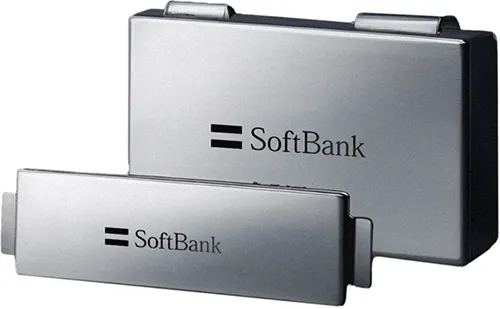
In addition, as innovative battery cells do not use a flammable organic electrolyte and instead use pure water as the electrolyte, the risk of ignition does not arise in principle due to its structure, thereby achieving a high level of safety. Furthermore, key raw materials, such as halogen and zinc, can be procured locally in Japan, helping to strengthen the supply chain.
About Battery Energy Storage Systems (BESS)
A battery energy storage system (BESS) is energy infrastructure centered on battery cells that handle power storage, supply and supply–demand optimization. With the expansion of renewable energy adoption and increasing variability in power supply and demand, BESS is becoming critical infrastructure that supports the stable supply of electricity. This system leverages DeltaX's world-leading BESS technologies. Through the adoption of its proprietary CCS design and CTP technology, along with rigorous reductions in component count and the minimization of unused space within the enclosure, DeltaX has achieved a storage capacity of 5.37 MWh in a standard containerized lithium-ion battery BESS and aims to achieve comparable or greater capacity with innovative battery cells.
In addition, by incorporating an EMS equipped with an AI-based power demand forecasting function developed independently by SoftBank, optimal control of charging and discharging will be achieved, enabling efficient and stable operation in accordance with varying electricity demand and renewable energy generation levels.
Through this business, SoftBank will actively promote initiatives to ensure a stable supply of electricity and enable efficient energy utilization while contributing to the development of next-generation power infrastructure in Japan.
- [Notes]
-
- *1As part of this industrial cluster centered on the AI Data Center, the AX Factory will serve as a hub for AI data center operations and AI infrastructure hardware manufacturing, while the GX Factory will serve as a manufacturing hub for next-generation batteries, solar panels, and related products.
- *2Energy density exceeding 5.00 MWh in a standard commercial container (20-foot high-cube container), as of May 11, 2026, according to SoftBank's research.
- *3A proprietary design that connects multiple battery cells with high efficiency and safety, maximizing overall battery performance.
- *4A proprietary technology that, through unique manufacturing methods such as directly packaging battery cells without modularization, reduces component count and minimizes unused space within the enclosure to achieve high energy density, lightweight design, and lower costs.
- *5This is the world's first product among commercially deployed aqueous zinc–halogen battery cells to achieve energy density comparable to lithium-ion batteries, as of May 11, 2026, according to SoftBank's research.
- *1
- SoftBank, the SoftBank name and logo are registered trademarks or trademarks of SoftBank Group Corp. in Japan and other countries.
- Other company, product and service names in this press release are registered trademarks or trademarks of the respective companies.