Press Releases 2026
SoftBank Corp., Hitotsubashi University and
NIPR Achieve World's First Demonstration of
Laser Ranging by Tracking a HAPS
from the Ground
- Team successfully tracked a HAPS operating in stratosphere in real time while continuously receiving reflected laser signals
- Utilized a corner cube reflector designed for HAPS and compact, portable laser ranging system
- Demonstration marks step forward toward future optical wireless communications between satellites, HAPS and the ground
September 17, 2026
SoftBank Corp.
Hitotsubashi University
National Institute of Polar Research
SoftBank Corp. (President & CEO: Junichi Miyakawa, "SoftBank"), Hitotsubashi University (President: Toshihiko Kato) and the National Institute of Polar Research (Director General: Yoshifumi Nogi, "NIPR") announced today they successfully demonstrated the world's first*1 real-time ground-based tracking and laser ranging*2 of a High Altitude Platform Station ("HAPS") operating in the stratosphere.
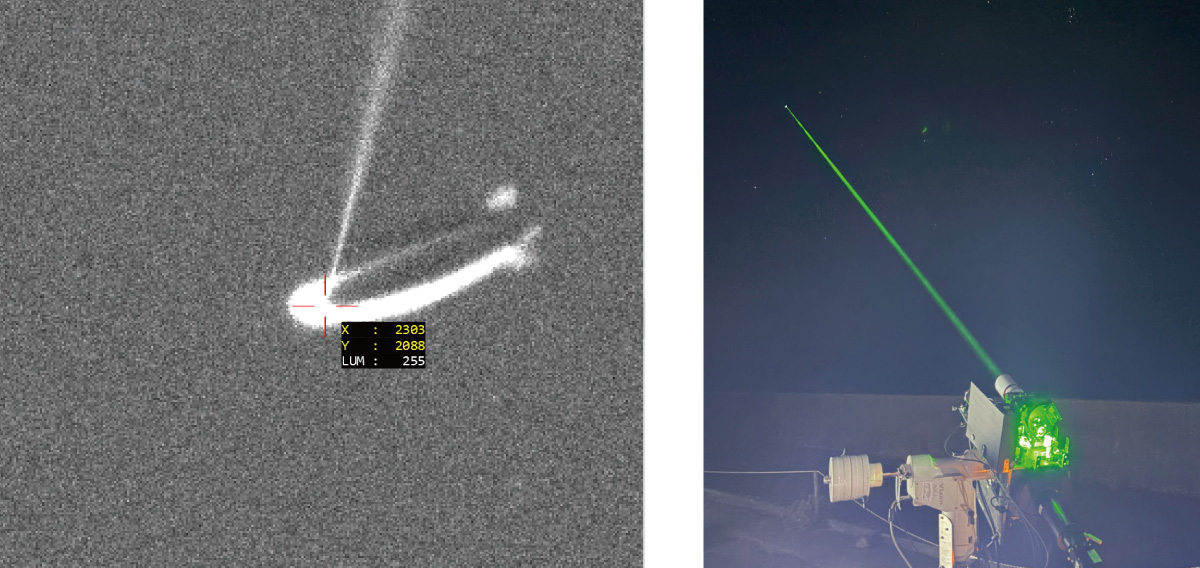
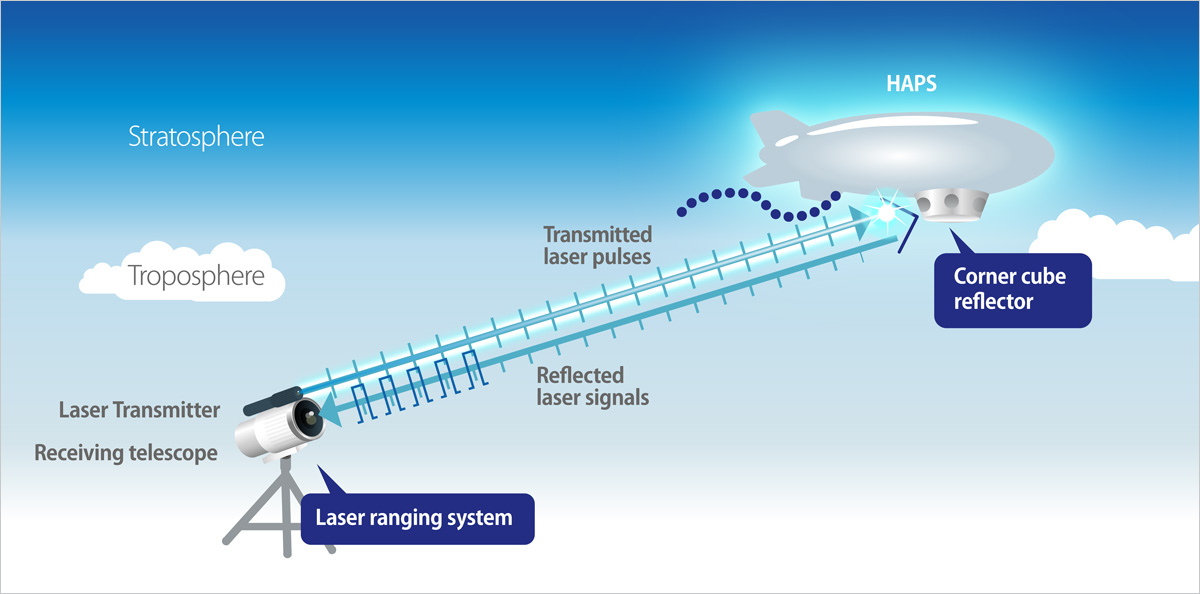
HAPS, also referred to as "base stations in the sky," operate in the stratosphere to provide wide-area communications coverage. In the demonstration, a corner cube reflector (CCR)*3 developed for HAPS was installed on an LTA (Lighter Than Air)-type*4 HAPS owned and operated by Sceye, Inc. ("Sceye"), and laser pulses were transmitted from the ground using a compact, portable laser ranging system. As a result, the team successfully conducted laser ranging by continuously receiving the reflected laser signals while tracking the HAPS in real time as it operated in the stratosphere.
In the future, this technology will enable a HAPS to be tracked from the ground or satellites as its position changes dynamically while remaining aloft. In addition, by analyzing the data obtained in this demonstration, including the attenuation of light as it propagates through the atmosphere between the ground and the stratosphere, the team can now examine in detail the requirements for optical wireless communication equipment on HAPS and how such equipment should be installed. This achievement represents an important step toward realizing future optical wireless communications between satellites, HAPS and the ground.
- [Notes]
-
-
*1
This is the world's first successful demonstration of laser ranging in which a HAPS operating in the stratosphere was tracked from the ground while laser pulses were transmitted toward it, with the reflected light from a corner cube reflector (CCR) mounted on the HAPS continuously received on the ground. Based on publicly available information as of September 8, 2026, according to research by SoftBank, Hitotsubashi University and NIPR.
-
*2
Laser ranging is a technique for measuring the distance to an object by transmitting short laser pulses toward the object and measuring the time it takes for the reflected light to return.
-
*3
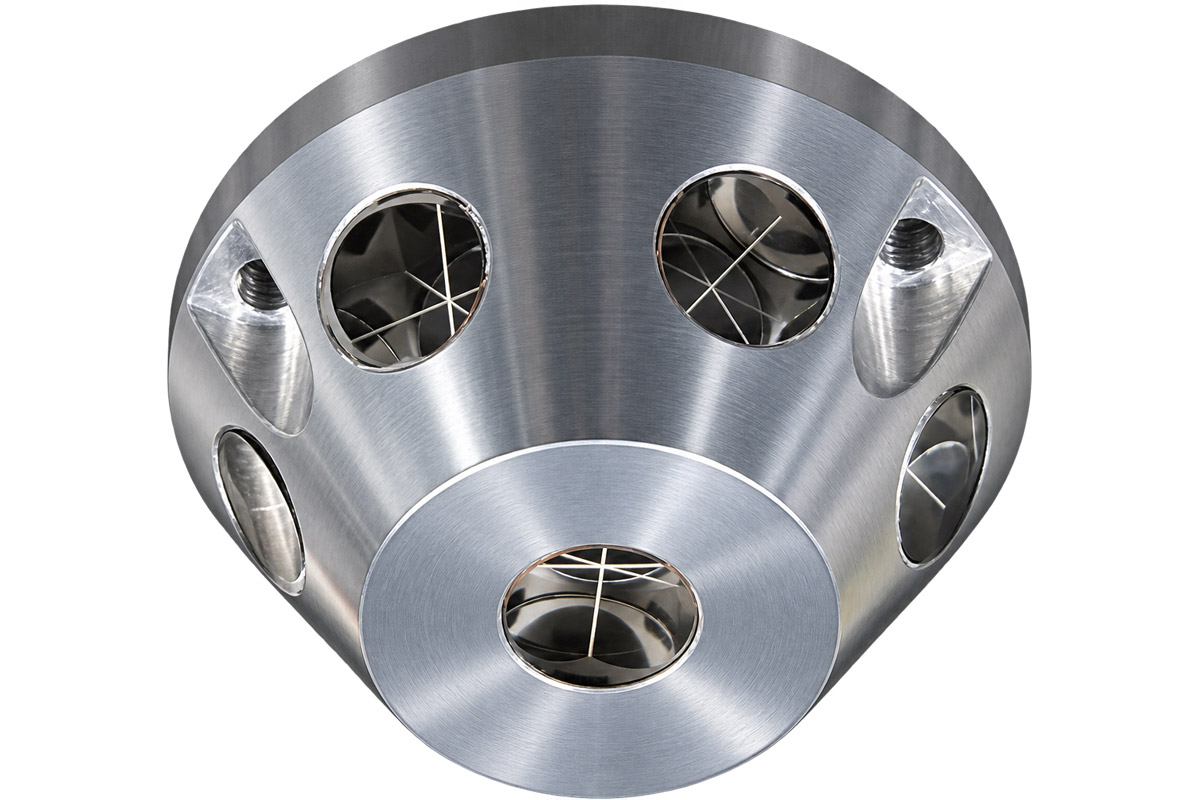
A corner cube reflector (CCR) is a reflector that returns incoming light 180 degrees toward its source (retroreflection), regardless of the angle at which the light enters the reflector.
-
*4
An LTA (Lighter Than Air)-type HAPS is a lighter-than-air platform that uses buoyancy to remain aloft.
-
*1
Background of the demonstration
In recent years, optical wireless communications have attracted attention as a next-generation high-speed communication technology to support non-terrestrial networks (NTN) such as satellite communications and HAPS. While already in practical use for inter-satellite links, the technology is expected to contribute to the immediate relay of Earth observation data, connectivity in underserved areas, rapid restoration of communications in disaster situations, and low-latency intercontinental backbones, thereby enabling fast, high-capacity, and flexible network deployments.
Against this backdrop, SoftBank has been advancing initiatives to demonstrate optical wireless communications between space and the stratosphere, as well as between space and the ground.*5 SoftBank plans to launch a low Earth orbit (LEO) satellite for demonstration purposes in 2026 to demonstrate optical wireless communications between space and the ground. In 2027, SoftBank plans to equip a HAPS with optical wireless communication equipment and conduct a demonstration of bidirectional optical wireless communications between a satellite and a HAPS (between space and the stratosphere).
The current demonstration was conducted to examine how optical wireless communication equipment should be installed on a HAPS and the requirements for such equipment, as well as to collect data toward realizing future optical wireless communications between satellites, HAPS and the ground. Laser ranging requires highly accurate acquisition and tracking to direct a highly directional laser beam at a target with precision, and these technologies can also be applied to optical wireless communications.
- [Note]
-
-
*5
For details, please see SoftBank's press release dated October 16, 2025, "NICT, KIYOHARA OPTICS, ArkEdge Space and SoftBank Corp. Enter Collaborative Agreement to Demonstrate Optical Wireless Communications Between Space and the Stratosphere."
-
*5
Overview of the demonstration
Equipment used in the demonstration
For this demonstration, NIPR designed a corner cube reflector for installation on a HAPS, and SoftBank developed a reflector assembly incorporating the CCR.
For the ground-based equipment, the team built a compact, portable laser ranging system capable of tracking a HAPS, based on "Omni-SLR," a compact satellite laser ranging system designed by Hitotsubashi University. Laser ranging generally requires equipment to be set up in advance and the precise alignment of the laser and telescope optical axes. For this reason, laser ranging is typically conducted at fixed observation facilities such as astronomical observatories. In this demonstration, however, the team deployed a compact system on site and successfully conducted the demonstration using this portable setup. The system also incorporates technology for accurately tracking a HAPS in real time and directing a laser beam at it.
Demonstration method and results
This demonstration, conducted toward the realization of optical wireless communications, was carried out in conjunction with SoftBank's trial provision of HAPS-based services using a base station providing 4G LTE-equivalent connectivity as part of its efforts toward the commercialization of HAPS.*6 A corner cube reflector was installed on Sceye's HAPS, and the team verified whether reflected laser signals could be received by tracking the HAPS from the ground with the laser ranging system and directing pulsed laser light at the reflector.
On August 22, 2026, the team observed the HAPS while it was operating above waters off Cape Muroto in Kochi Prefecture and made adjustments to the laser ranging system software. From August 23 to 24, the team successfully conducted the world's first demonstration in which the HAPS was continuously acquired and tracked from the ground while laser pulses were directed at the corner cube reflector, enabling continuous reception of the reflected laser signals for laser ranging. In the future, this technology will enable a HAPS to be tracked from the ground or satellites as its position changes dynamically while remaining aloft. The demonstration also enabled the team to obtain important data for realizing optical wireless communications, including data on the attenuation of light as it propagates through the atmosphere between the stratosphere and the ground.
Although the laser used in the demonstration was not a high-power laser, the demonstration was conducted under a safety program designed to stop laser transmission whenever a crewed aircraft was in the direction of the HAPS.
Roles of each organization
- SoftBank
-
Development of the overall demonstration plan, development of the reflector assembly incorporating the CCR and coordination of its installation on the HAPS; preparation of equipment for the laser ranging system
-
Hitotsubashi University
(Toshimichi Otsubo, Professor, Graduate School of Social Sciences; Mihoko Kobayashi, Research Assistant, Center for General Education) -
Basic design of the compact satellite laser ranging system (Omni-SLR), development of the portable HAPS laser ranging system based on Omni-SLR and its software, performance verification prior to the demonstration
-
National Institute of Polar Research
(Akihisa Hattori, Assistant Professor, Geoscience Group) -
Design and functional verification of the corner cube reflector, analysis of data obtained from the laser ranging system
- [Note]
-
-
*6
For details, please see SoftBank's press release dated September 2, 2026, "SoftBank Corp. Achieves Japan's First HAPS Trial Service in Preparation for Commercialization."
-
*6
Future plans
SoftBank, Hitotsubashi University and NIPR will analyze the various data obtained in this demonstration to evaluate factors including the attenuation and fluctuation of light as it propagates through the atmosphere between the stratosphere and the ground, as well as tracking performance in response to changes in the HAPS' position. Based on the results, the three organizations will further study the specifications and installation methods for optical wireless communication equipment to be mounted on HAPS, as well as acquisition and tracking technologies.
SoftBank will also continue its research and development toward demonstrating optical wireless communication between a LEO satellite and the ground in 2026, and bidirectional optical wireless communications between a LEO satellite and HAPS, planned for 2027. In the future, SoftBank aims to realize a high-speed, high-capacity and flexible three-dimensional communications network by using optical wireless communications to connect NTNs, including HAPS and LEO satellites, with terrestrial communications networks.
- SoftBank, the SoftBank name and logo are registered trademarks or trademarks of SoftBank Group Corp. in Japan and other countries.
- Other company, product and service names in this press release are registered trademarks or trademarks of the respective companies.