External Evaluations and Initiatives
SoftBank has gained authentication from domestic and overseas organizations by promoting ESG initiatives,
and endorses ESG related initiatives.
Third-party opinion
Below is a third-party opinion on the Company's sustainability initiatives.
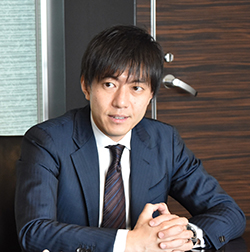
Kenji Fuma
Representative Director and CEO, Neural Inc.
Specially Appointed Professor, Sustainable Society Co-Creation Organization, Shinshu University
A management strategy and financial consultant specializing in ESG finance and sustainability management. He holds a Master of Liberal Arts in Sustainability from Harvard University, an MBA from Thunderbird School of Global Management, and a bachelor's degree in international relations from the University of Tokyo.
Overall assessment
In addition to sustainability information disclosed on its website, SoftBank Corp. publishes three reports, the Integrated Report, the Non Financial Report, and the ESG Data Book, and also provides information through the Corporate Governance Report and, in Japan, through its annual securities filing.
The website also includes cross-reference tables indexed to the GRI Standards, SASB Standards, TCFD, and ISO 26000, making it easier for readers to locate relevant information.
Governance
SoftBank Corp. has established a governance structure designed to integrate growth strategy and sustainability. Ultimate decision making rests with the Board of Directors. One notable feature is that the ESG Promotion Committee, chaired by the President, CEO and Representative Director, and the Independent External Board Members Meeting, composed solely of independent external directors to help protect the interests of minority shareholders in a listed subsidiary structure, have both been established as advisory bodies to the Board. The ESG Promotion Committee monitors progress on sustainability activities across the group at least quarterly and makes recommendations to the Board.
The Company is also structured as a company with an Audit and Supervisory Board. At the same time, it has voluntarily established a Nominating Committee and a Remuneration Committee, each with a high 80% ratio of independent external directors.
There remains room to further enhance disclosure on the board diversity guidelines considered by the Nominating Committee. With respect to director compensation, the Company has strengthened disclosure on base compensation and performance linked remuneration. That said, I would welcome more detailed disclosure on how sustainability metrics are actually incorporated into the operation of performance linked remuneration.
Disclosure on strategic shareholdings is highly robust, with a notably high standard of disclosure regarding the holding policy, the status of holdings, and the rationale for holding such shares.
Strategy
Based on a double materiality approach, the Company has identified six material issues: solving social issues through DX and AX, connecting people and information to create new excitement, realizing next-generation social infrastructure that supports a society coexisting with AI, contributing to the global environment through the power of technology, providing sustainable communications networks, and developing a resilient management foundation.
On that basis, it has articulated a growth strategy and a long-term vision of providing next-generation social infrastructure essential to the development of a digital society, with the aim of achieving both a sustainable society and higher corporate value. In doing so, the Company places particular emphasis on leadership in AI and the use of renewable energy as a distributed power source. The integrated process from materiality identification to strategy formulation can be regarded as strong.
Another distinctive feature is the materiality assessment process itself. The Company has established its own materiality assessment procedures and obtains third-party assurance on whether the actual implementation process conforms to those procedures.
Risk management
The Company has established a management framework based on the Three Lines Model. Headquarters functions and group companies constitute the first line. The second line is the Risk Management Committee, which is composed of the President and Representative Director, directors, the CRO, and officers responsible for overseeing each division, with Audit and Supervisory Board members and relevant department heads also in attendance. The Internal Audit Department serves as the third line.
Within the second line, the CRO reports to both the Board of Directors and the Audit and Supervisory Board. In addition, the CRO also reports to external directors on matters discussed by the Risk Management Committee, including the risk identification process.
With respect to information security, the Company has separately established a CISO function and an Information Security Committee chaired by the CISO. That said, fuller explanation would be desirable regarding the relationship between the Information Security Committee and the Risk Management Committee, as well as how the Board oversees the Information Security Committee.
As for the AI business, which the Company has positioned as a growth strategy, regulatory risk relating to AI technology is recognized as one of the risks managed by the Risk Management Committee. However, I would welcome more substantive disclosure on the Company's broader risk management framework for responsible AI, including elements that extend beyond hard law and formal regulation.
Metrics and targets
The Company has established individual KPIs/targets for all six identified material issues and discloses progress annually. For climate change mitigation, it has set a target of net zero by 2030 for Scope 1 and 2 emissions, and by 2050 including Scope 3 emissions, and has obtained SBTi validation for both its near-term and net-zero targets.
The number of targets in the natural capital area has been increasing. The Company has set four targets: forest conservation covering at least twice the area of land developed in key biodiversity areas; tree planting and related initiatives contributing to water source recharge equivalent to 1% of water use at newly developed data centers; a recycling and reuse rate of at least 20% relative to new mobile handset sales; and an industrial waste recycling rate of 98% by FY2026 and 99% by FY2030.
While many of the indicators disclosed by the Company are presented on a consolidated basis, some KPI targets linked to materiality are set only for SoftBank Corp. on a standalone basis or for a limited scope. Going forward, I would expect further enhancement of target setting and progress disclosure from a consolidated group perspective.
Overall view
The Company's governance and risk management frameworks from a sustainability perspective can be regarded as relatively advanced. It has also articulated a clear strategy and established detailed KPI targets for highly material themes, suggesting that it is practicing a well-developed PDCA cycle.
Looking ahead, I would highlight two areas where I would like to see further progress.
First is the development of internal and external talent capable of delivering on one of the two central pillars of the Company's material issues, namely solving social issues through DX and AX. As the global need for a just transition continues to rise from both the DX and AX perspective and the sustainability transition perspective, there remains a shortage of the people needed to carry this transition forward, both in Japan and internationally. Talent development and capacity building are therefore indispensable. I hope the Company will further evolve the talent development mechanisms it has built, make skillful use of digital tools, and take the lead not only in developing internal talent but also in developing talent across society and within client companies.
Second is the need for appropriate group-wide management of opportunities and risks in emerging fields where regulatory frameworks are not yet fully developed. This is particularly true in the AI domain, where a range of institutions have begun to identify emerging risks. I hope the Company will not only respond steadily to these emerging risks but also take a proactive role in leading the formation of global rules.
June 2026