Promotion of a Recycling-oriented Society
Our approach
to a circular economy
We position the promotion of resource circulation as a key management issue, advancing waste reduction and resource recovery through the efficient use of limited resources. These efforts not only mitigate environmental impact but also enhance our corporate trustworthiness and competitiveness, leading to long-term value creation.
We are committed to reducing, reusing and recycling industrial waste to contribute to the realization of a circular economy.
Initiatives for promoting
a circular economy
in business operations
Reduce
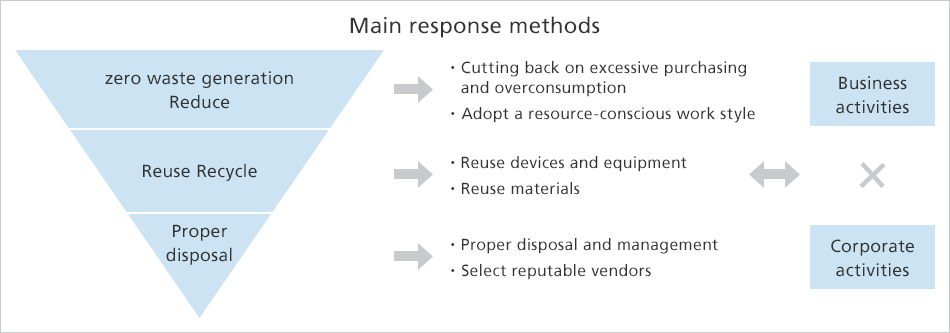
We strive to reduce the amount of paper resources used in the sales of mobile information devices by making individual packing boxes smaller, converting instruction manuals and other bundled documents to applications, and utilizing iPads in our stores.
Moreover, to replace the conventional paper-based invoices, we launched an “online charges guide” starting with the October 2006 statement which allows users to view electronic billing statements over the Internet from a SoftBank mobile telephone or PC. This is provided as a basic service to all individual subscribers.
Reuse
We efficiently collect and resell mobile phones that we have sold or rented to customers. With the domestic and global used smartphone markets growing in recent years, we will continue to enhance our value-added services in line with the diversification of customer needs and respond to market demand.
Recycle
As a member of the Mobile Recycle Network (MRN), an organization which engages in mobile telephone and PHS recycling activities, we promote the collection of used mobile telephone handsets, battery packs, chargers, USIM cards, and other items.
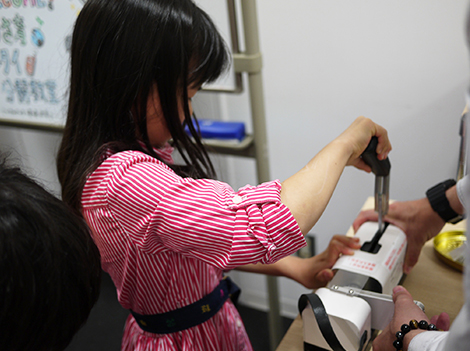
In order to promote collection of handsets, we are establishing collection points for corporate customers and investing in the creation of an environment to promote collection of handsets (e.g., purchasing and installing special equipment) at our directly operated and agent SoftBank stores and Y!mobile stores. Additionally, we have set up operations for collection by specialized companies to further promote these efforts. To make customers feel at ease and encourage cooperation with recycling efforts, mobile telephone handsets are processed for recycling by being physically destroyed with a “mobile telephone punch” during collection. In FY2024, through our collection initiatives, we collected 2.63 million used mobile phones, totaling 417 tons, for reuse and recycling. Having achieved our initial cumulative target of 12 million units (from FY2020 to 2025) ahead of schedule, we have revised our goal for FY2025 to a new cumulative total of 14 million units for the same period. We will continue striving to further increase the volume of collected devices. Additionally, we have achieved, as of March 2024, the goals set by the GSMA (GSM Association), an organization comprising global telecommunications operators, of more than 20% of the number of recycled handsets collected relative to the number of new handsets sold and 100% of the number of collected handsets to be processed without incineration.
Going forward, to further increase the number of devices collected, we will actively promote our recycling initiatives to business partners and customers. In addition, we will strengthen collaboration with MRN and other organizations, placing greater emphasis on sharing information related to the reuse and recycling of used mobile phones.
Initiatives for resource circulation in mobile phone services

Tracking of Waste Electrical and
Electronic Equipment Generated from Sold Products
Waste electrical and electronic equipment (WEEE) generated from sold products is managed using device identification numbers such as IMEI to ensure proper reuse and recycling. All devices collected through our recovery initiatives are 100% recycled or reused.
| Information tracked by The company |
|
|---|
Implementing educational activities to teach about recycling
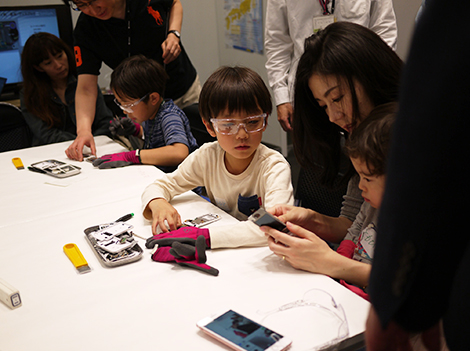
We hold “Risaikuru” environmental classes for children to learn the importance of recycling through the experience of disassembling cell phones at SoftBank shops across Japan. The class is designed for children to learn about the structure and materials of cell phones by actually disassembling them, and by using the disassembled parts to make crafts, to exercise their creativity and acquire knowledge about recycling while having fun. More than 1,400 people have participated in the class from April 2018 to the end of March 2025.
In addition, environmental classes are held at SoftBank shops nationwide, open to all customers regardless of whether they have a contract with us.
Value creation model for reducing environmental impact
The Company is advancing resource circulation throughout the value chain as part of its efforts to reduce environmental impact.
-
The Company's strengths in the circular economy - Monetization through effective utilization of used resources
- Avoidance of disposal costs
Ensuring and Strengthening - ①Maximizing recycling efforts
- ②Maximizing reuse efforts
Key initiatives - ①Monetization through resale of collected mobile handsets / monetization through resource reutilization of decommissioned base station equipment and used mobile handsets
- ②Monetization through sales of reused products both domestically and internationally
Risks /
opportunitiesRisk - Shrinking new mobile handset sales market
- Outflow of mobile handsets to other companies due to expansion of the reuse market
Opportunities - Increased collection and revenue through expansion of the reused mobile handset market
- Revenue growth from rising prices of scarce minerals and other resources
-
The Company's strengths in the circular economy - Improving resource efficiency through optimization of data centers, network centers, and base station facilities
- Sharing base stations with competing operators
- Providing mobile phones through rental and related services
- Diversification of the communication services provided
Ensuring and Strengthening - ①Complete implementation of efficient resource utilization for equipment and strengthening resource conservation
- ②Promoting rental services
- ③Advancing resource-efficient technology services and standalone SIM sales
Key initiatives - ①Energy conservation through EMS implementation at data centers and reduction of chiller operation
- ②Deployment of rental services for corporate mobile devices
- ③Provision of eSIM services
Risks /
opportunitiesRisk - Cost impacts from reduced stability of energy supply and surging energy prices
- Opportunity losses caused by delays in responding to diverse sales channels
Opportunities - Cost reduction through efficient resource utilization
- Revenue growth from expansion of the rental market
- Expansion of standalone e-SIM/SIM sales through inbound and outbound market growth
-
The Company's strengths in the circular economy - Use of certified paper that verifies sustainable forest management
- Joining resource circulation organizations
Ensuring and Strengthening - ①Promoting utilization of products with resource conscious labeling
- ②Strengthening partnerships
Key initiatives - ①Utilization rate of PEFC- and FSC-certified paper for internal use (approx. 80%)
- ②Membership in Circular Partners
Risks /
opportunitiesRisk - Reputational risk from using non–resource-conscious materials
- Productivity decline caused by closed internal know-how practices
Opportunities - Acquiring insights through external networks
- Accumulation of circular business knowledge and building competitive advantage
- Enhancement of brand image through use of certified materials
-
The Company's strengths in the circular economy - Strengthening employees' know-how and knowledge
- Promoting appropriate disposal, collection, and reuse by departments and employees
Ensuring and Strengthening - ①Providing opportunities for sustainability education
- ②Offering awareness initiatives to encourage proper collection and reuse
Key initiatives - ①Implementation of e-learning (FY24 participation rate: approx.92%)
- ②Establishment of an employee waste disposal desk and provision of procedural manuals
Risks /
opportunitiesRisk - Stagnation of resource recovery and increase in waste due to insufficient educational outreach
Opportunities - Promotion of resource collection and securing profits from sale of valuable materials
- Expansion of new businesses and innovation through increased employee awareness
-
The Company's strengths in the circular economy - Collaboration partners in the reuse and recycling business
- Provision of non-plastic-derived products and items utilizing unused resources and waste materials to customers
- Enhancement of environmental and resource utilization awareness among society and customers
Ensuring and Strengthening - ①Identifying and reinforcing relationships with reputable waste disposal contractors
- ②Facilitating mobile device collection at retail locations
- ③Providing awareness opportunities to customers
Key initiatives - ①Conducting vendor audits and selecting reputable waste contractors
- ②In-store device collection and stable recovery through offering the Shin-Toku plan
- ③Conducting the customer environmental education program "Risaiku-ru"
Risks /
opportunitiesRisk - Increased capital costs for providing reuse and recycling services during periods of customer or societal acceptance stagnation
Opportunities - Expansion of business opportunities in the reuse and recycling sector
- Enhancement of the corporate image through the use of nonplastic products and recycled materials, and provision of educational opportunities
-
The Company's strengths in the circular economy - Effective utilization of resources through reuse of scarce minerals and similar materials
- Reducing water usage through advanced data center technologies
- Reducing use of plastic-based products and utilizing products made from unused resources and waste materials
Ensuring and Strengthening - ①Promoting the reuse of resources such as scarce minerals through reuse and recycling
- ②Advancing conservation of natural capital such as water
- ③Promoting the use of low environmental-impact materials
Key initiatives - ①Setting materiality KPIs and driving them as company-wide initiatives
- ②Reduction of water usage through advanced data center technologies
- ③Use of certified shopping bags and production/internal use of business cards made from kudzu-based materials
Risks /
opportunitiesRisk - Resource exhaustion of scarce minerals and reputational damage due to stagnation in resource initiatives
- Constraints on water and resource use and business restrictions due to regulations
Opportunities - Stabilizing handset procurement through steady supply of recycled rare metals
- Expanding markets for waste and unused resources, fostering new business creation
Common outputs
| GSMA Targets | Achieve a recovery rate of at least 20% against new handset sales | Achieved 20% or more |
|---|---|---|
| Ensure 100% proper processing (zero landfill rate) of recovered handsets | Achieved 100% | |
| Total number of reused and recycled units (FY2020 – 2024) | 12.5 million | |
Common outcomes
Ensuring the sustainability of natural capital and resources to contribute to social, industrial, and economic development.
SDGs12
"Responsible Consumption and Production"

SDGs13
"Climate Actions"

SDGs15
"Life On Land"

Initiatives for resource circulation
in corporate activities (offices, etc.)
We place 3R (Reduce, Reuse, Recycle) activities, green procurement and paperless initiatives at the core, and continuously promote effective resource utilization and reduction of environmental impact. We also promote awareness and collaboration among all employees, realizing sustainable office operations through legal compliance and technological innovation.
Implementing 3R activities
at the office
Reduce
| Zero Paper for Internal Operations Declaration | Since April 2012, SoftBank has advanced a “Zero Paper for Internal Operations Declaration” and has been proactively promoting a shift to paperless operations for all paper used in internal and external procedures as well as paper used in reports and meetings, etc. Also, in April 2021, we launched the “Digitalization of Stamping Project” to further promote paperless operations. |
|---|---|
| Achieving “100% paperless” operations in the customer support center | To eliminate the risk of information leaks due to the removal of printed media, individual operations which used a large volume of paper including manuals, memos, and notices were identified and improved to achieve “100% paperless” (zero paper usage) operations within the Customer Support Center which handles private customer information. As a result, annual paper usage has been reduced by 3.12 million sheets (equivalent to 240 tree logs) compared to previous years. |
Reuse
| Introduction of reusable plastic cups | In the drink corner at the Takeshiba headquarters, we have introduced reusable bioplastic cups. Without using petroleum-derived ingredients, we have adopted a highly environmentally friendly material made primarily from biodegradable bioplastics*1 that is dishwasher-safe. After use, it can be reprocessed into new products, creating a comprehensive resource circulation system from reuse to recycling |
|---|
- [Note]
-
- *1This plant-derived plastic is produced by chemically synthesizing lactic acid, which is obtained through the fermentation of starch from corn or sugarcane juice. It can ultimately be broken down into water and carbon dioxide by microorganisms.
- *1
Recycle
| Secured recycling box for collecting confidential documents | Instead of individually processing unnecessary documents as wastepaper, they are collected in a special locked security box for collecting confidential documents and batch dissolved at a later date to ensure security and recycling as toilet paper. |
|---|
Appropriate use
of water resources
We recognize that water is both necessary for our business activities and an important resource for the local communities in which our business sites are located. Accordingly, we are addressing water risk and promoting the efficient use of water resources on a companywide basis.
The Environment Committee effectively manages water risk while conducting managerial supervision that ensures both companywide response to these risks and efficient water resource utilization.
Reducing energy and paper consumption through
White Work Style
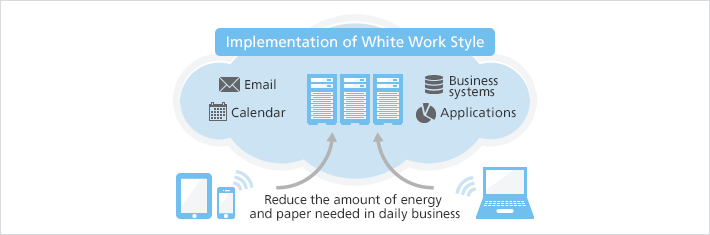
SoftBank is engaged in reducing environmental impact through the application of information and communications technology (ICT). Through the implementation and proposal of a new way of working called White Work Style, work efficiency is improved while the volume of paper and energy consumed in day-to-day business is also reduced.
White Work Style is a service that allows employees to access internal work systems and software simply by connecting to SoftBank's network. Home PCs or personal iPhones and iPads can also be connected to an environment equivalent to the office PC, allowing flexibility in working time and location, such as teleworking from home, when on the move or from outside of the office.
Furthermore, with computer processing carried out on network servers rather than individual computers, computer power consumption can be reduced. By centralizing these servers at a large-scale data center, operational efficiency can be improved and overall power consumption will be reduced.
According to estimates by the Ministry of Internal Affairs and Communications, energy consumption from the use of office automation equipment and lighting can be reduced by 43% with the introduction of telework. Even when energy consumption at the home office is factored in, it is possible to reduce energy consumption by 14%. Through the promotion of teleworking, it is possible to reduce the amount of energy consumption throughout society. It is also an important initiative from an energy conservation standpoint.
Moreover, through the use of iPhones and iPads, documents stored on servers can be accessed as necessary. This has made it possible to reduce paper handouts and to present information in a more effective manner using video.